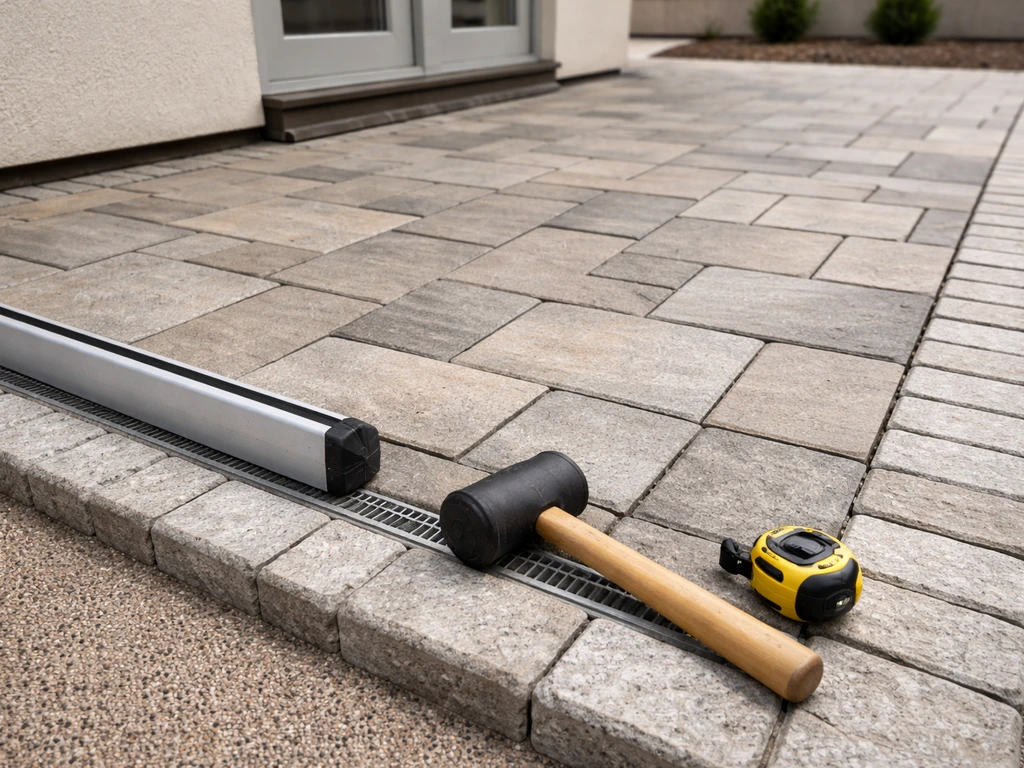
Finding an affordable patio or driveway contractor comes down to one thing: knowing how to read reviews the right way. Not just star ratings, but the written feedback that tells you whether a company actually showed up on time, prepped the base properly, and charged what they quoted. This guide walks you through exactly how to do that, from understanding what "affordable" actually means in this space, to comparing bids side by side, to verifying quality after the job is done.
Affordable Patios and Driveways Reviews Guide to Compare Contractors

Vera Grady
7 Jun 2026
What 'affordable' really means for patios and driveways
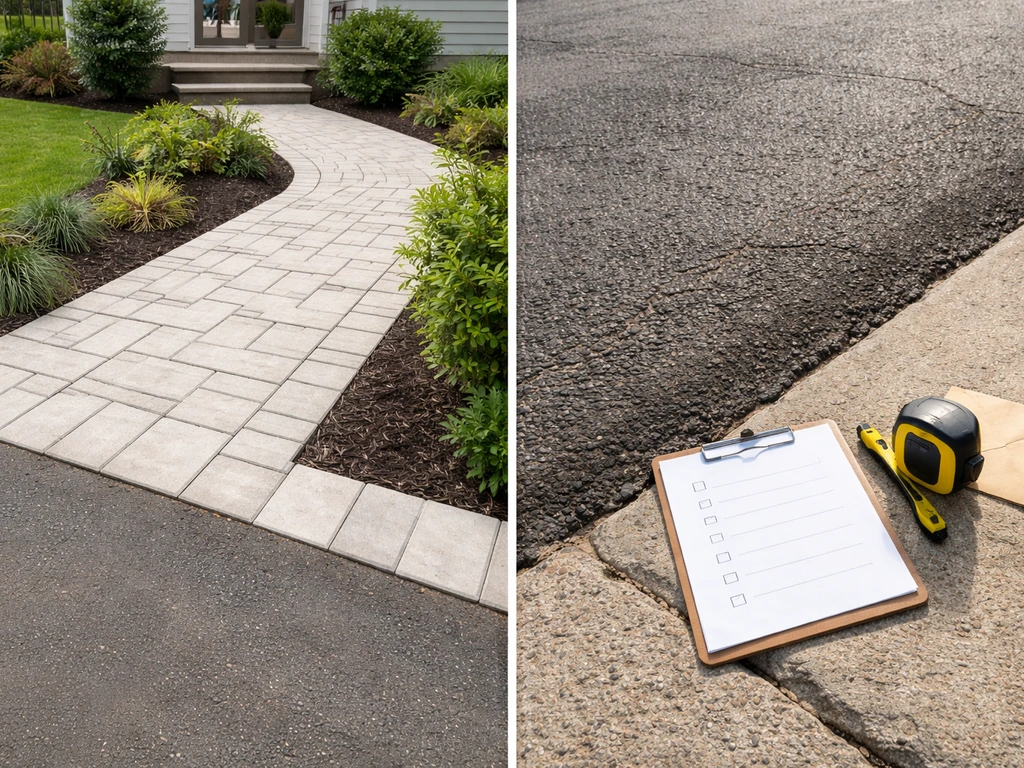
Affordable is relative, and in this niche it gets muddied fast. A quote that looks cheap upfront often excludes base prep, grading, removal of the old surface, or sealing. Before you can evaluate whether a contractor's price is genuinely good value, you need a clear sense of what things actually cost in 2025 and 2026.
For driveways, asphalt runs roughly $7 to $15 per square foot installed, concrete sits around $10 to $15 per square foot, and premium concrete pavers push up to $18 to $25 per square foot. A 2025 driveway cost guide reports typical concrete driveways at about $10, $15 per sq. ft. and premium paver driveways at about $18, $25 per sq. ft blank" rel="noopener noreferrer">typical concrete driveways at about $10–$15 per sq. ft.. For patios, stamped concrete is generally the budget-to-midrange sweet spot: on a typical 400 square foot patio, expect $3,200 to $8,000 total, with most projects landing between $5,000 and $7,000. For a typical 400 sq. ft. patio, Creststone Concrete estimates stamped concrete at about $3,200, $8,000 total, with many projects landing around $5,000, $7,000 blank" rel="noopener noreferrer">expect $3,200 to $8,000 total, with most projects landing between $5,000 and $7,000. High-end natural stone and concrete pavers cost more, but for many homeowners stamped concrete delivers similar curb appeal at a lower price.
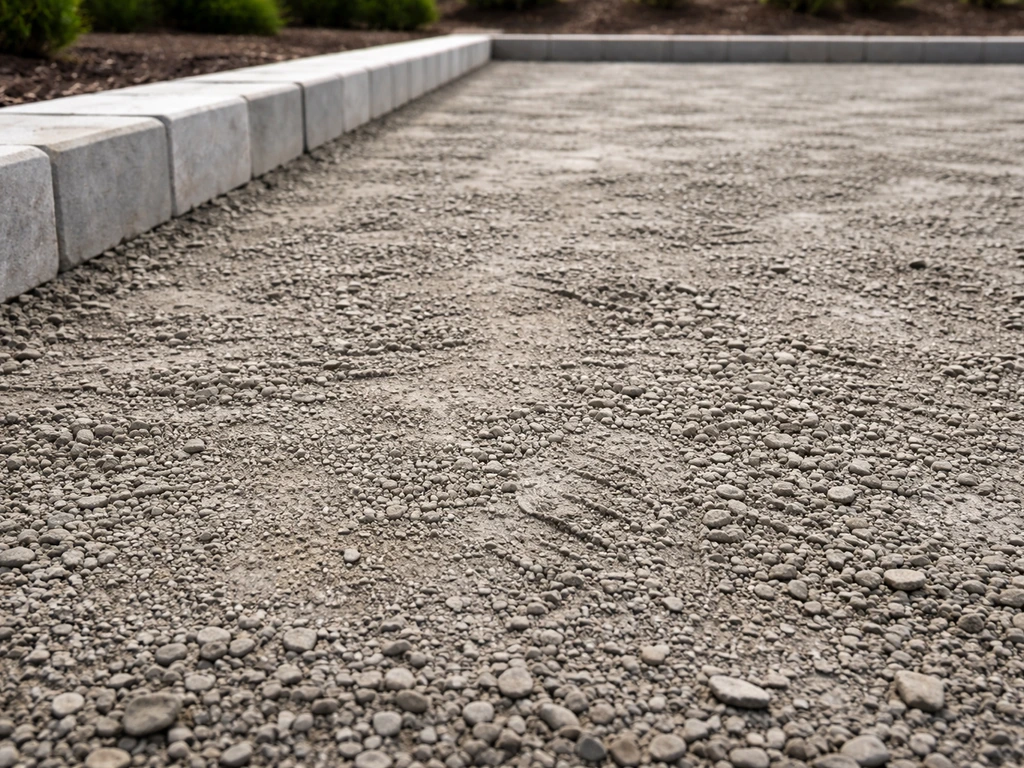
The biggest cost drivers that get hidden in low quotes are base preparation and grading. Driveways carry vehicle loads, so they need a deeper, more compacted aggregate base than a pedestrian patio. The ICPI (Interlocking Concrete Pavement Institute) standard for residential applications calls for subgrade compaction at 95% Standard Proctor density. Skipping or skimping on this step is the leading cause of long-term settlement and cracking, and it's the kind of detail you'll never see in a basic price quote unless you specifically ask.
| Surface Type | Typical Cost (per sq. ft.) | Best For | Key Risk If Done Cheap |
|---|---|---|---|
| Asphalt driveway | $7–$15 | Driveways, budget builds | Poor drainage, cracking within 3–5 years |
| Concrete driveway | $10–$15 | Driveways, long-term durability | Inadequate base thickness, settling |
| Paver driveway | $18–$25 | Driveways, premium curb appeal | Poor compaction, joint sand erosion |
| Stamped concrete patio | $8–$20 (avg. $5k–$7k total) | Patios, midrange budget | Drainage slope missed, surface cracking |
| Concrete pavers (patio) | Varies, often higher than stamped | Patios, high-end finish | Settlement from inadequate base lifts |
| Plain concrete patio | $6–$12 | Budget patios | No slope/drainage built in, pooling water |
Seasonal constraints matter too. In northern states and Canada, freeze-thaw cycles will destroy a poorly prepped base within a couple of winters. That means affordable in Phoenix looks different from affordable in Minnesota or Ontario. A legitimately affordable contractor prices base prep correctly for your climate, not just to win the bid.
How to find the right review sources
Not all review platforms are equally useful for evaluating patio and driveway contractors. Here's how to prioritize your research time.
Start with specialty aggregators, then cross-check
Review aggregators that focus specifically on outdoor living and hardscaping contractors are the best starting point. They compile feedback from actual customers who've had driveways poured, patios installed, and enclosures built, so the review language is directly relevant to what you're buying. If you want a quick way to narrow down options in your area, these middlesex drives and patios reviews can help you spot the contractors with repeatable workmanship patios installed. General platforms like Google and Yelp are worth checking for volume and recency, but they include feedback from walk-ins, retail purchases, and one-time repairs that may not reflect installation quality at all.
- Specialty aggregator sites for patio and driveway contractors: best for detailed, category-specific feedback
- Google Business profiles: good for volume and recent activity, check reviews from the last 12 months
- Yelp: useful for spotting recurring complaints, less reliable for specialty trades
- HomeAdvisor and Angi: decent for verified project leads, but watch for sponsored placement bias
- Better Business Bureau (BBB): check complaint resolution history, not just the letter grade
- Houzz: useful for seeing project photos alongside customer comments
When you find a contractor you're considering, search their business name plus words like "driveway review," "patio review," or "complaint" to surface feedback that doesn't always appear on their preferred platforms. If a company only has reviews on one site, that's worth noting.
Prioritize review recency and response patterns
A contractor with 150 reviews and a 4.2 average is more trustworthy than one with 12 reviews and a 4.9. Look for reviews from the past 18 months specifically, since ownership, crew quality, and pricing practices all change. Also pay attention to how the contractor responds to negative reviews: a defensive or dismissive response tells you a lot about how they handle disputes mid-project.
How to read patio and driveway reviews for real workmanship signals
A five-star review that says "great job, very professional" tells you almost nothing. You want reviews that mention specific details, because those are the ones written by customers who actually paid attention.
Workmanship signals worth looking for
- Mentions of base preparation, compaction, or gravel depth: customers who noticed this are paying attention
- References to water drainage or slope: a good installer ensures water runs away from the house, not toward it
- Comments about edging, joint sand, or finishing detail: these are the hallmarks of careful crews
- Notes on whether the final grade matched the quoted scope, with no surprise change orders
- Whether cleanup was thorough and the site was left properly
- Follow-up: did the contractor address any post-installation settling or cracking?
Affordability signals (beyond just low price)
The best value reviews don't just say "cheap. To make sure you pick the right contractor and avoid surprise costs, also look at costless patio reviews as a comparison point for affordability signals and workmanship details. " They say something like "came in under three other quotes and the base was deeper than what the others proposed." That's what genuine affordability looks like: competitive price with no shortcuts on the structural work. If reviews consistently mention that the job matched the quote with no add-ons, that's a contractor who prices honestly. If reviews mention last-minute charges for removal, disposal, or grading that weren't in the original quote, move on.
Driveway vs patio: what to look for differs slightly
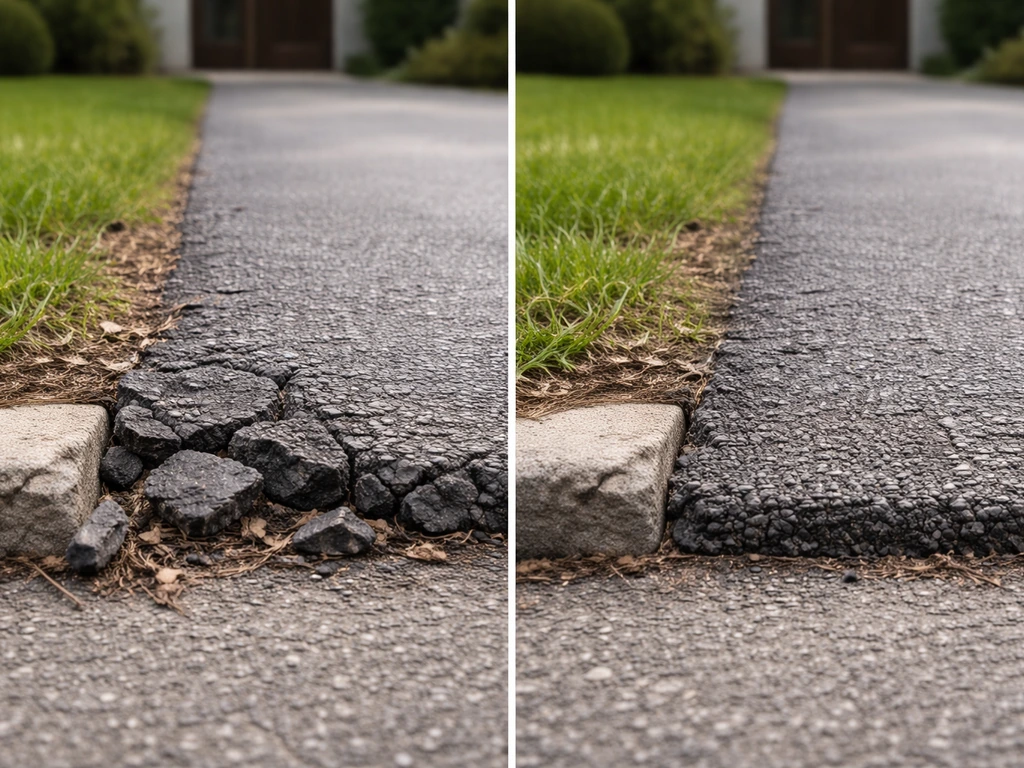
Driveway reviews should specifically mention load-bearing concerns: cracking after heavy vehicles, edge crumbling, or sinking near the garage apron. These are base compaction failures. Patio reviews should mention leveling, evenness underfoot, and whether pooling occurred after rain. Both should mention drainage, but for patios it's about slope direction; for driveways it's also about side drainage channels and preventing washout at the edges.
Shortlisting contractors: the questions that reveal the real price
Once you've identified three to five candidates through reviews, the shortlisting call is where you separate the honest ones from the bait-and-switch operators. These questions put specific cost drivers on the table so you can compare apples to apples.
- What is the base depth you're quoting, and how many compaction lifts will you do? (For driveways, a minimum of 4–6 inches of compacted aggregate base is standard; for pavers, base is installed in lifts to reach ICPI density standards.)
- Is demolition and removal of the existing surface included in this price?
- Is grading and drainage slope included, or is that an additional cost?
- What is your quoted thickness for the concrete or asphalt layer?
- Is sealing included? If so, what product and how many coats?
- What does your warranty cover, and for how long? Does it include base settling or just surface defects?
- Are permits required in my municipality, and is pulling them included in your quote?
- What are the most common change orders you issue during jobs like this, and what triggers them?
- Can you provide references from projects completed in the last 6 months in my area?
That last question about common change orders is the most revealing. A contractor who can name specific scenarios (rock ledge discovery, drainage rerouting, unexpected root systems) is being transparent. One who says "we rarely have change orders" without explanation is either inexperienced or not being straight with you.
Bid comparison checklist for apples-to-apples quotes

Never compare three quotes based on the bottom-line number alone. Scope differences of 20 to 40 percent are common in this trade, and a quote that looks $1,500 cheaper often excludes two or three line items the others include. Use this checklist to normalize what you're actually being offered.
| Line Item | Contractor A | Contractor B | Contractor C |
|---|---|---|---|
| Demo/removal of existing surface | Included / Not included / $___ | Included / Not included / $___ | Included / Not included / $___ |
| Grading and drainage slope | Included / Not included / $___ | Included / Not included / $___ | Included / Not included / $___ |
| Base depth (inches) | ___ in. | ___ in. | ___ in. |
| Base compaction method specified | Yes / No | Yes / No | Yes / No |
| Surface material and thickness | ___ in. / type | ___ in. / type | ___ in. / type |
| Sealing (coats, product) | Included / Not included | Included / Not included | Included / Not included |
| Permits | Included / Not included | Included / Not included | Included / Not included |
| Cleanup and debris hauling | Included / Not included | Included / Not included | Included / Not included |
| Warranty (years, what covered) | ___ yrs / scope | ___ yrs / scope | ___ yrs / scope |
| Total quoted price | $___ | $___ | $___ |
| Estimated adjusted total (add exclusions) | $___ | $___ | $___ |
Fill in the "adjusted total" row by adding the cost of any excluded items based on the other quotes. This is the only way to compare what you're actually getting. If a contractor refuses to break out line items in writing, that's a red flag by itself.
Common red flags in reviews and contract terms
These show up in real customer reviews over and over. If you spot more than two of these in a contractor's feedback profile, walk away regardless of the price.
Red flags in reviews
- Multiple reviewers mention the final price was higher than the quote, with vague explanations
- Complaints about crew changing mid-project, leading to inconsistent work quality
- Reviews mentioning water pooling on the finished surface within the first season
- Cracking or settling within one to two years of installation (base compaction failure)
- Contractor became unresponsive after final payment
- Photos show sloppy edging, uneven joint spacing, or visible surface defects
- Reviewers describe being pressured to sign quickly or lose the quoted price
- No negative reviews at all on any platform (suggests review management or fake reviews)
Red flags in contract terms
- Scope described vaguely (e.g., "install patio" with no square footage, material spec, or base depth)
- Change order language that gives the contractor broad discretion to add charges without your written approval
- Large upfront deposit requirements (more than 30–33% of the total job is a warning sign)
- No warranty clause, or warranty language that excludes settling, cracking, or drainage issues
- No permit responsibility assigned to either party
- Payment tied only to completion date, not to inspection milestones
- No cleanup or site restoration language
Some of these issues are more common with driveway contractors than patio installers, simply because driveway projects involve heavier equipment, larger material hauls, and more excavation variables. If you're also researching specific regional companies, checking reviews for contractors like those covered in ascot driveways and patios reviews or middlesex drives and patios reviews can give you a useful benchmark for what good and bad feedback looks like in practice.
Next steps after choosing: permits, timelines, and quality verification
Choosing a contractor is only half the job. What happens between signing and the final walkthrough determines whether you get what you paid for.
Permits and pre-construction
Most municipalities require a permit for driveway replacement or any hardscape project over a certain square footage (commonly 200 to 500 square feet, but it varies). Your contractor should know the local rules. If they tell you "we never bother with permits," that's not a perk, it's a liability that could fall on you when you sell the property. Confirm in writing who is responsible for pulling the permit and whether the cost is included.
Timeline expectations by material
- Asphalt driveways: typically 1–2 days installation, usable within 24–72 hours, but full cure takes 6–12 months (avoid heavy vehicles and sharp turns during this period)
- Concrete driveways and patios: 1–3 days installation, foot traffic after 24–48 hours, vehicle traffic after 7 days minimum, full strength at 28 days
- Stamped concrete: same as concrete but sealer adds a day; avoid foot traffic until sealer is fully cured (usually 24–48 hours after sealing)
- Paver patios and driveways: 2–5 days depending on size; usable almost immediately, but joint sand needs to settle and may require a top-up after the first rain
How to verify quality during and after installation
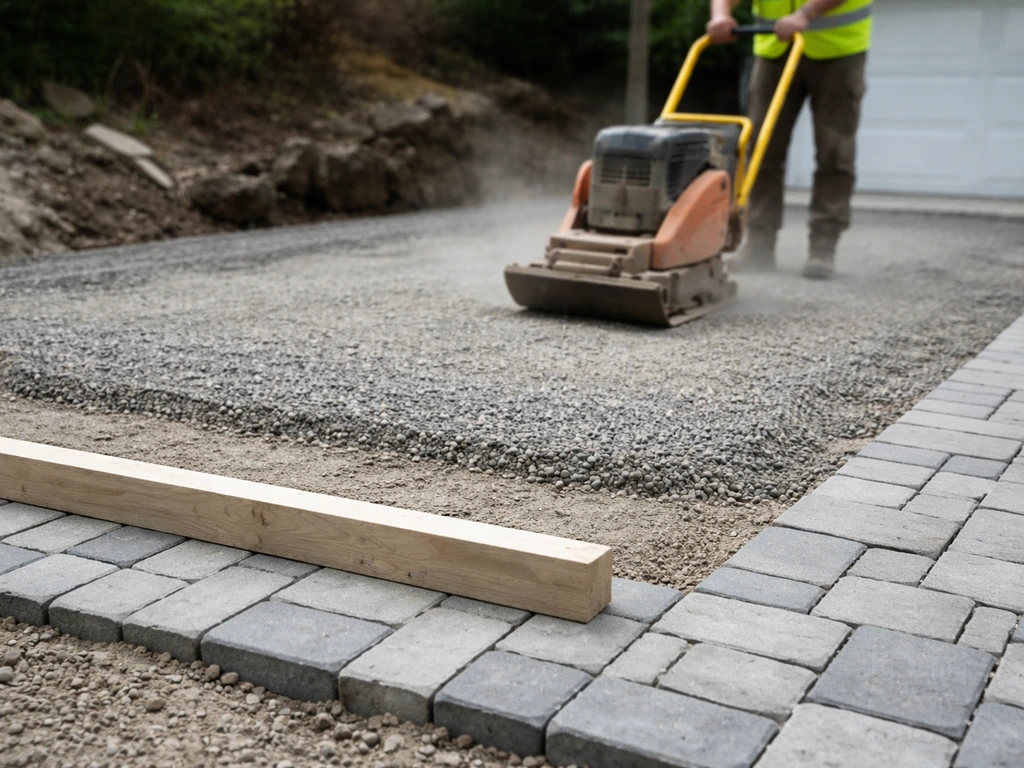
You don't need to be a contractor to catch problems early. The most important thing to check during installation is whether the crew is compacting the base in layers (called lifts) before adding the surface material. If they pour or lay everything in one step, that's a problem. After installation, check drainage within the first week by running a garden hose on the surface and watching which way water flows. It should run away from your house and toward a designated drainage point, not pool in the center or collect against a foundation.
For pavers specifically, watch for any rocking or unevenness in the first month. Some minor settling is normal, but individual pavers that sink more than a quarter inch relative to their neighbors indicate a base compaction issue that needs to be addressed while the contractor is still accountable. Continuous grading checks during installation are the professional standard, and the ICPI identifies poor subgrade compaction as the leading cause of long-term paver settlement. Hold your contractor to that standard.
The final walkthrough: what to inspect before you sign off
- Walk the full perimeter and check that edges are clean, consistent, and properly finished
- Run a level or straight edge across the surface to check for low spots
- Verify drainage slope visually or with the hose test described above
- Check joint sand coverage on paver installations (no visible gaps or bare areas)
- Confirm sealer was applied if included in the contract, and that it's even with no pooling or bubbles
- Check that all debris, extra materials, and equipment have been removed from the site
- Get all warranty documentation in writing before your final payment clears
Affordable doesn't mean cheap and hoping for the best. It means getting a fair price for work that's been done correctly. The reviews that signal genuine value describe exactly this: a contractor who quoted honestly, showed up consistently, built a proper base, and stood behind the finished product. If you're looking for a practical example, check darbs patio reviews to see what customers highlight when they talk about base prep, timing, and final workmanship. If you want to compare options, look for affordable patio reviews that describe the same workmanship details, not just the final price reviews that signal genuine value. That's the benchmark to hold every bid against, and it's the kind of feedback you should be leaving yourself once the job is done.
FAQ
How do I tell if “affordable patios and driveways reviews” are comparing the same scope between contractors?
Look for reviews that mention specific inclusions like base depth, grading method, removal and disposal of the old surface, and whether a sealant or leveling compound was included. If one contractor’s reviews talk about “full prep” but another’s focus only on the final surface, you’re probably not comparing the same scope. Ask for a line-item quote that mirrors those review details.
What are the most common review “red flags” that show up after the job is finished?
Watch for repeated complaints about settlement within a few months, pooling water after rain, unexpected charges for disposal or grading, and crews arriving late or disappearing mid-project. If multiple reviewers say they had to call back repeatedly to fix drainage or edge failures, treat it as a pattern rather than isolated incidents.
Should I trust a contractor with lots of positive reviews but only on one platform?
Not automatically. Reviews concentrated in one place can be missing the full story. If you only see feedback on the contractor’s preferred site, do an independent search using the company name plus terms like “refund,” “payment,” “change order,” or “drainage,” then compare whether the complaints match across sources.
How recent do reviews need to be for patio and driveway work?
Target reviews from the past 18 months, then prioritize the most recent posts that mention base prep, crew behavior, and how the job performed through at least one rain cycle (for patios) or seasonal temperature swings (for driveways). If the reviews are older than two years and the company ownership changed, don’t rely on them heavily.
What should I ask about base compaction when reading driveway and patio reviews?
Ask whether they compact in lifts, what material they use for the base, and how they measure or document compaction (for example, density testing or inspection notes). Reviews that specifically mention layered compaction and consistent thickness are a strong indicator that they’re following proper driveway standards.
If the review mentions “no add-ons,” does that guarantee there won’t be change orders?
It reduces the risk, but it’s not a guarantee. Change orders can still happen if conditions differ after excavation, like rock ledge or buried roots. What you want is a contractor who explains potential discovery scenarios upfront and references how they price those situations, not one who claims there will be zero changes in all cases.
How do I verify drainage claims mentioned in patio reviews?
Ask how they establish slope direction, where runoff is routed, and whether they plan for side drainage and away-from-home flow. After installation, confirm within the first week by running water from a consistent hose point and watching whether it moves toward the designated discharge area instead of gathering near the center or against the foundation.
What review details matter most for pavers versus stamped concrete?
For pavers, pay attention to mentions of rocking, unevenness, and whether any pavers sink relative to neighbors (which can signal base issues). For stamped concrete, look for reviews that describe curing and whether hairline cracking, surface scaling, or color mismatch became a problem, since finish quality complaints often appear in the months after installation.
When comparing quotes, what’s the best way to handle excluded items mentioned in reviews?
Normalize the quotes by requesting the same inclusions and exclusions on every bid (demo and disposal, base material and depth, grading, drainage work, sealing, and any hauling fees). If a contractor won’t provide line items or won’t clearly state what’s excluded, treat that as a pricing risk even if the total number looks low.
What contract terms should I insist on after reading reviews that complain about communication?
Require a written schedule for key milestones (layout and prep, base work, surface installation, and final inspection), and specify a payment schedule tied to those milestones. Reviews that mention late starts or delayed completion often correlate with vague timelines or payment terms that let contractors stretch the work.
How can I spot “bait-and-switch” pricing patterns before signing?
Compare how the reviews describe the quote process. If many reviewers mention that the final price jumped due to items that were not disclosed, or that the contractor stopped explaining line-item changes, that’s a pattern. Ask for a written adjustment approach for discoveries, and verify whether unit pricing is stated for common extras like drainage rerouting or disposal of unsuitable material.
Do permits and inspections show up in reviews, and should I care?
Yes, and it’s useful. Reviews sometimes mention whether permits were handled properly and whether the city required inspections. If the contractor indicates they skip permits or can’t confirm who pulls them in writing, that’s a liability risk that could also delay your project and add costs later, especially around selling the property.
Next Article
Ascot Driveways and Patios Reviews: How to Vet a Contractor
Use real Ascot driveways and patios reviews to vet contractors, spot red flags, and compare estimates before hiring.