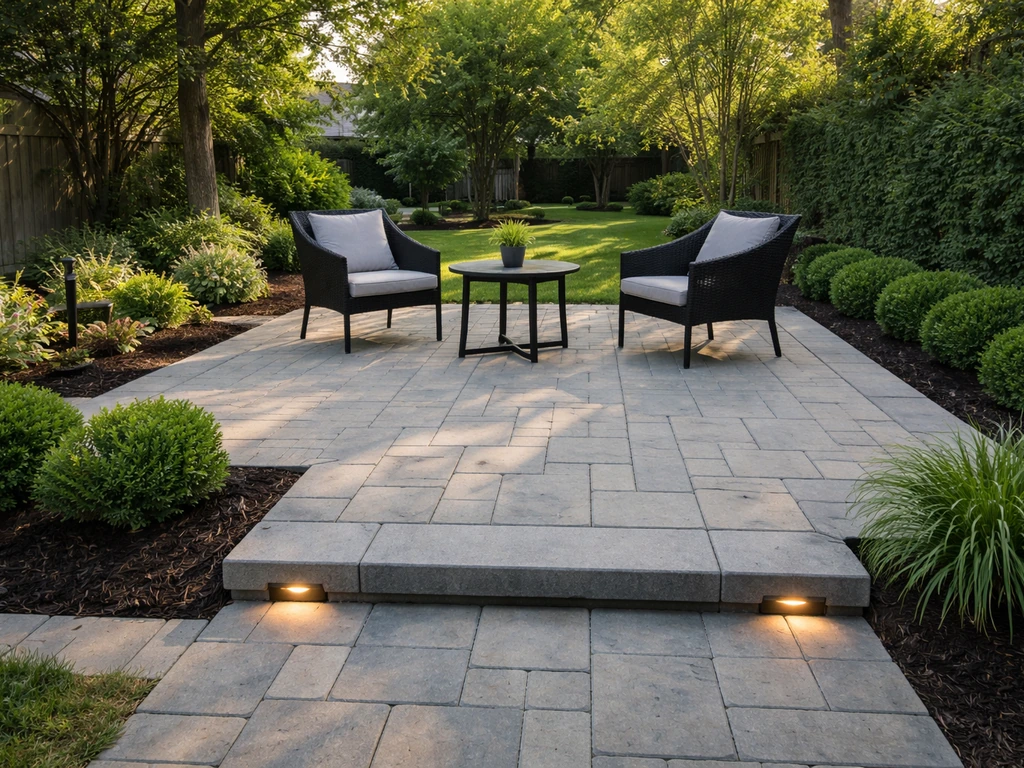
Grand Patios is a patio and outdoor living builder based in Rockingham, Western Australia, serving suburbs across the Perth and Mandurah areas. Based on the reviews available right now, they carry a 4.9 Google rating from 37 reviews, and the recurring themes in customer feedback are professionalism, competitive pricing, and handling council approvals without leaving homeowners to figure it out themselves. That's a solid signal for a small-to-mid-size contractor. But 37 reviews is a limited pool, so you need to know how to read those reviews carefully before you sign anything.
Grand Patios Reviews: How to Judge Quality, Value, Red Flags

Vera Grady
29 Apr 2026
What Grand Patios is (and whether they cover your suburb)
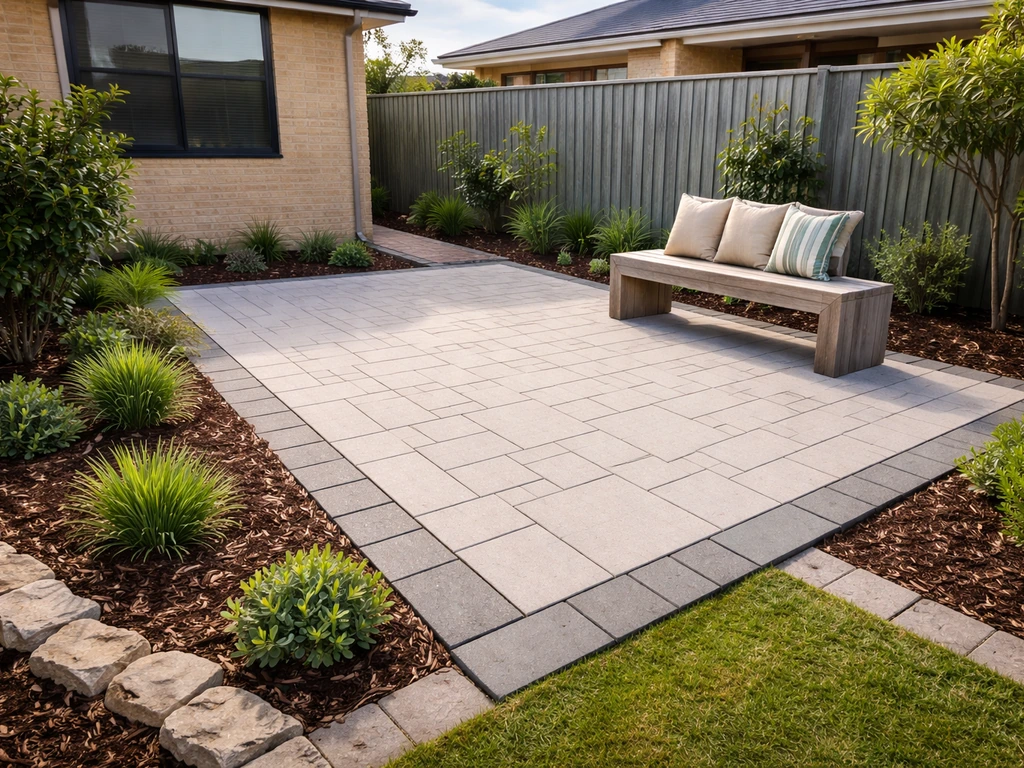
Grand Patios is a Perth-area outdoor living company headquartered at Unit 1/97 Dixon Rd, Rockingham WA 6168 (ABN 77160933773). Their core services are custom patios, alfresco living spaces, pergolas, carports, and decking. They're not a retailer selling flat-pack kits. They're a design-and-build contractor, which means you get a custom quote, council submission, and full installation.
Their advertised service area covers a specific slice of greater Perth and the southern corridor. Before you spend any time researching their reviews, confirm your suburb is on the list.
- Perth (metro)
- Rockingham
- Mandurah
- Baldivis
- Waikiki
- Byford
- Port Kennedy
- Armadale
- Bicton
- Applecross
- Ardross
- Secret Harbour
If your suburb isn't on that list, call and ask directly. Some contractors extend their area for larger projects, but don't assume. Getting a contractor who treats your job as a one-off detour outside their zone is a real risk for service quality and timeline management.
How to actually read Grand Patios reviews

A 4.9 star rating sounds great. But when that rating is built on 37 reviews, a single bad month could shift it noticeably. Here's how to read what's there without getting fooled by the headline number.
Check the platform, not just the score
Grand Patios' 4.9 rating is Google-based. Google reviews are the most credible because they require a Google account and are harder to game than website testimonials. The reviews displayed directly on the Grand Patios website (phrases like 'Exceptional service from start to finish' and 'Absolutely amazed with my patio') are curated by the company. That's not fraud, but it's also not an unfiltered view. Always go to the Google Business profile and read reviews there, not just what's shown on a company's own website. At the time of this writing, their Houzz profile shows no public reviews yet.
Look for patterns, not just the star average

Scroll through all available reviews and look for words that repeat across multiple reviewers who clearly don't know each other. In Grand Patios' case, the themes that show up across their posted reviews include professionalism, reliability, competitive pricing, and help with council approvals. When three or four different people who wrote different-length reviews all mention the same thing, that's a pattern you can trust. One person saying something is anecdote. Four people saying it is signal.
Weigh recency
A five-star review from three years ago matters less than a four-star review from last month. Companies change personnel, workload, and quality over time. Filter reviews by most recent first and see whether the tone and themes hold up. If the most recent reviews feel noticeably different from older ones (more complaints about communication, longer timelines), that's worth a direct conversation with the company before proceeding.
Distinguish isolated complaints from systemic problems

One reviewer complaining about a scheduling delay during a busy season is normal. Three reviewers saying they waited months without updates, or couldn't reach anyone after payment, is a red flag that the company has a structural communication problem. At 37 reviews, Grand Patios doesn't have a large enough sample to fully rule out systemic issues, so you need to supplement with direct questions during your quote meeting.
What customers say: the real pros and cons
Based on the review themes visible across Google and the company's own posted feedback, here's an honest breakdown of what customers actually report.
| Area | What reviewers say positively | What to probe further |
|---|---|---|
| Professionalism | Repeatedly described as professional and reliable across multiple reviewers | Ask how they handle disagreements mid-project |
| Communication | Mentioned as friendly and responsive; 'ongoing admin support' referenced in reviews | Ask who your single point of contact is throughout the build |
| Council/permits | Handle council submissions and approvals on your behalf, seen as a major plus | Confirm in writing which permits they pull and who is liable if approval is delayed |
| Pricing | Described as 'very competitive' in at least one review | Get a fully itemised quote to understand what 'competitive' actually includes |
| Workmanship | Positive language like 'amazed with my patio' appears in testimonials | Ask to see completed projects in person or request references you can call |
| Design | Custom design and build advertised as core service | Confirm whether design changes after sign-off trigger change-order fees |
One important caveat: the reviews available right now skew positive, which is expected for any company that actively manages its online presence. The absence of visible critical reviews doesn't mean no one has had a bad experience. It can also mean negative reviewers haven't posted publicly, or that reviews have been responded to and resolved. Ask the company directly if they can share examples of projects that hit a snag and how they resolved it. How they answer that question tells you a lot.
What drives price, and what reviewers actually mean by 'value'
When a reviewer says a job was done 'at a very competitive price,' they're usually comparing it to one or two other quotes they received, not to a market average. That's useful context but not a guarantee you'll get the same deal. Here's what actually drives cost on a Grand Patios-style project.
- Scope and size: A basic flat roof patio over a concrete slab costs far less than a curved or dome-roofed structure with integrated lighting and decking
- Materials: Colorbond steel roofing, timber, composite decking, and polycarbonate panels all carry different price points and longevity trade-offs
- Site prep: Sloped ground, poor drainage, or existing structures that need modification add cost that's hard to estimate without a site visit
- Design complexity: Custom-designed alfresco spaces with specific angles, bay windows, or architectural detailing cost more than standard kit-style builds
- Council and permit fees: Grand Patios handles submissions, but permit fees and council decision timeframes (10 business days for a certified BA1 application; up to 25 business days for an uncertified BA2 application under WA local government rules) are real costs and potential delays built into the project
- Timeline: Faster turnaround requests or off-season scheduling can affect pricing
- Warranty inclusions: Grand Patios advertises up to a 25-year structural warranty on workmanship; confirm whether that's reflected in your contract, not just their website
When you're comparing quotes, the cheapest number rarely tells the full story. A quote that seems lower may exclude permit fees, waste removal, or site preparation that another quote bundles in. Ask every contractor for a line-item breakdown so you're comparing the same scope.
Red flags to watch for before you hire
Even a contractor with strong reviews can create problems if you don't know what to watch for at the contract stage. Here are the specific red flags to look for when dealing with Grand Patios or any comparable outdoor living contractor.
- No itemised quote: A lump-sum quote with no breakdown makes it impossible to understand what you're paying for or to compare with other bids
- Vague warranty language: 'Up to 25 years' means something very different depending on what conditions and exclusions apply. If it's not spelled out in the contract, it's marketing, not a promise
- Unclear permit responsibility: If the contract doesn't state who handles council submissions, who pays the fees, and what happens if approval is delayed or denied, you're exposed
- No change-order process: Find out in writing what happens to the price if you change the design mid-project or if unexpected site conditions (like poor footings) are discovered
- Pressure to sign quickly: Legitimate contractors don't need you to commit before you've had time to read the contract and get competing quotes
- Unlicensed or uninsured work: In WA, patio and structural work requires appropriate licensing. Ask to see their builder's registration number and public liability insurance certificate, not just a verbal assurance
- No references or completed work to inspect: A company with dozens of local jobs should be able to point you to at least one or two completed projects you can see in person or contact references for
- Requests for a very large upfront deposit: A deposit is normal. A request for 50 percent or more before work starts is a risk factor, especially for a first-time engagement
Green flags are the opposite: a detailed scope document, clear timeline with milestones, insurance certificates provided without being asked, references who are happy to talk, and a change-order clause that's fair to both sides.
Questions to ask Grand Patios (and what to get in writing)
Bring this list to your first meeting or quote call. It's not about being difficult. It's about making sure you're both on the same page before money changes hands.
- Are you licensed and insured for this type of work in WA? Can I see your builder's registration number and a current certificate of insurance?
- Who handles council submissions and permit applications, and are those fees included in my quote or additional?
- What's the realistic timeline from sign-off to project completion, including the council approval window?
- What is your change-order process if I want to adjust the design after signing, or if unexpected site conditions increase the cost?
- What exactly does the 25-year warranty cover, what does it exclude, and is it on the contract or just the website?
- Will any part of this project be subcontracted, and if so, who are the subcontractors and are they licensed?
- Can I see an itemised quote that breaks down materials, labour, site prep, permits, and any other line items separately?
- Can you provide two or three references from completed projects in my area that I can contact directly?
- What is the deposit structure, what are the payment milestones, and what triggers the final payment?
- What happens if the project runs over the agreed timeline, and is there a remedy in the contract?
The documents you want in hand before you sign anything: a detailed written quote with line items, a signed contract that includes the full scope, payment schedule, timeline, warranty terms, permit responsibility, and change-order process, plus copies of their licence and insurance. If they resist providing any of these in writing, that's a red flag in itself.
How to compare Grand Patios against other contractors nearby
Grand Patios isn't the only option in the Perth and Mandurah corridor, and for a project of any significant size you should always get at least three quotes. Here's how to approach the comparison without wasting weeks of back-and-forth.
Start by identifying two or three other patio and outdoor living contractors who serve your specific suburb. Use review aggregators to compare their Google ratings, review volume, and review recency side by side. A competitor with 120 reviews at 4.7 stars often gives you more confidence than a company with 37 reviews at 4.9, simply because the larger sample is harder to skew. Look at contractors the same way you looked at Grand Patios: patterns over averages, recency over history, and specific themes over star ratings. If you're also comparing outside this specific suburb, you can use grand patio reviews style breakdowns to benchmark patterns like pricing, communication, and build quality.
Other outdoor living contractors in the broader Australian market, including companies with profiles like Ultra Patios, Pacific Patios, and Coastal Spa and Patio, may serve overlapping or adjacent areas and are worth checking if you're near a regional boundary or want a broader comparison baseline. Even if they don't cover your exact suburb, reviewing their customer feedback patterns can sharpen your instinct for what good (and bad) looks like in this category. If you want a broader comparison, the ultra patios reviews can also help you benchmark service quality, communication, and pricing.
If Grand Patios has limited reviews in your specific area or for your specific project type (say, you want a dome-roofed alfresco and most of their reviews mention flat patios), ask them directly how many similar jobs they've completed, and ask to see photos or visit a finished site. Limited reviews don't automatically mean a bad contractor, but they do mean you need to do more due diligence to fill the gap.
Here's the practical process to make a confident decision this week: confirm your suburb is in their service area, pull up their Google reviews and read the full text (not just the score), request a detailed itemised quote alongside two competing quotes, ask all the questions above at the meeting, verify their licence and insurance independently, and check whether the warranty they advertise appears in the actual contract. For Western Australia building work, the ABN Lookup and ABLIS government service can be used as a reference point for building contractor registration information blank" rel="noopener noreferrer">confirm your suburb is in their service area. If all of that checks out, you have enough to make a well-informed call. Rockingham’s local permit guidance also lists timeframes of 10 business days for a Building Permit Certified (BA1) and 25 business days for an Uncertified Building Permit (BA2) blank" rel="noopener noreferrer">How do I obtain a building permit?. If something doesn't add up during that process, you'll know before you're committed.
FAQ
If grand patios reviews look strong, how can I tell whether the reviews match my specific project (patio, pergola, decking)?
Because their rating is based on a relatively small review count, look at how many reviews specifically mention your exact project type (for example, pergolas vs. decking) and your likely complexity (council approvals, site access, sloping ground). If most reviews are about simpler builds, ask for examples of comparable recent jobs before you treat the score as proof of fit.
What should I ask about council approvals to confirm I will not be “left to figure it out”?
Ask for the council approval workflow in writing, including who submits, who pays, and the expected lead time. A good sign is when they can outline stages (measure and design, documentation, submission, approvals, install start) and name what happens if council requests amendments, rather than saying it will all be handled with no timeline.
When comparing quotes, what details should I force them to spell out in the scope so the price is truly comparable?
Use their line items to compare scope equality, not just totals. Specifically ask whether site prep, excavation, disposal, concrete or decking framing, drainage, electrical allowance (if lighting is included), and variations are included, and request assumptions to be stated. If they cannot provide this level of detail, that is a common reason projects come in higher later even with good reviews.
How do I verify the warranty is real and not just marketing in grand patios reviews?
Confirm the warranty clause before signing, and ask how warranty claims are handled in practice (response time, whether they cover materials only or also labour, and whether travel costs apply). If the contract warranty differs from what they advertise or the wording is vague (for example, “as per manufacturer guidelines” only), get the exact terms clarified in writing.
What insurance-related questions should I ask, and what should I check on the documents?
Request their insurance certificates (public liability and any relevant builder’s risk or subcontractor coverage) and verify the policy is current and includes the types of work they will perform at your address. Also ask who holds responsibility for sub-trades, a frequent pain point when timelines slip and homeowners end up coordinating.
In grand patios reviews, what wording is most predictive of whether they will communicate well during the build, not just after completion?
Look for review language about responsiveness during active build phases, not only “end result.” If several recent reviews praise communication and provide concrete dates or update frequency, that aligns with what you need. If feedback is mostly about the final look with few comments on scheduling and change discussions, ask how they will update you during construction.
What payment structure is safest to require in the contract for an outdoor living build?
Ask for a payment schedule tied to milestones (for example, deposit, design/sign-off, materials ordered, installation stages) and ensure the final payment is not due before practical completion and snag resolution. If they require a large upfront payment without clear milestones, consider it a financial risk despite positive review scores.
How should I use contractor references to detect problems that might not show up in grand patios reviews?
When you ask for references, don’t only accept “happy customers.” Ask whether they would use the contractor again and probe for any issues with timelines, change orders, council interactions, and site conditions. References who mention both what went well and what they learned are usually more reliable than generic praise.
If there are no negative reviews, how can I still confirm how they handle mistakes or delays?
Ask for an example of a resolved snag, then request the timeline of what happened, what decision was made, and how much it affected cost or completion date. The key is whether they explain the cause, the corrective action, and how they communicated, not just that “it was fixed.” Review managers who can answer specifics tend to have better operational controls.
If my suburb is outside their listed area, what should I clarify so I am not taking a hidden risk?
If they claim they can service outside their usual area, ask what changes for you, especially travel time, scheduling priority, and responsibility for additional council or site coordination. Get any “out of zone” promise added to the contract, because quality and timeline risks increase when projects become detours from their normal workflow.
What due diligence should I do if grand patios reviews are limited for my suburb or for my exact project style (for example, dome-roofed alfresco)?
For limited or uneven review history, ask how many similar jobs they have completed in the last 6 to 12 months and request photos of those exact phases (footings, framing, waterproofing or drainage details, and final finishes). If they cannot provide recent, similar evidence, treat the project complexity as higher risk even if the overall star rating is high.
Next Article
Patio Design Laval Reviews: How to Compare Contractors
Learn how to evaluate patio design Laval reviews, compare contractors, and vet quotes with red flags and checklists.