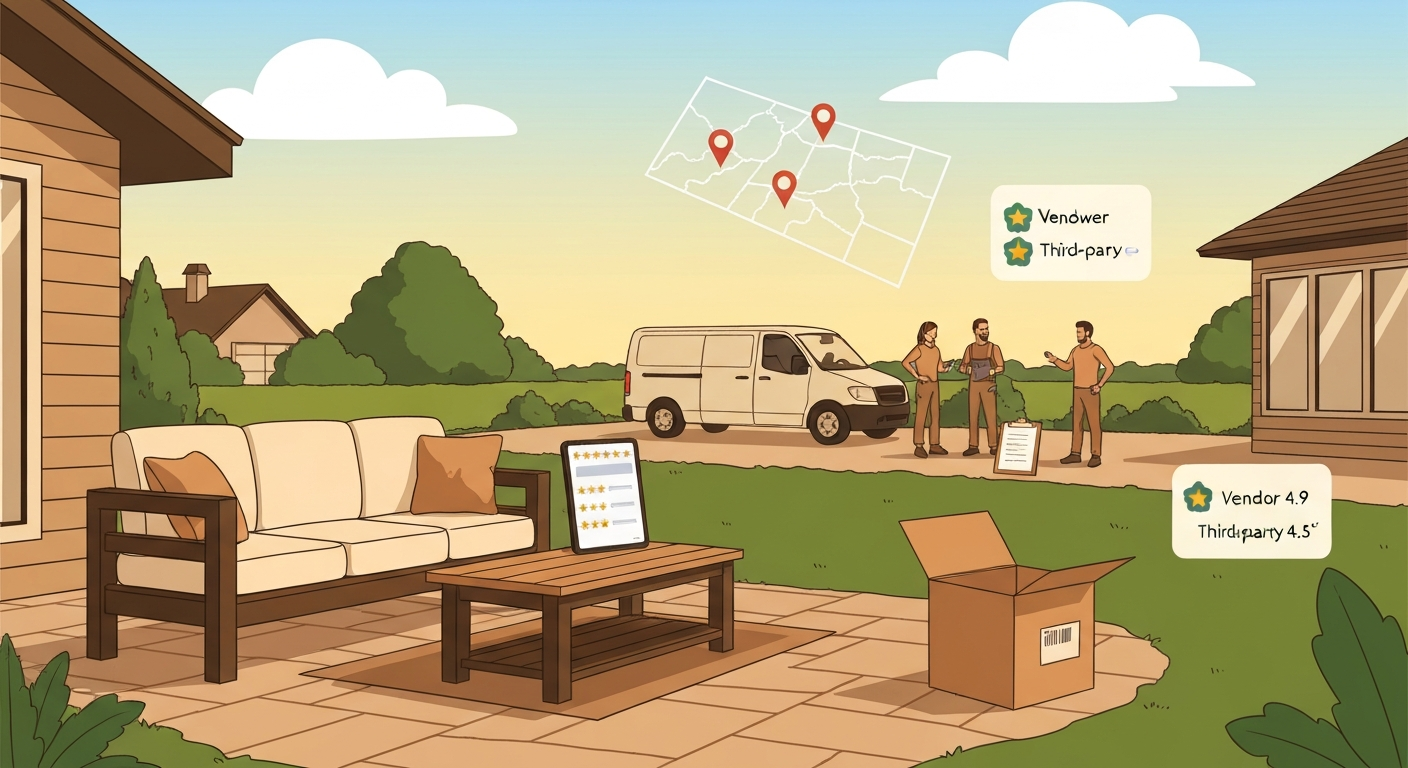
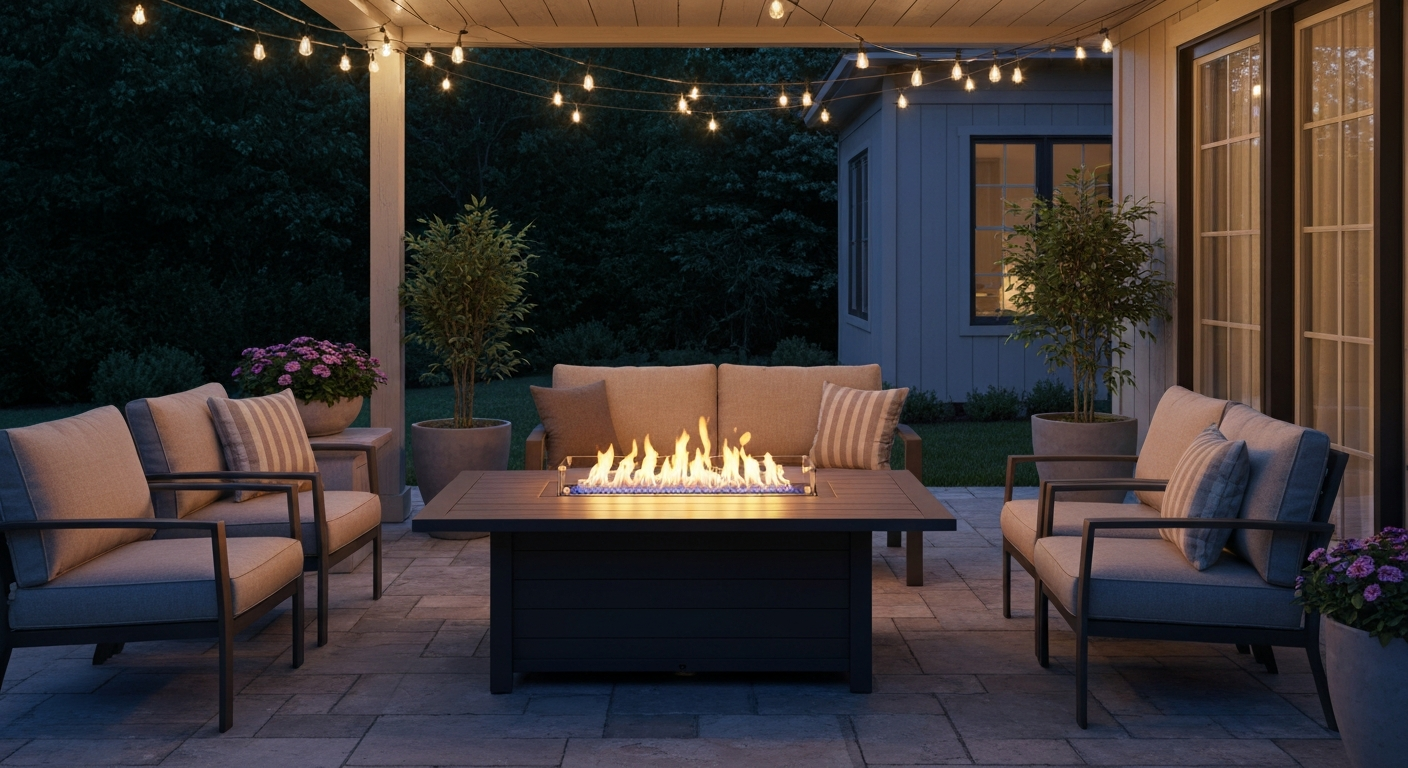
If you are shopping for a patio fire pit in 2026, the honest answer is this: the best model depends almost entirely on your fuel source, patio size, and whether you want to install it yourself or hire a contractor. Across thousands of aggregated customer reviews on platforms like Wayfair, Amazon, and Google Business Profile, freestanding propane fire pits in the $200 to $600 range earn the highest overall satisfaction scores, while built-in natural gas fire tables draw the most praise for aesthetics but also the most complaints about installation cost overruns. This guide pulls all of that together so you can compare options, vet brands, and hire confidently.
Patio Fire Pit Reviews: Top Picks, Buying & Installation

Vera Grady
9 Aug 2026
Who this guide is for and what you will find here
This article is written for North American homeowners who are somewhere in the research phase: maybe you have a rough budget, a patio size in mind, and a stack of browser tabs open. The goal here is to give you aggregated, vetted customer feedback across fire pit types and brands, a practical buying checklist, realistic price expectations, and a contractor hiring guide so you do not end up overpaying or under-specifying. Patio Reviews Guide collects and verifies reviews from real buyers, flags incentivized or unverified submissions, and publishes brand-specific pages for companies like Pangaea Patio, Patio Chef, Patio Gourmet, and Patio Range BBQ. You will find links to those pages throughout this article. Where relevant, we also cross-reference independent lab testing from outlets like Consumer Reports and Popular Mechanics, and we track CPSC recall history so safety flags surface before you buy.
How we collect and vet reviews
Every review that feeds our aggregated scores goes through a multi-step verification process. We pull customer feedback from Amazon (weighting Verified Purchase badges), Wayfair (filtering by Verified Buyer status, reviewer location, and review date), Google Business Profile (capturing ratings, review dates, and owner responses), Yelp, Angi, and the BBB. The Home Depot's refund policy page outlines return windows, refund methods, and exceptions for online and in-store purchases The Home Depot's refund policy page outlines return windows, refund methods, and exceptions for online and in-store purchases.. We flag and score separately any reviews that carry an incentivized badge, like the ones Lowe's explicitly marks under its Incentivized Reviewer Program. That means a product can have a strong average score but a footnote showing a notable share of those reviews were incentivized, which is information worth having. We also cross-check CPSC's SaferProducts.gov portal and the official recall database for incident reports and model-specific recalls. If a model has an open recall or a recent CPSC consumer alert, we display that prominently on its review page before any star rating.
The main fire pit types: a quick snapshot
Before you dive into specific models, it helps to understand what each fuel type actually delivers in everyday use. Here is a plain-language breakdown of the seven most common categories you will encounter on our review pages.
| Type | Typical BTU Range | Key Pros | Key Cons | Best For |
|---|---|---|---|---|
| Propane (freestanding) | 40,000–65,000 BTU | Portable, no gas line needed, easy ignition | Tank refills, ongoing fuel cost, shorter burn time | Renters, small patios, people who move the unit seasonally |
| Natural gas (freestanding or built-in) | 40,000–100,000 BTU | Continuous fuel supply, lower per-BTU cost | Requires gas line, professional install, not portable | Permanent patio setups with existing gas service |
| Wood-burning | Variable (no BTU rating) | Authentic crackle and scent, no fuel cost per use | Smoke, ash cleanup, restricted in many municipalities | Rural or large lots with no HOA or burn bans |
| Gel fuel | 5,000–9,000 BTU | Ultra-portable, no smoke, indoor/outdoor use | Low heat output, high per-use fuel cost | Decorative ambiance on small balconies or tables |
| Hybrid (wood + propane) | Varies by mode | Flexibility between fuel types | Complex burner systems, harder to service | Buyers who want backup options |
| Fire table | 30,000–60,000 BTU | Doubles as outdoor furniture, clean look | Higher price point, less radiant heat than bowl styles | Entertaining patios where aesthetics matter most |
| Built-in (custom) | 50,000–150,000+ BTU | Fully integrated design, high heat, premium look | Highest install cost, requires permits and licensed contractor | Permanent outdoor living spaces with larger budgets |
One safety note worth putting upfront: the CPSC issued a consumer alert in 2025 warning homeowners to stop using alcohol or other liquid-burning fire pits after flame-jetting incidents caused serious burn injuries. If you own or are considering a tabletop or gel-adjacent model that uses poured liquid fuel, check the CPSC recall database and SaferProducts.gov before you light it. A specific example is the Colsen-branded fire pit recall for flame-jetting and burn injuries, which resulted in a formal remedy program. We flag any recalled models on their individual review pages.
Freestanding vs. built-in: what the aggregated scores show
Across our current dataset of customer reviews, freestanding fire pits average a 4.1 out of 5 stars, while built-in fire pit installations average a 3.8. That half-star gap is almost entirely explained by two factors: installation experience and expectation mismatch. Freestanding units arrive boxed, set up in under an hour, and deliver on the product description. Built-in projects involve a contractor, a permit process, and sometimes a gas line extension, so there are more variables that can go wrong. When installation goes smoothly, built-in reviewers rate the finished product extremely highly, often 4.8 or 5 stars. When it does not, the contractor experience drags the overall score below 3.
Among freestanding models, propane fire tables and propane bowl-style fire pits earn the highest satisfaction scores. The most common complaints in one-star freestanding reviews are igniter failures within the first two seasons, rust on powder-coated steel bowls, and hose or regulator leaks. For built-in gas fire pits, the top complaint categories are contractor delays, permit-related hold-ups, and BTU output that fell short of what was quoted.
Brand roundups: what customers say about the major names
We maintain dedicated review pages for several brands that appear frequently in customer searches. Here is a concise summary of where each one stands based on aggregated ratings and the themes that surface most often in verified reviews.
Pangaea Patio
Pangaea Patio earns consistently positive marks for its fire tables and patio heating products. Reviewers cite clean design aesthetics, solid BTU output figures that match the manufacturer-published specs, and responsive customer support as the top strengths. The most common criticism is lead time on custom or special-order pieces. Our dedicated Pangaea Patio reviews page aggregates verified buyer experiences and tracks any changes in product quality over time.
Patio Chef
Patio Chef sits at an interesting crossover between outdoor cooking and fire feature products, offering gas fire tables alongside outdoor ovens and grills. Customer reviews on the cooking side are strong, with verified buyers consistently praising BTU accuracy and accessory compatibility. The fire table segment shows slightly more mixed results, with a handful of reviews mentioning regulator sensitivity in cold-weather climates. Our Patio Chef BBQ reviews page has the full breakdown by product category.
Patio Gourmet
Patio Gourmet draws buyers who are looking for a blend of outdoor cooking and entertaining-focused fire products. The brand scores well on value for price, particularly on mid-range fire tables. Verified reviews highlight ease of assembly and clean flame performance. Common issues flagged in lower-rated reviews include weather cover fit and limited parts availability for older models. See our Patio Gourmet reviews page for model-level detail and customer photo submissions.
Patio Range BBQ
Patio Range BBQ occupies the premium end of the outdoor cooking and fire space. Customer reviews reflect that price point: buyers generally report high satisfaction, but the gap between top and bottom reviews is wider than other brands, often depending on whether the buyer used a certified installer. Models with natural gas burner systems receive the strongest durability marks. The Patio Range BBQ review page includes verified contractor experiences alongside product reviews.
Top-rated models by category (based on aggregated user reviews)
The models below represent the strongest performers in their respective categories based on aggregated verified-buyer ratings, cross-referenced against independent lab testing from Consumer Reports (including its 2026 smokeless fire pit test) and hands-on reviews from Popular Mechanics and similar outlets. They compare categories (wood, smokeless, propane/gas, tabletop) and report burn duration, smoke reduction, and BTU/performance measurements across multiple outlets to document methodology and caveats Aggregator roundups such as Top Rated Fire Pits – Expert Reviews & Buying Guide 2026 – Flame Authority aggregate model comparisons and summarize reviewers' test methods.. Where a CPSC recall exists for any model, it is excluded from this list and flagged separately on its product page.
Smokeless wood-burning
Breeo and Solo Stove consistently top lab tests and verified-buyer scores in this category. Consumer Reports' 2026 smokeless fire pit test identified both brands as top scorers alongside Tiki and Cuisinart, measuring smoke reduction, heat output, and burn duration. Breeo models earn higher marks for secondary combustion performance in field conditions; Solo Stove draws praise for minimal ash cleanup. Both sit in the $200 to $500 range for most popular sizes. If you want a reliable performer in this segment without paying a premium, Tiki's fire pit line offers solid smokeless performance at a somewhat lower price point.
Portable propane
Outland Living's Cypress series (particularly Model 863) appears in multiple editorial roundups from Popular Mechanics, The Spruce, and BobVila, and earns strong verified-buyer ratings on Amazon and Wayfair. The manufacturer manual for the Model 863 specifies a pre-attached 10-foot hose with an adjustable regulator for a standard 20-lb LP cylinder, which reviewers frequently cite as making setup genuinely straightforward. At a street price typically between $150 and $300, it is a solid choice for smaller patios or anyone who needs a portable solution.
Propane and natural gas fire tables
This is the most crowded segment in our review database. Fire tables from brands like Endless Summer, Outland, and the Pangaea Patio line perform well in the $400 to $1,200 range for freestanding propane models. Natural gas fire tables at comparable BTU ratings tend to start around $700 for the unit alone, with installation pushing the all-in cost to $1,500 or more. The models that earn top marks combine a powder-coated steel or cast concrete frame with a stainless steel burner pan, crystal or lava rock media, and a push-button or electronic ignition system.
Built-in custom fire features
Customer satisfaction for built-in fire pits is more contractor-dependent than product-dependent. The units that receive the highest post-installation scores tend to use linear burner designs with high-BTU output in the 80,000 to 150,000 range, stainless steel burner pans, and natural gas or propane supply through a properly sized dedicated line. Brands like Patio Range BBQ and higher-end Pangaea Patio configurations appear here when installed by a licensed contractor.
Your buying checklist: what to compare before you purchase
Before you finalize any purchase, run through the following criteria. These are the factors that generate the most review disputes when buyers skip them upfront.
- Size and footprint: Measure your usable patio space and account for the 10-foot clearance from combustibles that most fire pit manufacturers specify in their manuals. Verify the dimensions of the unit before ordering, especially for fire tables where the listed size may include the frame overhang.
- Fuel type: Decide between propane, natural gas, wood, or gel before you shop. Propane is portable and requires no installation. Natural gas requires a dedicated gas line and a licensed contractor in most jurisdictions. Wood-burning may be restricted in your municipality or HOA. Gel is decorative, not a primary heat source.
- Materials: Cast iron and corten steel hold up best in wet climates. Powder-coated steel is the most common mid-range material but rusts at chip or scratch points within two to three seasons if not maintained. Concrete and stone are durable but heavier and more expensive to ship and install.
- BTU output: For genuine warmth on a cool evening, look for at least 40,000 BTU in a propane or gas model. Fire tables in the 50,000 to 60,000 BTU range are adequate for patios up to about 300 square feet. Anything below 30,000 BTU is primarily decorative.
- Ignition system: Electronic push-button igniters are convenient but fail more often in cold or damp climates, based on the igniter-failure complaints in our review database. Manual spark ignition is less convenient but more reliable long-term.
- Warranty: Most mid-range fire pit manufacturers offer a one-year limited warranty. Higher-end brands offer two to five years on the burner and frame. Confirm what is covered: many warranties exclude rust on steel components and igniter failure after the first season.
- Durability markers: Look for a stainless steel burner pan, a powder coat thickness rated for outdoor use, and a frame gauge of at least 16-gauge steel on bowl-style units. Thinner gauges warp with repeated heat cycling.
- Price tier: Budget under $200 is almost exclusively decorative or low-heat. Mid-range $200 to $600 covers most reliable freestanding propane and smokeless wood-burning options. Premium $600 to $1,500 covers fire tables and higher-output propane units. Built-in installations start around $2,000 all-in and can exceed $10,000 for custom stone or concrete designs.
What to expect on price and installation costs
Pricing for patio fire pits spans a genuinely wide range, and the all-in cost for gas models is almost always higher than the sticker price once you factor in installation. Here is what the data from customer reviews and contractor profiles on our platform shows.
| Category | Unit Price Range | Typical Install Cost | All-In Estimate | Notes |
|---|---|---|---|---|
| Portable propane (freestanding) | $100–$400 | $0 (DIY) | $100–$400 | No gas line needed; regulator and hose usually included |
| Propane fire table (freestanding) | $350–$1,200 | $0–$150 (assembly) | $350–$1,350 | Some retailers charge for white-glove delivery/assembly |
| Natural gas fire table (freestanding) | $500–$1,800 | $300–$900 | $800–$2,700 | Cost depends on distance to gas line and local labor rates |
| Built-in gas fire pit (custom) | $800–$4,000+ | $1,500–$8,000+ | $2,300–$12,000+ | Includes gas line extension, concrete/stone surround, permits |
| Wood-burning insert or bowl | $150–$800 | $0–$500 | $150–$1,300 | Higher end if set into a masonry surround |
| Smokeless wood-burning (branded) | $200–$500 | $0 (DIY) | $200–$500 | Breeo, Solo Stove, Tiki; no installation required |
Several factors push installation costs up: the distance from the existing gas supply to the fire pit location, local labor rates (which vary significantly from, say, Phoenix to Toronto), the complexity of the patio surface (concrete cutting costs more than running a line across a soft-surface patio), and whether a permit pulls an inspection fee. Homeowners in California, British Columbia, and Ontario consistently report higher all-in install costs than those in Texas, Florida, or Alberta, based on the contractor reviews in our database.
Hiring a local installer: how to vet contractors and what permits you need
This is the section most buyers skip until something goes wrong. If your fire pit project involves a gas line, a custom surround, or an electrical connection for an electronic ignition system, you need a licensed contractor. Here is how to hire one without getting burned.
Where to find and compare contractors
Start with our local review pages, which aggregate Google Business Profile ratings, Yelp reviews, Angi and HomeAdvisor listings, and BBB complaint history for outdoor living contractors in your area. When comparing contractor profiles, look at the overall star rating but also the response rate to negative reviews: a contractor who responds constructively to complaints is generally a better bet than one with a perfect score and five total reviews. Thumbtack is also useful for getting initial ballpark quotes before committing to an in-person bid.
Your contractor vetting checklist
- Verify current licensing: In the U.S., gas line work requires a licensed plumber or gas fitter in most states. In Canada, a gas fitter's certificate (Class A or B depending on province) is required. Ask for the license number and verify it with your state or provincial licensing board.
- Confirm insurance: Require proof of general liability insurance (minimum $1 million per occurrence is standard) and workers' compensation coverage. Uninsured contractors leave you liable for on-site injuries.
- Check CPSC and code compliance knowledge: Ask explicitly whether the contractor follows NFPA 58 (Liquefied Petroleum Gas Code) for propane installations or NFPA 54 (National Fuel Gas Code) for natural gas. A contractor who does not know what those codes are is a red flag.
- Get at least three written bids: Bids should itemize labor, materials, permit fees, and any gas line extension work separately. Reject any bid that provides only a single lump sum with no line items.
- Ask for references from similar projects: A fire pit installation is not the same as a deck build. Ask specifically for references from customers who had gas fire pit or fire table installs completed in the last 24 months.
- Confirm permit responsibility: Confirm in writing who pulls the permit. In most North American jurisdictions, the licensed contractor pulls the permit, not the homeowner. Be wary of any contractor who asks you to pull your own permit for gas work.
- Get a timeline in writing: Typical simple natural gas fire table installations take one to two days once materials arrive. Custom built-in projects with a masonry surround can take one to three weeks. Get a start date, a completion date, and a clause for delays.
- Review the payment schedule: Never pay more than 30 percent upfront. Structure payments to milestone completion: materials delivery, rough-in inspection passed, and final completion.
Permit considerations for North American homeowners
Whether you need a permit depends on your jurisdiction and the type of installation. As a general rule: any work that connects to a natural gas or propane supply line requires a permit and inspection in virtually all U.S. states and Canadian provinces. Freestanding propane units that use a standard 20-lb cylinder typically do not require a permit. Wood-burning fire pits may require a burn permit from your local fire authority, and some municipalities and HOAs ban them entirely. Built-in fire features with gas supply almost always require both a building permit and a gas permit, and the installation must pass a final inspection before the gas is turned on. Budget $75 to $350 for permit fees in most North American jurisdictions, though complex custom projects in major metros can run higher.
Safety, maintenance, and common troubleshooting
The most frequent safety and maintenance issues in our review database fall into predictable categories. Knowing them upfront prevents the most common one-star review scenarios.
Safety basics that most manuals underemphasize
- Keep the minimum 10-foot clearance from combustible structures, overhangs, and furniture. Most manufacturer manuals specify this, but many patio setups violate it.
- Never use a patio fire pit indoors or in an enclosed space, including three-season rooms without sufficient ventilation. Carbon monoxide poisoning is a real risk.
- Do not use alcohol or any poured liquid fuel in a fire pit not specifically designed for it. The CPSC's 2025 consumer alert on flame-jetting injuries from liquid-burning fire pits is a direct warning against this.
- For propane units, perform a soap-bubble leak test on all hose connections at the start of each season and after any hose disconnect.
- Check CPSC's recall database (recall.gov) for your model before first use each season. Recalls for fire pits, including the Colsen flame-jetting recall, have affected multiple models in recent years.
- In high-wind conditions, extinguish gas fire pits. Wind can blow out the pilot without shutting off the gas supply.
Routine maintenance by fuel type
- Propane and natural gas: Clean the burner ports with a soft wire brush at the start and end of each season. Spider webs and insect nests in burner ports are a leading cause of uneven flame and igniter failure. Replace the igniter battery or electrode assembly every two to three seasons.
- Wood-burning: Remove ash after every two to three burns. Allow the bowl to fully cool before cleaning. Inspect for rust or cracks in cast iron models annually; treat bare metal with high-heat paint rated for 1,200 degrees Fahrenheit or higher.
- Gel fuel: Replace the fuel canister if the seal is compromised. Store unused canisters in a cool, dry space away from open flame. Never add gel fuel to a burning or still-hot canister.
- All types: Cover the unit when not in use. Weather covers are the single most cost-effective maintenance step: uncovered fire pits in wet climates show rust and burner damage within one to two seasons in verified-buyer reviews.
Common troubleshooting
- Igniter clicks but does not light: Check the electrode gap (should be 3 to 5mm on most models), clean any moisture or spider-web debris from the burner, and verify the gas supply valve is fully open.
- Low flame or uneven burn: Blocked burner ports are the most common cause. Also check regulator pressure: most propane fire pits are set at 11 inches of water column pressure, and a failing regulator will reduce output significantly.
- Rust on powder-coated steel: Touch up with high-heat spray paint rated for outdoor use. If rust has penetrated to the base metal, the bowl or frame will need replacement within one to two seasons.
- Gas smell without ignition: Turn off the supply valve immediately, move away, and call your gas utility or a licensed contractor before relighting. Do not troubleshoot a gas smell yourself.
How to use Patio Reviews Guide to research your purchase
Our search and filter tools are built specifically for this kind of research. You can filter by fire pit type (propane, natural gas, wood-burning, fire table, built-in), brand, price tier, and geographic region to find reviews from buyers in climates and cities similar to yours. That matters more than you might think: a propane fire table that gets rave reviews in Arizona may have igniter problems in Manitoba winters, and our location-tagged reviews will surface that pattern. You can also filter by verified-purchase status to exclude incentivized or unverified submissions from your score calculation.
For contractor research, use the local installer directory to search by zip or postal code. Each contractor profile shows their aggregated rating, review count, review date range, complaint history from the BBB, and any owner responses to negative reviews. You can request up to three quotes directly through the platform. If you have had a fire pit installed recently, submitting your own verified review helps the next homeowner make a better decision. We verify contractor reviews by confirming the project address, approximate cost, and completion date before publishing.
Brand-specific review pages for Pangaea Patio, Patio Chef BBQ, Patio Gourmet, and Patio Range BBQ are all live and updated regularly. If you are comparing an outdoor cooking-focused brand like Patio Chef or Patio Gourmet against a fire-feature-first brand like Pangaea Patio, those pages will show you exactly where each brand performs and where it falls short, based on verified customer experiences rather than manufacturer marketing copy.
FAQ
What high-level source categories must be researched to produce an accurate, transparent North‑American article on "patio fire pit reviews"?
Include these source categories: 1) Government safety and recall databases (CPSC SaferProducts, CPSC recall pages) for incidents/recalls; 2) Independent lab/test organizations (Consumer Reports, Intertek/UL where available) for performance and test‑method results; 3) Editorial hands‑on reviews and buying guides (Popular Mechanics, This Old House, Tom’s Guide, BobVila, Serious Eats) to cross‑check testing observations and user‑facing criteria; 4) Manufacturer product pages and downloadable manuals/warranty PDFs (Pangaea Patio, Patio Chef, Patio Gourmet, Patio Range BBQ, etc.) for official specs, BTU, fuel, regulator and warranty details; 5) Major retailer listings and metadata (Amazon, Wayfair, The Home Depot, Lowe’s) to capture SKU, current price, verified‑purchase flags, reviewer media and return/refund policy info; 6) Aggregator and independent review sites for model‑level comparisons (Flame Authority and similar) to identify consensus; 7) Local contractor directories and review platforms (Google Business Profile, Yelp, Angi/HomeAdvisor/Thumbtack, BBB) to vet installers and capture response history; 8) Codes and standards bodies (NFPA 54 and NFPA 58, local adopted codes) for fuel, piping, regulator and permitting rules; 9) Manufacturer safety notices and recall pages; 10) Insurance and municipal permit guidance (municipal permitting portals or municipal code pages) for local installation requirements.
What specific factual questions should I answer about each fire‑pit model or SKU?
Collect and verify: 1) Model name/number, UPC and SKU; 2) Manufacturer and warranty terms (length, coverage, exclusions) with link to warranty PDF; 3) Fuel type(s) supported (propane, natural gas, wood, gel, hybrid) and any fuel‑type restrictions; 4) Official BTU or heat output and any manufacturer test method notes; 5) Materials and construction details (steel gauge/thickness, stainless grade, powder‑coat, cast iron, refractory); 6) Dimensions, weight and footprint; 7) Ignition type (manual, piezo, electronic) and controls (remote, key valve); 8) Included components (hose, regulator, burner pan, lava rock) and factory‑supplied hose length/pressure data; 9) Installation classification (freestanding/portable, built‑in, fire‑table) and required clearances; 10) Price range (MSRP and common retail prices across major retailers) and shipping/return policy; 11) Retailer reviewer metadata (review count, average star rating, verified‑purchase count, review date range, photos/videos); 12) Independent lab or editorial test scores and method summary; 13) Any safety incidents/recalls tied to the model (CPSC recall IDs, incident summaries); 14) Common consumer complaints and praised features from aggregated reviews; 15) Source links for every data point to preserve traceability.
What reviewer‑metadata and signals should I extract and record when aggregating customer reviews to vet authenticity and bias?
Record these fields for each review source/entry: 1) Verified‑purchase badge (Amazon, Wayfair, retailer flags); 2) Reviewer location and date of review; 3) Review text, star rating and multimedia (photos/videos); 4) Whether the review is flagged as incentivized or part of a reviewer program (Lowe’s incentivized badge, platform disclosures); 5) Reviewer history (multiple reviews on same SKU or cross‑product patterns) when available; 6) Seller vs. manufacturer vs. marketplace seller identity; 7) Presence of owner/merchant responses and timing; 8) Extremes and temporal trends (spike of negative reviews after known recall or model redesign); 9) Review translation or non‑native language indicators (possible fake review signal); 10) Removal/edited flags or reviewer account suspensions if visible. Weight verified‑purchase and non‑incentivized reviews higher and flag incentivized reviews in transparency notes.
How should I design and document the methodology for collecting and vetting reviews so readers trust the aggregation?
Document a reproducible methodology that includes: 1) Source selection criteria (authoritative retailers, manufacturer pages, independent labs, government databases, local contractor platforms); 2) Time window for included reviews (e.g., last 3–5 years with explicit cutoff date); 3) Data fields captured (see previous answer) and normalization rules for star ratings and units (BTU, dimensions); 4) Authentication and weighting rules (give higher weight to verified‑purchase, non‑incentivized, lab tests, editorial bench tests; down‑weight or label incentivized and platform‑flagged reviews); 5) Duplicate detection (same review posted across retailers) and deduplication approach; 6) Conflict‑of‑interest screening (identify manufacturer‑funded reviews, affiliate relationships, paid placements); 7) Safety and recall cross‑checks against CPSC and manufacturer recall pages; 8) How aggregate scores are computed (median vs. mean vs. weighted average) and thresholds for “top‑rated”; 9) Manual sample‑audit procedures (human spot checks of a percentage of reviews for accuracy); 10) Date‑stamped audit trail and links to the raw data sources for transparency.
Which independent tests, standards and safety sources must be checked to support safety, maintenance and installation guidance?
Check and cite: 1) CPSC SaferProducts and CPSC recall notices for incident and recall histories; 2) NFPA 54 (National Fuel Gas Code) and NFPA 58 (Liquefied Petroleum Gas Code) for gas piping, regulator and clearances guidance; 3) UL, CSA or other certification listings for burners and gas components (where applicable); 4) Manufacturer instruction manuals and safety bulletins for model‑specific clearance, combustion and maintenance procedures; 5) Independent lab testing reports (Consumer Reports and similar) for actual smoke, heat and stability testing; 6) Municipal permitting pages and local fire codes for open‑burn or gas appliance permitting rules; 7) Insurance carrier guidelines for outdoor appliances and built‑in installations (if available).
What buyer‑facing comparison criteria and checklist items should the article include, and what data points must back each criterion?
Include these criteria with required supporting data: 1) Size and footprint — measured dimensions, recommended clearance and seating‑area fit; 2) Fuel type — manufacturer‑stated fuel(s), regulator/pressure requirements, and line‑sizing notes (NFPA references); 3) Materials and durability — material type/grade and thickness, corrosion warranty and test observations from independent reviews; 4) Heat output/BTU and effective heating area — manufacturer BTU plus lab/field observations; 5) Ignition and controls — ignition type, sparker reliability notes from review citations; 6) Installation complexity/cost — whether portable or built‑in, required gas hookup, expected contractor labor and permit cost ranges; 7) Maintenance and expected lifetime — cleaning frequency, refractory replacement, warranty exclusions; 8) Safety features — auto shutoff, flame failure device, CSA/UL listings and historical incident reports; 9) Price range and value — MSRP, typical retail price bands, shipping costs and return policies; 10) Warranty and support — warranty length, claim process and known consumer experience with claims. Back each item with citations to manufacturer specs, lab tests, retailer price scraping, and aggregated customer feedback.
Next Article
Pangaea Patio Reviews: Ratings, Pros, Costs & Installers, Guide
Pangaea Patio reviews: unbiased verdict, ratings, common pros/cons, pricing & installer tips for North American buyers