
A well-matched patio misting system can drop the air temperature around you by up to 35°F when the droplets fully evaporate before hitting your skin or furniture. Whether that actually happens depends on three things: enough water pressure (or a pump), nozzles sized for your layout, and a maintenance routine that keeps mineral buildup from killing the mist within weeks. Get those right and reviews are almost universally positive. Get them wrong and you'll see the same complaints cycle through every retailer page: fittings that leak, heads that clog after a day, and mist that just soaks everything instead of cooling the air.
Patio Misters Reviews Guide: What Buyers Actually Say

Vera Grady
3 Jul 2026
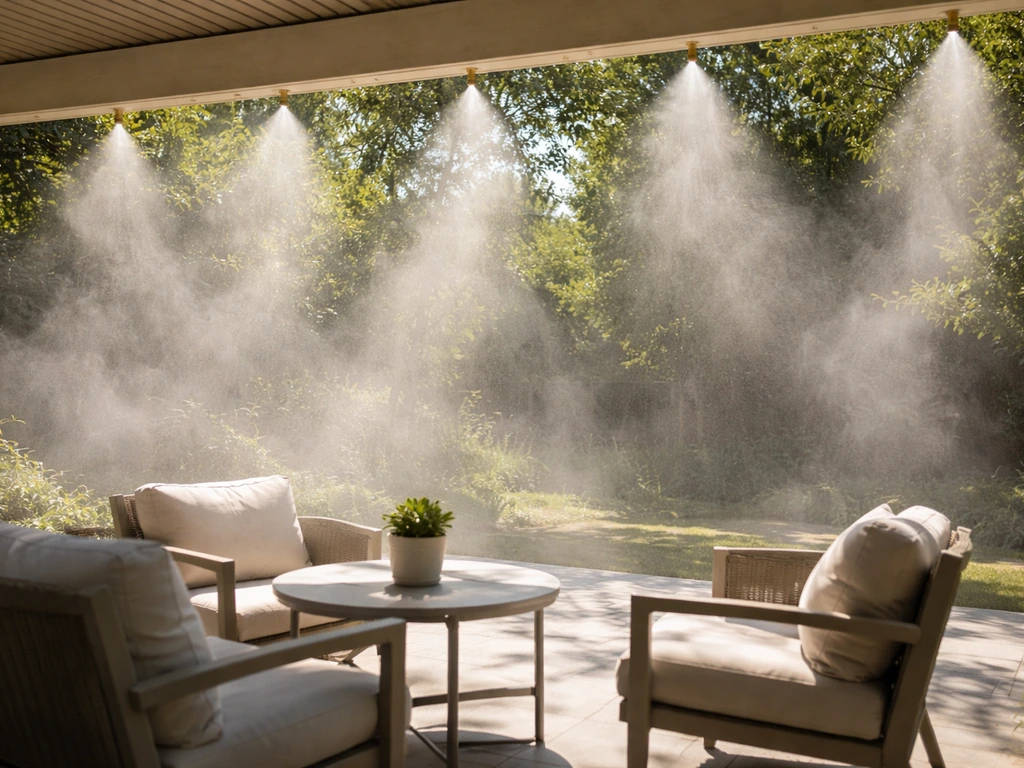
What a patio mister actually does (and what reviews reveal)
A misting system forces water through tiny nozzles to create a fine fog. When those droplets are small enough, they flash-evaporate on contact with warm, dry air, pulling heat out of the surrounding space in seconds. That's the science behind the 35°F temperature drop figure. The catch is 'small enough.' Low-pressure DIY setups running off a standard garden hose (45–80 PSI) produce larger droplets that can fall and wet surfaces rather than evaporate. High-pressure pump systems, typically running 1,000 PSI or more, produce a true fog that's far more likely to flash-evaporate, especially in hot, dry climates like Phoenix or Las Vegas.
What reviews actually reveal about this: positive reviews tend to cluster around systems that match pressure to climate. A Walmart reviewer running Orbit at normal house pressure reported a 'really great mist' for their setup, while a Home Depot reviewer with 'good water pressure' called a similar kit disappointing. The difference is almost never the brand alone. It's usually pressure, nozzle spacing, mounting height, or water quality.
Reviews that skip those details are hard to use as a buying signal, which is exactly why you need to know what to look for before you read them. If you are specifically searching for patio casual reviews, focus on what reviewers say about pressure, nozzle fit, and maintenance so you can avoid common disappointment points patio mister reviews.
Top review criteria to compare systems (cooling, coverage, mist quality)
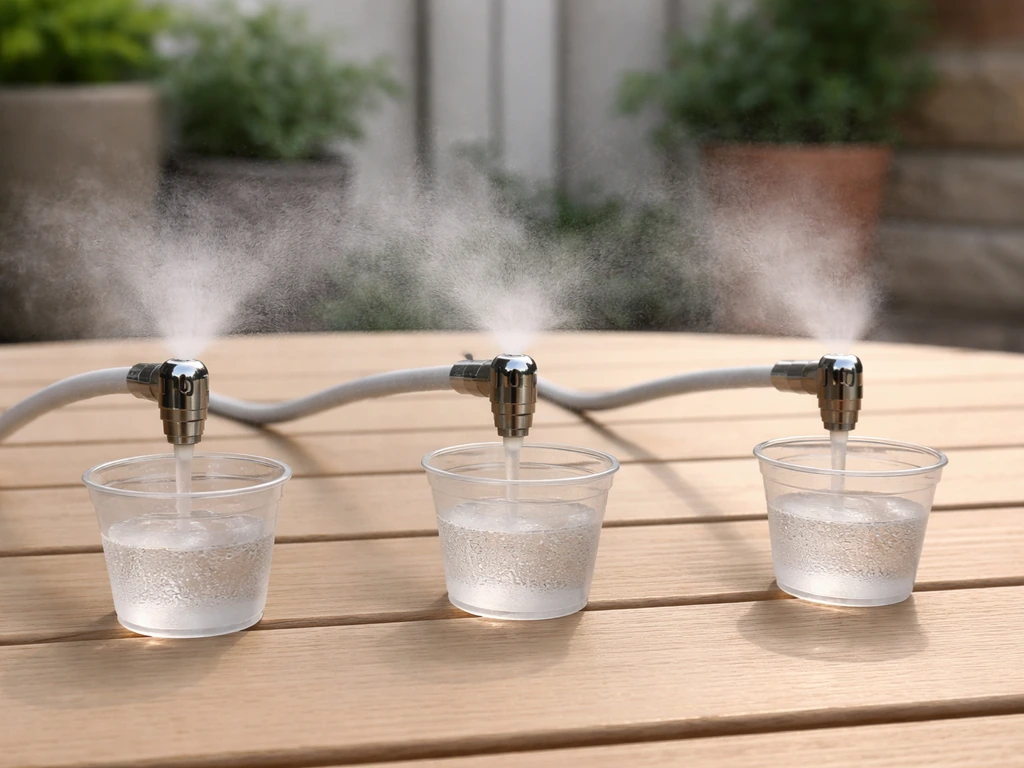
When you're reading through product pages, Reddit threads, or contractor reviews, these are the signals worth tracking. Vague star ratings without context are nearly useless. Specific detail about operating conditions tells you everything. If you are specifically looking at brand-style feedback, patio mister reviews about cooling performance and mist quality are the closest related comparison to use before buying.
| Review Criterion | What to Look For | Red Flag in Reviews |
|---|---|---|
| Cooling performance | Reviewer mentions climate (dry vs. humid), temperature drop felt, how long effect lasted | Generic 'it works great' with no location or conditions |
| Mist quality | Fog vs. visible spray, no wet surfaces, droplets evaporate before landing | 'Soaks everything,' 'more like a sprinkler,' 'felt wet immediately' |
| Coverage area | Specific patio size covered, nozzle count, mounting height used | 'Doesn't reach the whole patio,' no size details given |
| Pressure & pump | Reviewer confirms whether they used a pump or ran off house pressure, PSI mentioned | No mention of pressure at all, or pump mentioned but no PSI detail |
| Clog/leak frequency | How soon after install problems appeared, whether mineral filters were used | Clogs or leaks within days of install with no hard water mention |
| Durability | Seasonal use over multiple years, UV/sun exposure noted, material (brass vs. plastic) | Nozzles failed within one summer, fittings cracked |
| Maintenance effort | Filter change schedule mentioned (every 3–6 months), ease of nozzle cleaning | Reviewer gave up after one season due to upkeep |
| Install experience | DIY vs. contractor, time to install, fitting quality noted | Contractor ghosted after install, warranty voided by third-party install |
For high-pressure pump systems specifically, pay attention to reviews that mention the pressure switch. MistCooling's manual notes an adjustment range of roughly 10–100 PSI on the switch, and if it's not dialed in correctly the pump will short-cycle, reducing mist consistency. A reviewer who says the system 'pulses' or 'keeps turning on and off' is almost always describing a pressure switch issue, not a defective unit.
Common complaints in patio mister reviews (clogs, leaks, noise, upkeep)
The same four complaints appear across virtually every review thread and retailer page, regardless of brand or price point. Understanding why they happen helps you decide whether a complaint reflects a bad product or a bad setup. If you want to narrow down your options, patio scenes reviews are a good place to start for what people actually experienced in real setups patio mister reviews.
Clogged nozzles
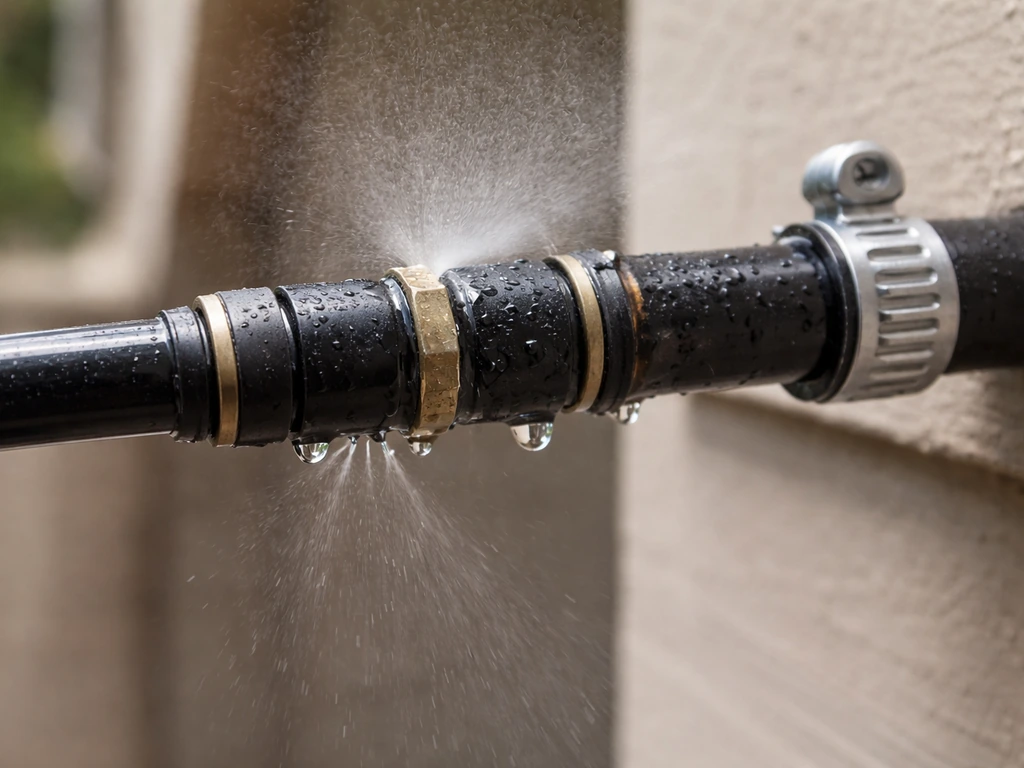
This is by far the most common complaint, and it almost always comes down to water quality. Mineral-heavy water, especially in cities like Las Vegas or Phoenix, can crust over nozzle orifices within weeks. One Vegas-area commenter reported heads failing and crusting over in under a month. Orbit's own troubleshooting guide recommends soaking nozzles in cleaning solution for about 30 minutes and checking fitting security regularly. The real fix is upstream: use a calcium inhibitor filter (Orbit sells one specifically for this) and change your inline filter every 3 to 6 months, or sooner if your water is particularly hard.
Leaking fittings
Leaks at fittings right after install are extremely common and often misread as product defects. One Slip Lock misting system manual actually notes that some water around fittings at first startup can be normal during pressurization. The actual causes are usually under-tightened connections, nozzles seated at an angle, or using the wrong thread tape. Orbit's assembly guide specifically calls for flushing the line at full pressure to clear debris before final use. If a reviewer says it leaked immediately and they returned it, check whether they mention any install steps or whether they simply connected it and turned on the water.
Pump noise
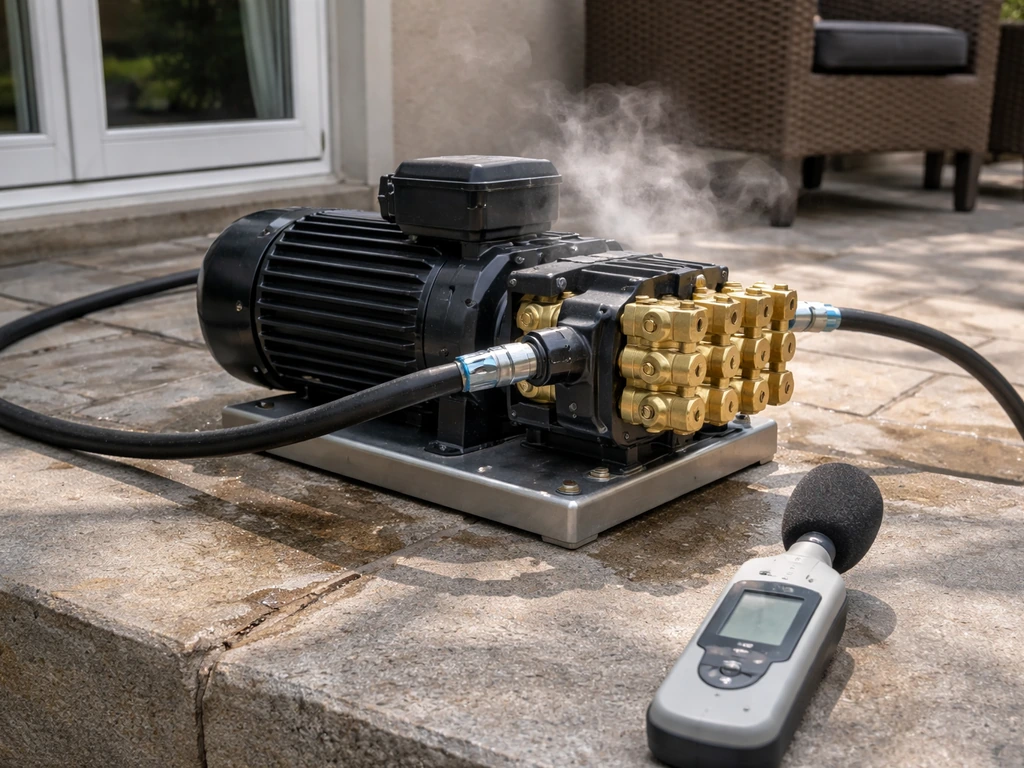
High-pressure pump systems are audible. At 1,000 PSI you will hear the pump running, and some reviewers flag this as a dealbreaker for quiet outdoor spaces. If noise is a concern, look for reviews that specifically mention decibel level or whether the pump was mounted away from the seating area. Many installers recommend positioning the pump unit at least 10–15 feet from the main seating zone.
Upkeep burden
Low-maintenance is a common marketing claim that doesn't hold up in hard-water regions. The most honest reviews acknowledge that filter changes every few months and an annual nozzle cleaning are part of ownership. Systems that include auto-drain valves (like some Orbit kits) help clear the line when pressure drops, which reduces standing water and slows mineral buildup, but they don't eliminate it. Koolfog’s nozzle description also targets mineral buildup and drip after the system is shut off, which matches complaints about wetting tied to off-cycle behavior drip that can occur when the system is shut off. Reviewers who complain about constant maintenance in year two usually skipped filter upkeep in year one.
Installation vs DIY: how reviews differ by installer and how to judge reliability
DIY and professionally installed misting systems get very different review profiles, and most of the difference comes from setup decisions made at install, not from the hardware itself.
DIY reviews tend to be more variable. Success stories usually come from homeowners who read the manual, flushed the line before first use, and added a filter upfront. One Home Depot reviewer described using Orbit kits over more than 10 years by connecting sections incrementally to expand coverage as their patio grew, which is exactly the kind of outcome DIY is capable of producing. Failure stories are often from people who expected plug-and-play results without pressure-checking their setup first. If your hose spigot delivers between 45 and 80 PSI, most Orbit-style kits will run without a pump. Outside that range you need either a pump or a pressure reducer.
Professionally installed systems get better reviews overall for coverage and consistency, but the service experience varies a lot by contractor. The biggest red flag in professional install reviews is warranty ambiguity. Some manufacturers, including aerMist, explicitly state that warranties do not apply to consumer or third-party installations, meaning a bad contractor install can leave you with no recourse. When reading reviews of outdoor patio companies or misting specialists, pay attention to whether reviewers mention follow-up support after install.
A contractor who disappears after the job gets recurring mentions in negative reviews. Specialty outdoor retailers and patio companies (the kind reviewed on platforms like this one) often do better here because they have a reputational stake in your long-term satisfaction, compared to a one-off installation crew.
Some homeowners research the contractor side through the same review aggregators they use for products. Reading reviews for patio enclosure installers and specialty outdoor retailers in your area can surface contractors who specifically handle misting system work alongside their main services. This cross-referencing is worth doing before committing to anyone, since installation quality drives a huge share of the variance you see in customer outcomes.
Climate and patio layout considerations (heat/humidity, wind, surface type)
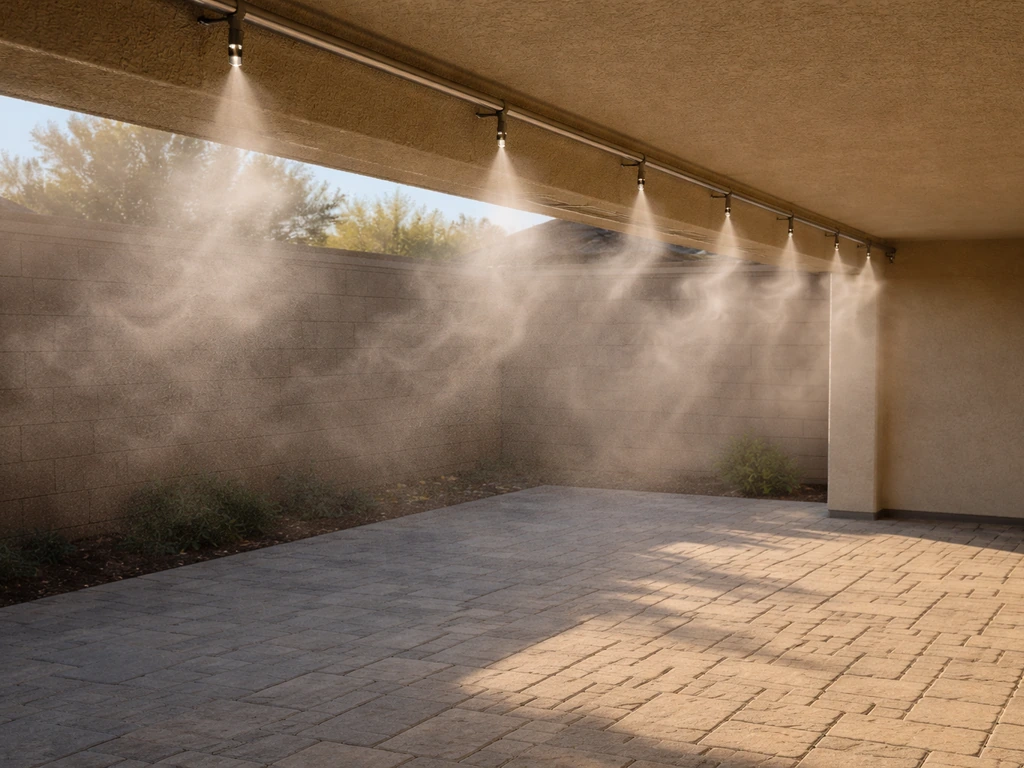
Misting systems are not one-size-fits-all, and climate is probably the single biggest factor determining whether you'll be thrilled or disappointed. Evaporative cooling only works when the surrounding air has room to absorb more moisture. In dry climates like Arizona, Nevada, or the inland Southwest, even a lower-pressure system delivers a noticeable temperature drop because the humidity is low enough for rapid evaporation.
In humid climates like Florida, Houston, or coastal areas, the air is already saturated, so droplets don't evaporate as efficiently and you end up getting wet rather than cool. If you live in a humid region, you need a very high-pressure system (1,000 PSI range) with ultra-fine nozzles to maximize the chance of evaporation, and even then, results are more modest.
Layout matters just as much. Mounting height is one of the most under-discussed factors in reviews. Koolfog's design guide is explicit that [nozzle selection and spacing change when you mount above roughly 8 to 10 feet](https://www. globalindustrial.
com/site/images/universal/KOOLFOGPUMPS/Koolfog-Misting-Design. pdf? srsltid=AfmBOopq4cpy1f3vN1fISyd8kDGWZuX6SuFcjltvRIx1pWxrWJhOaCi3). aerMist's support guidance similarly notes that lines installed lower than about 9 feet with limited airflow may need different nozzle sizing.
Most DIY reviewers mount at whatever height feels convenient without adjusting nozzle type, then wonder why coverage is uneven. Wind is another variable: if your patio is exposed to consistent crosswinds, mist drift will carry the fog off the target area before it can cool it. A partially enclosed or covered patio holds mist longer and produces better results, which is one reason patio enclosure and cover projects often get bundled with misting system installs by specialty contractors.
- Dry climate (under ~30% humidity): Even mid-pressure systems deliver strong cooling. Focus reviews on coverage and durability.
- Moderate climate (30–50% humidity): High-pressure pump systems recommended. Look for reviews confirming evaporation, not just mist visibility.
- Humid climate (50%+ humidity): Results will be limited. Prioritize ultra-fine nozzle reviews and manage expectations.
- Covered/enclosed patio: Mist stays in the zone longer, improving efficiency. Works well with lower-pressure setups.
- Open/windy patio: Mist drifts. Space nozzles more densely or use a perimeter layout per professional design guides.
- Hard surface (concrete, pavers): Wet spots from over-misting show quickly. Reviews mentioning wet furniture are a layout/nozzle-size signal.
- Wood decking: Ongoing wetting causes long-term damage. High-pressure flash-evaporation systems are strongly preferred.
Questions to ask before buying or hiring a patio mister installation
Whether you're buying a kit from a retailer or hiring a patio company for a full installation, these questions will help you filter out bad fits before you commit. The answers also tell you a lot about whether a seller or contractor actually knows their product.
- What's my current hose spigot PSI, and will this system run on it, or do I need a pump? (Any seller who can't answer this is a red flag.)
- What nozzle spacing and mounting height do you recommend for my patio dimensions?
- Does this kit include an inline filter, and what type? Is a calcium inhibitor filter available or recommended for my area's water quality?
- What's the filter replacement interval, and what does nozzle cleaning involve season to season?
- If I'm in a high-humidity climate, what PSI level do you recommend to still get evaporative cooling?
- What does the warranty cover, and does it apply if I install myself or use a third-party contractor?
- Do you have customer reviews or references specifically from my climate region or a similar one?
- What's the expected lifespan of the nozzles and pump under normal use conditions in my area?
- Can the system be expanded later if I want to cover a larger area?
- For contractor installs: what follow-up support or service calls are included after installation?
Quick shortlist checklist and next steps based on your patio size and budget
Use this decision framework to narrow down what kind of system and sourcing approach makes sense before you dive into reading specific product or contractor reviews. The goal is to filter your research, not replace it.
| Your Situation | Best-Fit System Type | DIY or Pro? | Key Review Signal to Prioritize |
|---|---|---|---|
| Small patio (under 150 sq ft), dry climate, tight budget | Low-pressure hose kit (45–80 PSI), 12–24 nozzles | DIY | Nozzle mist quality, filter included, easy flushing steps |
| Medium patio (150–400 sq ft), dry/moderate climate | Mid-range kit with optional pump, 24–36 nozzles | DIY or pro | Coverage consistency, pressure compatibility, long-term reliability reviews |
| Large patio (400+ sq ft), any climate | High-pressure pump system (1,000 PSI), custom nozzle layout | Pro strongly recommended | Installer follow-up support, warranty clarity, contractor reviews in your region |
| Humid climate (any size) | High-pressure pump, ultra-fine nozzle spec | Pro preferred | Evaporation confirmed (not just mist visible), reviewer humidity/location noted |
| Hard water region (Vegas, Phoenix, Southwest) | Any system + calcium inhibitor filter as mandatory add-on | Either, but filter is non-negotiable | Clog frequency after weeks/months, filter maintenance mentioned by reviewer |
For next steps: start by checking your hose spigot pressure with an inexpensive gauge (under $15 at any hardware store) before buying anything. That one measurement tells you whether you need a pump and which product tier to look at. Then search reviews specifically filtering for your climate region and patio size, not just star averages.
For a quick patio link review, focus on whether the system matches your local pressure range and nozzle setup, since those details drive most of the satisfaction or complaints. If you're leaning toward a contractor install, pull reviews for local outdoor patio businesses in your area, looking specifically for mentions of misting system work, post-install support, and warranty handling.
Specialty patio retailers tend to have the most detailed customer feedback across service and product categories, which makes comparison easier than relying on single-retailer review pages alone.
If you're exploring other outdoor upgrades at the same time, some of the same outdoor living companies that handle misting systems also work on patio enclosures, pergola builds, and full outdoor room designs. Reading aggregated reviews for those businesses often surfaces misting system installation quality as a side note, which can be a useful shortcut to finding contractors worth calling.
FAQ
How do I tell from patio misters reviews whether the mist will actually cool or just get everything wet?
Look for mentions of droplet size and evaporation behavior, not just “cool” or “refreshing.” The reviews that describe cooling without damp furniture usually include details like hot dry weather results, quick dry time, and whether they adjusted nozzle spacing or mounting height for their layout.
If my water pressure is within the recommended range, do I still need a pump?
Sometimes, but confirm with a real measurement at the outdoor spigot and again while another tap is running. Several reviews attribute weak mist to pressure drop under load, not to the kit itself. If your gauge fluctuates or drops below the kit’s target range, a pump or pressure regulator may still be needed.
What should I check if reviews say the nozzles clogged quickly but I have hard water filters installed?
Verify that the filter is sized for the flow rate of the system and that it is changed on schedule. Also search for reviews that mention whether they flushed the lines before first use, because debris from installation can foul nozzles even when hard-water control is present.
Do patio misting systems require winterization, and will winter damage show up in reviews?
Yes, especially in freeze climates. Reviews that complain about leaking or broken fittings next season often come from systems left pressurized or without draining/air purge. Systems with auto-drain features help, but you still want review details on whether the installer or owner drained the lines properly before freezing weather.
Are leaks after install always a defect?
Not usually. Reviews that include “water around fittings at first startup” or mention pressurization can be normal during the initial cycle. What matters is whether the reviewer reports persistent dripping after tightening, reseating nozzles, and correcting thread tape usage.
How loud are high-pressure pump systems really, based on patio misters reviews?
Noise complaints are common, but some reviewers specify where the pump was mounted relative to seating. If you care about sound, prioritize reviews that discuss pump placement distance, enclosure/vibration mounting, and whether the pump noise was intermittent due to pressure switch cycling.
What causes uneven mist coverage that reviews call “patchy” or “some areas get wet”?
The usual culprits are nozzle spacing, mounting height, and wind exposure, not random bad parts. Reviews that include photos or mention they changed nozzle types for their mounting height tend to have better outcomes than reviews that assume “one kit fits all” layouts.
How can I use patio misters reviews to judge the quality of a contractor install?
Filter for reviews that discuss post-install support, warranty handling (who the warranty actually covers), and whether the contractor adjusted nozzle setup after testing. If a reviewer says the company “disappeared” after problems or warranty coverage excluded third-party work, that is a strong negative signal.
Are DIY installations more likely to have problems, and what do successful DIY reviews do differently?
Yes, DIY outcomes vary because small setup steps matter. Reviews that go well often mention flushing the line, installing a calcium inhibitor or properly maintaining filters, and expanding coverage in planned sections rather than rushing connections without pressure checks.
What’s the right way to interpret star ratings for patio misters reviews?
Treat star ratings as weak evidence unless the reviewer describes operating conditions. The most useful reviews include local climate (dry vs humid), approximate patio size, mounting height, and whether the system used a pump or relied on hose pressure.
Do auto-drain valves eliminate maintenance in hard-water areas?
They reduce standing water and can slow mineral buildup, but they do not prevent clogging on their own. Reviews that say “no maintenance needed” in hard-water regions are often contradicted by later mentions of filter swaps and periodic nozzle cleaning.
What’s a quick pre-purchase check I can do before reading more reviews?
Measure your hose spigot pressure with a gauge and note your typical patio environment (open to crosswinds, covered/partially enclosed, and whether humidity is high). That single combination determines the pressure tier, the likelihood of evaporation, and whether the review comparisons you read will be relevant to your situation.
Next Article
Patio Scenes Reviews: How to Choose the Right Patio Provider
Translate patio scenes reviews into a shortlist: verify the right Patio Scenes entity and assess work, timelines, and re