
Southern California patio reviews are most useful when you match them to your exact project type, whether that's a new patio slab, a wood or aluminum patio cover, a screen or glass enclosure, or a patio furniture retailer. Once you filter by project type and city, look for review patterns around workmanship quality, permit handling, timeline accuracy, and how the contractor handled problems. That combination tells you far more than a star rating alone.
Southern California Patios Reviews: How to Compare Contractors

Vera Grady
5 Jun 2026
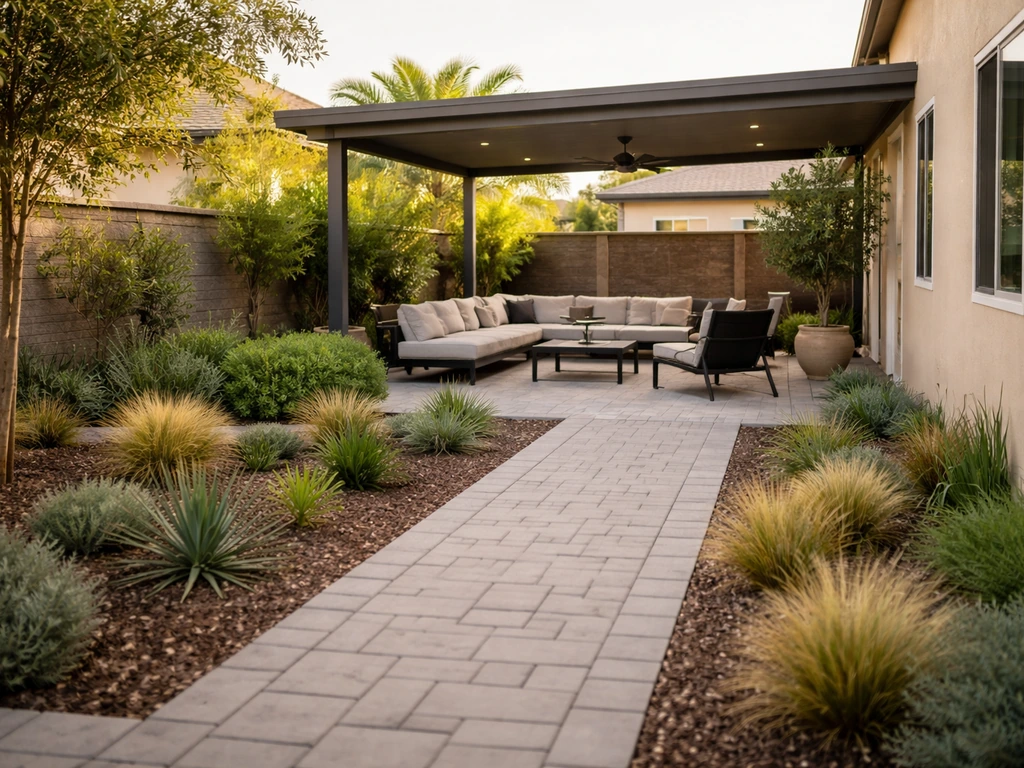
What Southern California patio reviews should actually cover
The phrase 'Southern California patios' covers a wider range of businesses than most people realize. Before you start reading reviews, it helps to know which category you're dealing with, because the signals you want to see in reviews are different for each one.
- Patio contractors and installation companies: These build hardscape patios, pour concrete, lay pavers, and handle full outdoor living construction. Reviews here should speak to structural quality, subgrade prep, drainage planning, and whether the finished surface held up after a season.
- Patio cover and enclosure installers: These handle aluminum or wood patio covers, lattice covers, pergolas, and glass or screen enclosures. Look for reviews that mention permit pulling, final inspections, wind-load design, and how the cover performed after Santa Ana wind events.
- Patio product and supply retailers: These sell furniture, pavers, concrete products, and outdoor accessories. Reviews should address product quality on arrival, delivery reliability, staff knowledge, and return/warranty handling.
- Design-build outdoor living firms: These combine design services with construction and installation. Reviews need to show consistency from the design phase all the way through final cleanup.
Southern California's climate adds a layer of specificity that matters. Heat cycling in the Inland Empire, marine layer humidity on the coast from Long Beach to San Diego, and high wind events across much of the region can stress patio materials differently than other parts of the country. The best reviews will mention how a product or installation held up through at least one summer, ideally longer.
How to search and filter reviews by city and patio type
Generic searches like 'patio company near me' surface too much noise. A more targeted approach gets you to relevant reviews faster and filters out businesses that operate in a different part of SoCal or specialize in a different service type.
- Start with your city or neighborhood, not just 'Southern California.' Cities like San Diego, Chula Vista, Irvine, Long Beach, Riverside, and Temecula have distinct contractor markets, permit processes, and price ranges.
- Add the project type to your search: 'patio cover installer Temecula,' 'concrete patio contractor San Diego,' or 'patio enclosure company Irvine' will surface far more relevant reviews than a broad search.
- Use multiple review platforms. Cross-reference what you find here with BBB.org, where you can search by business name and see both customer reviews and formal complaints filed against a company. A business's BBB profile shows its accreditation status and complaint history side by side.
- Filter reviews by date. Reviews older than two years may reflect a company under different ownership, different staff, or different material suppliers. Prioritize reviews from 2024 and 2025.
- Search for project-specific language in reviews. Terms like 'permit,' 'inspection,' 'lattice,' 'Alumawood,' 'pavers,' or 'enclosure' help you find reviewers who had a similar project to yours.
If you're in San Diego County specifically, it's also worth checking whether reviews mention permit requirements. San Diego has a 300-square-foot exemption concept for certain freestanding patio covers that meet height and openness conditions, but solid roofs almost always trigger structural permit requirements. Reviewers who mention permit experience give you a realistic picture of the contractor's local code knowledge.
What to look for in patio contractor reviews
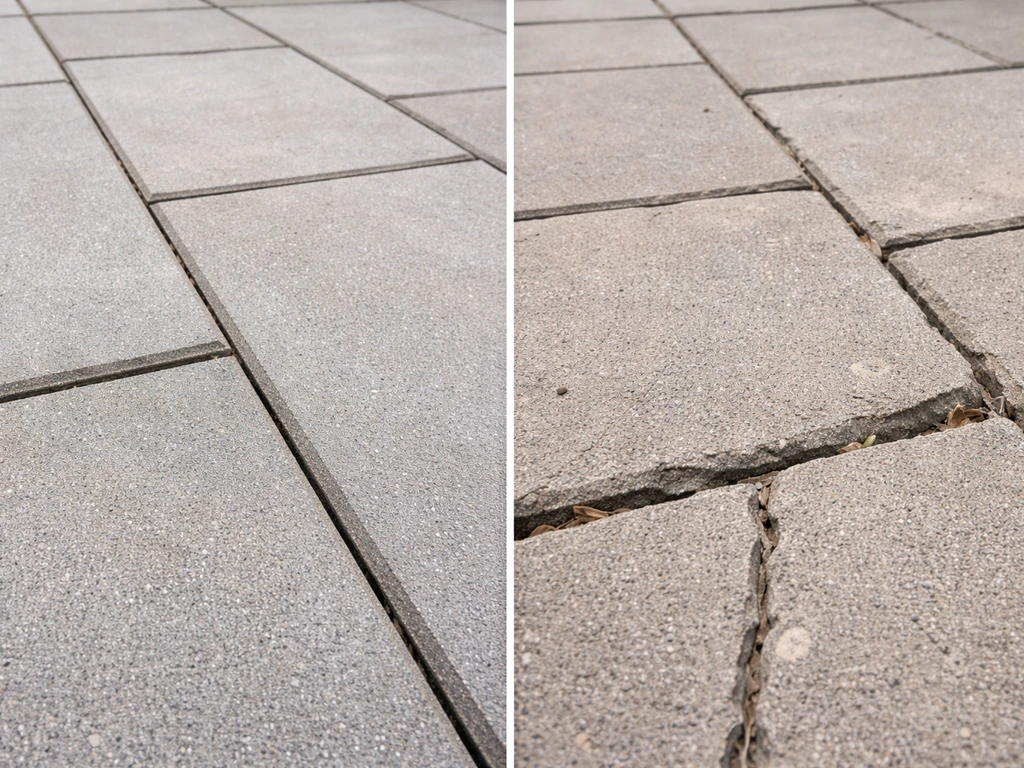
A five-star rating without detail is nearly worthless. What you want are reviews that describe specifics. Here's what the best reviews tell you, and what it means when those details are missing.
Workmanship quality
Look for reviews that describe the finished product after time has passed, not just on completion day. Concrete that cracks within six months, patio covers that leak at the beam connections, or pavers that shift after the first rainy season are all failure patterns that show up in follow-up reviews. Reviews mentioning 'still looks great two years later' or 'held up through wind season' are worth more than reviews that say 'beautiful job' with no timeline context.
Timeline and communication

Reviewers who describe a start date that slipped by weeks, or who had to chase the contractor for status updates, are warning you about a company that over-books or under-staffs. Conversely, reviewers who mention that the contractor communicated proactively about material delays or weather holds are describing a contractor who manages expectations well, which matters just as much as finishing on time.
Permit handling and inspections
In California, any patio work that requires a building permit must be permitted, regardless of how minor the contractor makes it sound. Los Angeles and its surrounding cities include wind-load requirements in their patio cover codes, and final inspections are required for permitted enclosures.
California Residential Code Appendix AH provides relaxed patio cover provisions and explicitly addresses structural design-load topics, including wind load determination for screen enclosure loading using projected frontal area wind-load determination for screen enclosure loading using projected frontal area. Reviews that mention the contractor pulled permits, handled the inspection process, and passed without issues are a positive signal.
Reviews that mention 'no permit needed' for a structural cover or enclosure should make you pause and verify that claim with your city's building department.
Change orders and pricing
Under California law, any change to the contract scope or price must be documented in a written change order, signed by both the customer and contractor before the change is made. Reviews that mention a contractor added costs verbally or after the fact are describing a contractor operating outside of what the law requires. This is one of the cleaner signals in reviews because homeowners tend to mention it explicitly when it goes wrong.
Cleanup and final walkthrough
Reviews that mention leftover debris, unmoved equipment, or a contractor who disappeared before the final walkthrough describe a company that doesn't close out projects properly. This seems minor until you're left with a pile of cut lumber or concrete waste on your driveway for a week.
Warranty and post-project support
Reviewers who came back to update their review six months or a year later, especially those who mention the company returned to address a minor issue at no charge, are telling you something important about the contractor's long-term reliability. A warranty means nothing if the company is unreachable after payment clears.
How to compare your top-reviewed options
Once you've narrowed your list to two or three candidates based on reviews, use a simple scorecard to compare them side by side. This keeps you from picking based on the most recent positive review instead of the overall pattern.
| Criteria | Contractor A | Contractor B | Contractor C |
|---|---|---|---|
| Average rating (recent 12 months) | |||
| Reviews mention workmanship quality | Yes / No | Yes / No | Yes / No |
| Reviews mention permit handling | Yes / No | Yes / No | Yes / No |
| Reviews mention timeline accuracy | Yes / No | Yes / No | Yes / No |
| Reviews mention written change orders | Yes / No | Yes / No | Yes / No |
| Reviews mention post-project support | Yes / No | Yes / No | Yes / No |
| Complaints on BBB (last 3 years) | |||
| CSLB license verified (active) | Yes / No | Yes / No | Yes / No |
| Workers' comp confirmed | Yes / No | Yes / No | Yes / No |
| Project photos available | Yes / No | Yes / No | Yes / No |
Fill this out for each company before you call anyone. You'll notice pretty quickly if one contractor has great ratings but no permit mentions, or strong workmanship reviews but a pattern of BBB complaints about billing. The scorecard surfaces those contradictions before you're sitting across from a salesperson.
If you've been looking at reviews for specific sub-regions, related review categories like Orange County patio company reviews or valley patios reviews can give you a useful comparison point for pricing norms and workmanship standards in neighboring markets.
Questions to ask before hiring and what to request in quotes
Reviews tell you what past customers experienced. Your consultation is where you confirm whether those patterns still hold. Come to every quote with the same list of questions so you're comparing apples to apples.
- What is your CSLB license number, and can I verify it before we proceed? (Then actually check it at the CSLB online license lookup tool. Confirm the license is active, the classification matches your project type, and that workers' compensation is on file if they have employees.)
- Will you pull the permits for this project, and which city department handles the inspection?
- Does this project require structural engineering or wind-load calculations under the local building code?
- What is the payment schedule, and what is the down payment? (California law caps the down payment at $1,000 or 10% of the contract price, whichever is less. If a contractor asks for more upfront, that's a legal violation, not just a yellow flag.)
- What does your written warranty cover, and for how long?
- How do you handle change orders if the scope or materials need to change mid-project?
- Can you provide references from projects in my city completed in the last 12 months?
- What does the project timeline look like from signed contract to final inspection, and what can delay it?
On the quote itself, request an itemized written contract that lists scope, materials, labor, payment schedule, and start/completion dates. CSLB homeowner checklists also recommend verifying a contractor license online and using safe down-payment terms such as 10% or $1,000, whichever is less, along with a schedule of payments blank" rel="noopener noreferrer">verifying the contractor license online. Every change after signing must be a written change order, signed by both parties before work proceeds. If a contractor resists putting something in writing, that resistance is your answer.
Red flags in reviews and how to avoid bad patio projects
Most bad patio projects leave a paper trail in reviews before they become your problem. Here's what to watch for. If you are specifically looking at Wing Place, wing place patio reviews can help you spot patterns in workmanship, permits, and scheduling before you book a site visit.
- Vague pricing complaints: Reviews that mention the final cost was significantly higher than the quote, with no mention of a written change order, describe a contractor who adds charges informally. Avoid.
- No project photos in the company's portfolio: A legitimate patio contractor in Southern California accumulates dozens of project photos over time. An absence of photos, or only computer-rendered 'before/after' images, suggests limited real-world project history.
- Reviews mentioning work without permits on a structural project: A contractor who skipped permits on a patio cover or enclosure is leaving you with unpermitted work that can complicate a home sale, fail a home inspection, or create liability if the structure fails.
- A pattern of 'great until there was a problem': Reviews that describe a smooth installation but an unresponsive contractor afterward, especially for warranty issues, suggest the company's service model ends at final payment.
- Unrealistic timeline promises: If multiple reviews mention delays of several weeks beyond the promised completion date, that's a staffing or scheduling problem, not a one-time weather issue.
- High-pressure deposit requests: Any contractor asking for more than 10% or $1,000 upfront (whichever is less) is violating California's contractor law. Walk away.
- Generic five-star reviews with no project detail: A cluster of short, non-specific reviews posted within a short window can indicate review manipulation. Look at reviewer profiles and prioritize reviews with project-specific details.
- No mention of subcontractors: For larger projects, ask specifically whether licensed subcontractors will be used and whether they're covered under the primary contractor's insurance.
Your next steps checklist
Here's a practical sequence you can follow starting today to move from reviewing to hiring with confidence.
- Define your project type: construction (slab, pavers), cover (aluminum, wood, lattice), enclosure (glass, screen), or retail purchase. This determines which reviews are relevant.
- Search by city and project type, not just 'Southern California patios.' Pull results from this site, BBB, and at least one other platform.
- Filter for reviews from the past 18 months and look for mentions of permits, timelines, change orders, and post-project follow-up.
- Build your scorecard for two or three top candidates using the criteria table above.
- Verify each contractor's CSLB license number online. Confirm it's active, check the license classification, and confirm workers' comp coverage if they have employees.
- Check each company's BBB profile for formal complaints, especially billing and contract-related complaints.
- Schedule consultations with your top two or three choices. Bring your question list.
- Request written, itemized quotes from each. Compare scope, materials, payment schedule, warranty terms, and permit responsibilities side by side.
- Confirm the down payment cap before signing. California law limits it to $1,000 or 10% of the contract price, whichever is less.
- Sign a written contract that includes scope, timeline, payment schedule, and change order procedures. Do not authorize any verbal changes once work starts.
- Confirm your project start date and permit application status in writing before the first crew arrives.
If you're still early in your research and comparing regional options, it's worth looking at reviews for companies in neighboring areas like Orange County or the broader valley patio market to get a sense of where Southern California pricing and workmanship standards land. Northern patio reviews can help you compare similar contractor behavior using the same review criteria valley patio market.
If you're looking for orange county patio company reviews, pay extra attention to permit handling, weather-related durability, and whether homeowners describe real timelines and follow-ups. The same review criteria apply regardless of which part of the region you're in, and comparing patterns across markets can help you recognize when a local quote is out of range. If you are specifically looking for Wing Place patio reviews, focus on workmanship details and permit mentions so you can compare contractors fairly.
FAQ
If a contractor says they “handled permits,” what should I verify beyond reading reviews?
For patio work, a “review verified by permits” is more useful than a general star score. Ask the contractor to provide permit numbers (or a permit record ID) for the specific address and scope, and confirm that the final inspection was passed, not just that plans were submitted.
What review details matter most for avoiding cracked concrete or uneven patio slabs?
Look for reviews that mention concrete mix and curing conditions, not just appearance. Concrete that cracks early is often linked to curing problems or poor prep (base compaction, drainage, and jointing), so prioritize reviews that describe the steps taken, and whether the crew addressed drainage changes.
How can I use reviews to judge whether a patio cover will leak at joints?
Request evidence that the contractor uses manufacturer-approved fastening, flashing, and sealants for covers and enclosures. In SoCal, leaks often show up at joints after wind and thermal cycling, so reviews that mention water-tested seams, proper flashing at beam connections, or rework to stop leaks are strong indicators.
Southern California patios face high winds, how do I spot that in contractor reviews?
Ask for an estimate of wind exposure for your property, since inland and coastal areas can differ sharply. Then compare reviews for whether the contractor discussed wind-load design, engineering paperwork (when applicable), and how they secured posts and framing, not just that the materials are “rated.”
Are reviews that mention “lower than expected cost” always a good sign?
Be cautious with reviews that say a contractor “beat the estimate” or “saved money” without specifying what changed. In these cases, ask what was removed from scope, whether materials downgraded, and how it affected durability, especially for pavers, coatings, and enclosure glazing.
What should I look for in reviews to get a realistic schedule for my patio project?
Confirm what the timeline actually includes, such as demolition, curing time (for concrete), delivery lead times, and inspection scheduling, not only “work days.” Reviews that provide a start date and describe weather holds or inspection delays usually predict your project path better than vague timelines.
How do I detect poor communication patterns from Southern California patio reviews?
Track the number of people involved and how they handled communication. If multiple reviewers mention missed calls, unclear change discussions, or day-of cancellations, it often signals staffing issues that also affect quality and cleanup.
If most reviews in my area say permits are rarely needed, should I still be worried?
Yes. Reviews that reference “no permit needed” should be treated as a red flag unless the contractor explains why your exact configuration qualifies and you confirm with the building department. For example, solid roofs and some enclosure configurations commonly require permits, even if the work looks small.
What’s the best way to use reviews to evaluate real warranty support?
Ask for warranty terms in writing that specify coverage duration, what is covered (materials, labor, leaks, settlement issues), and the response steps. Reviews that say the company returned to fix a minor issue at no charge are more meaningful when they also mention the warranty process and time to respond.
How can I prevent “surprise scope” issues that show up in reviews?
Choose contractors who leave a paper trail, for example itemized line items and clearly listed exclusions (haul-away, turf removal, electrical, water routing). Reviews that mention debris left behind or missing scope items are often about gaps between what was quoted and what was delivered.
What specific items should my written patio contract include to match what good reviews describe?
An itemized contract should include line-by-line materials and quantities, a payment schedule tied to milestones, and start and completion dates. Also require that any change is documented as a written change order before work starts, and that the contractor commits to a final cleanup and walkthrough date.
What’s a practical way to compare contractors using reviews without letting stars mislead me?
Use a scorecard that separates categories (workmanship durability, permit handling, timeline accuracy, communication, and closeout) instead of averaging stars. Then compare only companies with a similar project type mix, because a furniture retailer review pattern is different from enclosure or slab work.
Next Article
Wing Place Patio Reviews: How to Vet Customer Feedback
How to vet Wing Place patio reviews: spot credible feedback, compare services, and ask key pre-signing questions.