
Reading spa and patio store reviews well is a skill, not just a habit. The difference between a great outdoor living purchase and a frustrating one usually comes down to knowing which signals in those reviews actually matter, which platforms you can trust, and what questions to ask before you hand over any money. Whether you're buying a hot tub, hiring a patio contractor, or getting a screen enclosure installed, the same core framework applies: look for specific, recent, verified feedback, check how the business responds to problems, and compare patterns across multiple sources before you shortlist anyone.
Spa and Patio Store Reviews: How to Choose the Right Supplier

Vera Grady
23 Jun 2026

What to Look for in Spa and Patio Store Reviews

Not every five-star review means the same thing. When you're reading reviews for a spa retailer, patio furniture store, or outdoor contractor, focus on the signals that actually predict your experience. Generic praise like 'great people, loved it!' tells you almost nothing. What you want are reviews that mention specific details: delivery timeframes, how a damage claim was handled, whether the installation crew cleaned up, or how the business communicated when something went wrong.
The eight signals worth paying close attention to are quality of the product or workmanship, delivery and lead times, communication throughout the process, pricing fairness (especially whether the final bill matched the quote), product fit for what the customer actually needed, scheduling reliability, warranty or post-sale support, and how well the business handled problems. If you see five reviews in a row praising every single one of those things with vivid detail, that's meaningful. If you see fifty reviews that each say 'amazing store, 5 stars' with nothing else, treat that cluster with real skepticism.
- Specific details about delivery dates, lead times, or install timelines
- Mentions of how damage, returns, or complaints were resolved
- Comments on crew behavior, cleanup, and workmanship quality
- Pricing transparency: did the final cost match the quote?
- Post-sale warranty follow-through and responsiveness
- Reviewer appears to be a real customer, not a one-time account created just for that review
- Reviews that include photos, receipts, or other verification signals
Recency matters too. A business can change ownership, change suppliers, or slip on quality over time. A string of glowing reviews from three years ago next to a cluster of frustrated reviews from the past six months is a warning sign, not a reassurance. Always sort by most recent before you form an opinion.
How to Find Trustworthy Reviews (and Filter Out the Noise)
Review platforms don't all work the same way, and understanding their mechanics helps you read them more critically. Yelp, for example, uses recommendation software that analyzes reviewer history and behavior to decide which reviews show up in the main count. Non-recommended reviews still exist but don't factor into the star rating, and they can shift over time as Yelp's system learns more. That means the star rating you see isn't always the complete picture. Always scroll down to check non-recommended reviews too.
Angi and HomeAdvisor attempt to verify that reviews come from real customers by matching them against their lead and booking data, though it's worth knowing that the FTC took action against HomeAdvisor in recent years for deceptive practices around its lead-selling model. That doesn't make every review there invalid, but it's a reason to cross-check what you find there against other platforms. The BBB adds a different layer: it shows formal complaint history, how the business responded, and whether issues were resolved, which is especially useful for contractors.
To filter out fake or low-quality reviews, use these practical checks. Look at the reviewer's profile history. An account created last week with one review for this exact business is a red flag, as the FTC and Consumer Reports both note that single-review accounts with no history are common patterns in fake review schemes. Watch for clusters of very short, generic five-star or one-star reviews appearing around the same time. Legitimate customers tend to describe their specific situation. Also check whether the business owner responds to negative reviews, because that response behavior is itself a signal of how they handle problems in real life.
- Use at least two or three platforms (Google, Yelp, BBB, Angi) and look for patterns across all of them
- Sort reviews by most recent, not most helpful or highest rated
- Check reviewer profiles for history, not just the review itself
- Read the non-recommended reviews on Yelp; they may include real customers whose accounts didn't meet the algorithm's threshold
- Look at how the business replies to negative reviews: professional responses are a good signal, defensive or dismissive ones are not
- Treat verified-purchase or verified-customer badges as meaningful but not definitive
Top Review Categories for Patio and Outdoor Businesses

One thing that trips people up is comparing reviews for very different types of businesses as if they're the same thing. A spa and patio store can mean a showroom retailer, an online-only seller, a contractor who builds and installs patios, an enclosure specialist, or a pool and spa service company. The review categories that matter most are different for each one. Here's how to think about them.
| Business Type | Most Important Review Categories | Common Complaints to Watch For |
|---|---|---|
| Retail store (showroom or online) | Product quality, pricing accuracy, delivery/lead time, damage/return handling | Items damaged in shipping, stock not matching website, slow refunds |
| Patio contractor or builder | Workmanship, permit handling, scheduling, cleanup, final cost vs. quote | Bait-and-switch pricing, no-shows, poor cleanup, permit issues |
| Pool and spa retailer/installer | Product availability, installation quality, warranty service, communication | Long lead times, poor post-install support, warranty claim problems |
| Enclosure installer | Structural quality, permit compliance, scheduling, crew professionalism | Leaks or gaps after install, permit delays, incomplete cleanup |
| Outdoor furniture specialty store | Product accuracy, delivery timing, assembly instructions, damage handling | Items not matching photos, missing hardware, slow customer service |
When you're reading reviews on an aggregator site, pay attention to which category a business falls into and filter accordingly. A contractor review mentioning 'the showroom staff was friendly' is less useful than one that describes what the finished patio looked like six months later. A retail review that focuses purely on in-store experience tells you nothing about whether your furniture will arrive undamaged. Look for the review type that matches your actual transaction.
Questions to Ask Before You Buy or Book Installation
Reviews tell you what past customers experienced. But you also need to ask the business direct questions before committing money. Sweeten also recommends asking contractors direct questions about licensing and insurance, how change orders get approved, and what deposit or payment schedule they require ask the business direct questions. This is especially critical for anything involving installation, because a bad contractor relationship is much harder to escape than a bad furniture purchase. Before you sign anything or pay a deposit, get clear answers to the following.
For retail purchases (stores and online sellers)
- What is the current lead time for this specific product, and is it in stock or a special order?
- What is your damage and return policy if items arrive broken or incorrect?
- Is the price quoted today the final price including delivery and assembly?
- Do you provide tracking and delivery scheduling, or is it a third-party carrier?
For contractors, installers, and builders
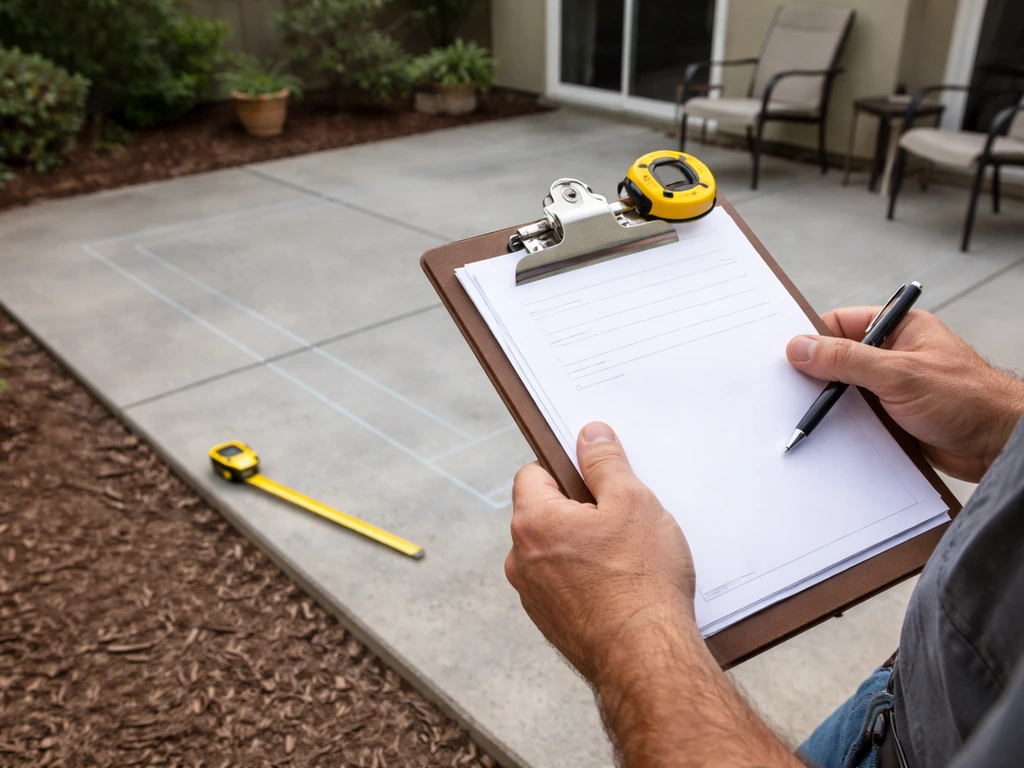
- Are you licensed and insured in this state, and can you show proof before we sign?
- Who pulls the permits, and are permit costs included in the quoted price?
- What does your payment schedule look like? (A reasonable starting point is no more than one-third upfront after signing a contract, with the rest tied to milestones.)
- What does your contract include for change orders, and how are additional costs approved?
- What are your cleanup responsibilities, and what does the site look like when you're done?
- What is your process if there's a workmanship issue after the job is complete?
- Can you provide references from similar projects completed in the last 12 months?
On the payment point specifically: the BBB and NAHB both recommend tying payments to work milestones rather than paying a large sum upfront. Avoid any contractor who demands full payment before starting or who pressures you to pay before a written contract is signed. This protects you regardless of how glowing their reviews are.
How to Compare Local Stores and Contractors Side by Side
Once you've gathered reviews from multiple sources, the goal is to turn them into a fair comparison. If you're trying to narrow down options in your area, you can use your patio store Boca Raton reviews as a starting point and then verify the patterns against recent, specific feedback. The mistake most people make is comparing total star ratings across different platforms, which doesn't account for review volume, recency, or category. A business with 4.8 stars from 12 reviews and a business with 4.3 stars from 340 reviews are telling you very different things. More reviews over a longer period give you a more reliable read on consistency.
Build a simple side-by-side comparison for your shortlisted options. Track the things that actually matter to your project, not just average star ratings. For each candidate, note the number of reviews in the past 12 months, the most common praise and most common complaint, whether the business responds to negative feedback, their BBB complaint history, and their licensing status. That structure gives you something concrete to compare rather than a gut feeling based on whoever happened to show up first in search results. If you want to save time, look for wholesale patio store reviews that call out delivery timing, warranty handling, and what other buyers experienced with the ordering process.
| Comparison Factor | Why It Matters | What to Look For |
|---|---|---|
| Review volume and recency | More recent reviews reflect current quality | Steady flow of reviews in the past 6 to 12 months |
| Response to negatives | Shows how they handle real problems | Professional, solution-focused replies vs. deflection |
| BBB complaint history | Formal complaints reveal patterns beyond star ratings | Few unresolved complaints; issues closed with resolution |
| Specific praise themes | Repeated praise for the same thing is more credible | Multiple reviewers independently mention same strengths |
| Specific complaint themes | Repeated complaints signal real operational issues | Two or more reviewers mentioning the same problem |
| Licensing and insurance | Protects you legally and financially | Verified credentials, not just a claim on their website |
It's also worth cross-referencing what different review aggregators say about the same business. If you're evaluating a specific outdoor retailer or specialty patio store and you've already looked at general review sites, checking a dedicated outdoor living review aggregator adds context because the reviews there tend to be from people who actually bought or installed patio and spa products, which is more directly relevant to your situation than reviews mixed in with restaurant and retail feedback. If you want the best results, also compare the patio store reviews specifically about your product type and timeframe so you can spot patterns faster.
Red Flags and Common Issues Reported by Customers
After reading thousands of reviews across patio stores, outdoor contractors, and spa retailers, certain problems show up repeatedly. These are the patterns that should put a business on your watch list or knock them off your shortlist entirely.
- Bait-and-switch quotes: the initial price is low to win the job, then costs escalate after work starts with poorly explained change orders
- Unexplained delays: a contractor who can't give a concrete schedule or who repeatedly misses promised start dates without proactive communication
- Poor communication during the project: multiple reviewers mention having to chase the business for updates
- Workmanship issues that weren't caught until after final payment: substandard finishes, incorrect installations, or structural problems discovered later
- Warranty gaps: the product has a manufacturer warranty but the installer won't honor workmanship issues, leaving you stuck between two parties
- Permit problems: contractor who skips permits to save time, leaving you legally liable for unpermitted work
- High-pressure deposit demands: requests for more than a third of the total cost upfront, or payment demanded before a contract is signed
- Review clusters that look artificial: a burst of five-star reviews in a short period with no specifics, often following a period of negative feedback
- No physical address or verifiable business history: particularly risky for contractors who present only through social media or referral apps
The warranty gap issue is particularly common in the spa and pool space. A retailer sells you a hot tub with a manufacturer warranty, the installer handles setup, and when something leaks six months later neither party claims responsibility. Before you finalize any purchase that involves both a product and installation, get in writing who is responsible for what, and for how long.
Making a Short-List and Next Steps Today
Here's a practical process you can run through today to go from searching to a confident shortlist in a few hours. If you are looking at shop 4 patio reviews, prioritize recency and specific details like delivery timelines and how damage claims are handled.
- Search for businesses by type and location: use Google Maps, Yelp, Angi, and a dedicated outdoor living review aggregator to build an initial list of candidates in your area.
- Filter to businesses with at least 20 reviews and activity in the past 12 months: anything with fewer reviews or a stale history is harder to evaluate.
- Read the most recent 10 to 15 reviews on at least two platforms for each candidate: look for the specific signals described above, not just star ratings.
- Check BBB for complaint history on any contractor or installer you're seriously considering: unresolved complaints are a disqualifier.
- Verify licensing and insurance independently, not just from what the business tells you: most state contractor licensing boards have searchable online databases.
- Narrow to two or three finalists and contact each one with your checklist of questions: how they respond to those questions is itself useful data.
- Request written quotes and review the contract terms before agreeing to any deposit: make sure payment schedules are milestone-based, not front-loaded.
- Check references from recent, similar projects: a quick call to one or two past customers adds more clarity than a dozen anonymous reviews.
If you're comparing specialty outdoor retailers (whether a store focused on wholesale patio furniture, a boutique outdoor emporium, or a regional spa retailer), the same process applies with a retail lens: look for reviews that specifically mention delivery reliability, product condition on arrival, and return handling. If you’re looking for outdoor patio emporium reviews, use the same approach: prioritize recent, verified details about delivery, installation, and how issues were handled. Businesses that show up across multiple outdoor-specific review categories, with consistent feedback across different reviewer types, are generally your safest bets.
The goal at the end of this process isn't the business with the highest star rating. It's the business whose reviews show consistent reliability in the categories that matter most to your specific project, who responds professionally to problems, and who is willing to put the details in writing before you pay a cent. If you want to save time, start by reading the outdoor patio store reviews that break down delivery, installation, and warranty handling. That combination is a much stronger predictor of a good outcome than any single number on a review platform.
FAQ
How can I tell if a review is about the exact product or service I’m buying (not something else)?
Use keyword matching inside the review for your transaction details, for example “hot tub delivery,” “in-home installation,” “enclosure build,” “patio furniture arrived,” or “damage claim.” Then check the date relative to your target delivery or install window. If the review never mentions the specific service step you care about, treat it as background noise.
What’s the safest way to compare reviews when one store has fewer reviews but higher stars?
Compare on review recency and coverage, not just the average. Prefer businesses with a similar timeframe of activity (for example, reviews within the last 12 months) and that discuss outcomes like delivery condition and post-install support. A smaller sample is less risky if it includes detailed, repeatable specifics rather than generic praise.
Are contractor or installation reviews more important than product reviews for spa and patio purchases?
For anything that involves on-site work (installation, wiring/plumbing connections, enclosure build, patio construction), installation reviews usually predict your experience more than showroom product comments. Prioritize feedback that mentions timeline adherence, cleanup, rework, and who handled problems when something went wrong.
What should I ask about warranty coverage to avoid the “gap” problem mentioned in spa and pool reviews?
Ask two written questions: (1) which party covers defects versus workmanship, and (2) how claims are filed step-by-step. Also confirm whether the warranty is tied to the brand’s terms, the installer’s workmanship, or both, and who pays labor versus parts after the first service visit.
How do I spot patterns that suggest review manipulation rather than just bad luck?
Look for bursts of very similar wording, the same phrasing repeated across multiple reviewers, and reviews that avoid specifics like dates, delivery windows, model names, or issue resolution steps. Also check whether negative reviews receive detailed, consistent responses or mostly get ignored, which can indicate either a real process issue or a review filtering strategy.
Should I read both recommended and non-recommended reviews on platforms like Yelp?
Yes. Non-recommended reviews can include legitimate complaints that never influence the visible star rating. Skim for the same high-value signals as recommended reviews, especially delivery condition, missing parts, schedule reliability, and how quickly the business resolves problems.
What payment approach should I use if the business offers “discounts” for paying upfront?
Ask for a written payment schedule tied to milestones (for example, contract signing, delivery, completion, and final walkthrough). If they cannot provide milestone billing and insist on most of the cost before work begins, treat that as a risk signal even if reviews look strong.
How can I verify whether a contractor or installer is actually licensed for my project type?
Confirm licensing based on the scope you’re hiring them for, not just general trade. For example, patio construction, enclosure installation, and spa-related connections may fall under different requirements. Ask for license details before scheduling and make sure the paperwork matches the exact job description in the contract.
What information should I capture in my side-by-side comparison so it stays objective?
For each shortlist candidate, record the number of reviews from the last 12 months, the most common praise and complaint themes, whether issues were resolved without the customer chasing, the presence of written warranty terms, and whether they respond professionally to negatives. If those fields are missing in most reviews, you do not have enough signal to choose yet.
If reviews conflict across different sites, what’s the best tie-breaker?
Use category fit and timeline alignment. Give more weight to reviews that describe the same type of purchase and the same phase you care about (delivery, install, warranty claim). Then check whether the business’s responses show a consistent process rather than one-off apologies or vague explanations.
What’s a good next step after I shortlist a few spa and patio store options?
Request the exact deliverable in writing, including delivery dates or windows, installation responsibilities, warranty claim process, and a checklist for what happens if parts arrive damaged or scheduling slips. Use that written proposal to compare apples-to-apples, then decide based on clarity and commitments, not just review stars.
Next Article
Outdoor Patio Emporium Reviews: Value, Delivery, Quality
Outdoor Patio Emporium reviews summary on value, quality, delivery, customer service, warranties, and common complaints.