
If you searched for 'today's patio reviews,' you're most likely trying to find the most current, trustworthy customer feedback on a patio contractor, enclosure installer, or outdoor living retailer near you, right now. Reddit users on r/Yelp report that Yelp can move reviews into a “not recommended” area that hides them from the main star rating while keeping them accessible via the link at the bottom.
Today’s Patio Reviews: How to Find Trusted Local Options

Vera Grady
29 Apr 2026

The fastest way to do that is to use a review aggregator that sorts by date (not by algorithm), filter results to the last 60 to 90 days, and then read the detailed narrative reviews rather than just scanning star ratings. That process takes about 20 minutes and will tell you more than hours of browsing individual company websites.
How to find truly recent patio reviews (not just 'recent-ish' ones)
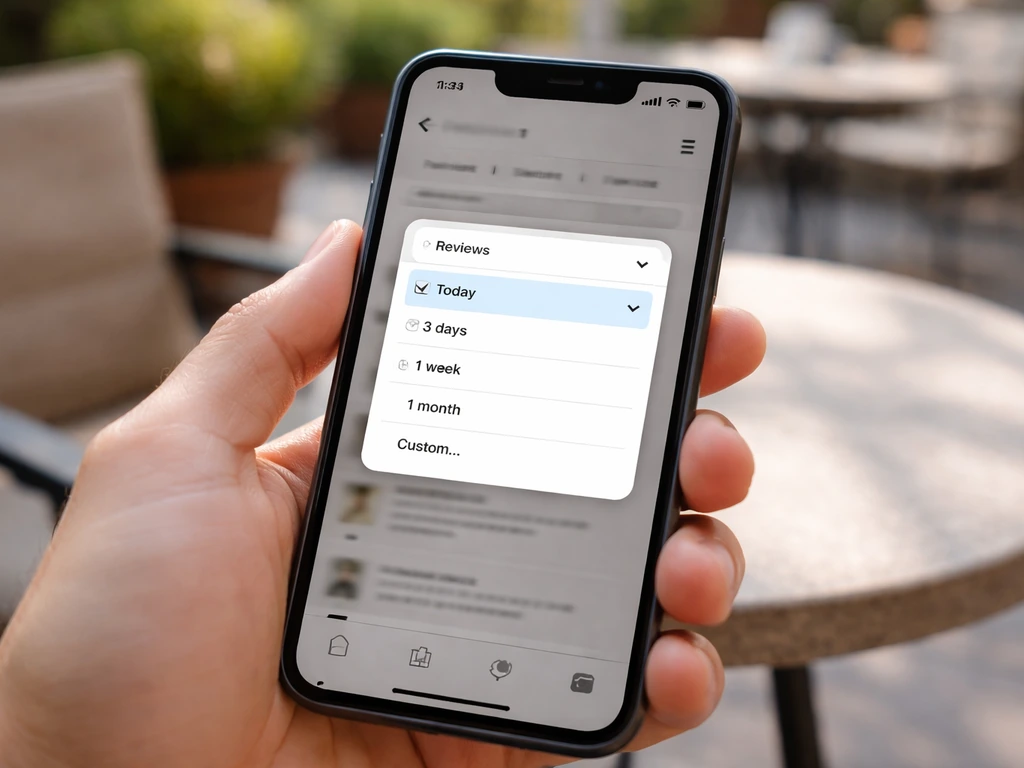
The word 'today's' in your search matters more than most people realize, because different platforms handle recency very differently. On Trustpilot, the default view is reverse chronological, meaning the newest review appears at the top. That's genuinely useful. On Yelp, though, [the default 'Yelp Sort' mixes recency with user votes and other quality signals](https://www.
yelp-support. com/article/How-is-the-order-of-reviews-determined? l=en_US), which means a review from three years ago can sit above one posted last week. If you're on Yelp, you need to manually switch the sort order to 'Newest First' to actually see what recent customers experienced.
On Angi, reviews go through a 24 to 48 hour verification window before they appear on a profile, so a review posted this morning might not be visible until tomorrow. That's worth knowing when you're trying to gauge a contractor's most recent work.
For patio and outdoor living research specifically, 'recent' should mean within the last 90 days during active outdoor project season (roughly March through October in most of North America) and within the last 6 months during the off-season. Anything older than a year has limited value for assessing a contractor's current crew quality, pricing, or communication habits. Companies change, crews turn over, and management shifts happen. A 4.8-star average built on reviews from 2022 tells you almost nothing about the crew showing up at your house in spring 2026.
- Trustpilot: default view is reverse chronological, most recent at the top. Use keyword filters (like 'installation' or 'pergola') to narrow further.
- Yelp: change the sort to 'Newest First' manually. The default Yelp Sort is not purely chronological.
- Angi: reviews take 24 to 48 hours to appear and may require homeowner verification before posting. Account for that lag.
- BBB: check both customer reviews and the complaints tab. Complaints are public for three years from the filing date and often reveal issues that reviewers won't post publicly.
- This site: search by business name or category, then filter by rating and date to surface the most relevant recent experiences.
What actually matters in a patio review
Star ratings compress a lot of complexity into a single number, and that number can mislead you. A contractor with a 4.2 average might be excellent at installations but terrible at follow-up warranty calls, while a 4.6-average retailer might ship the wrong materials half the time. The details inside the review text are where the real signal lives. Here's what to read for specifically:
- Workmanship quality: Did the finished product match what was promised? Look for mentions of levelness, sealing, drainage, finish quality, and structural integrity.
- Materials used: Did the reviewer get what was specified in the quote, or were substitutions made without notice?
- Timeline: Was the project completed on schedule? Repeated mentions of delays, no-shows, or 'took three times as long as promised' are a pattern worth taking seriously.
- Communication: Did the contractor return calls and explain what was happening? Poor communication almost always shows up in the middle section of negative reviews.
- Permits and inspections: Did the contractor pull required building permits? Reviewers occasionally mention this, and skipping permits is a serious red flag (more on that below).
- Warranty and aftercare: Did the business honor its warranty when something went wrong? This is the most valuable signal in a review because it reveals character after the sale.
- Overall value: Not the cheapest bid, but whether the final cost matched expectations and the outcome justified the investment.
A single glowing review that mentions all of these things in specific detail is worth ten generic five-star reviews that just say 'great job, would recommend.' Read for specifics.
Comparing options side-by-side: ratings plus real detail

Once you've found a handful of candidates, resist the urge to just pick the one with the most stars. Instead, build a quick comparison across a few key dimensions. Here's a simple framework you can run through in about 15 minutes per business:
| What to compare | Where to find it | What a strong signal looks like |
|---|---|---|
| Recent review volume (last 90 days) | Review platform date filters | 5 or more dated reviews from recent months, not a burst of old ones |
| Review detail and specificity | Full review text, not just stars | Mentions project type, materials, crew names, or timeline details |
| Owner or business response rate | Response tab on Trustpilot or Yelp | Responds professionally to both positive and negative reviews |
| BBB complaint history | BBB business profile, complaints tab | Complaints marked Resolved, not Unanswered or Unresolved |
| Contractor vs. retailer distinction | Business description and review categories | Reviews match your actual need: installation work vs. product purchase |
It's also worth noting that hiring a patio contractor and buying from a patio specialty retailer are genuinely different transactions with different review signals. For a contractor, you're evaluating people and process: crew quality, project management, permit compliance, and post-job support. For a retailer (like a patio furniture store or enclosure supplier), you're evaluating product quality, shipping accuracy, stock availability, and return policies. Both matter, but the review details that signal trust are different. Keep that lens on when comparing.
Red flags and how to verify you're reading legitimate reviews
Fake and misleading reviews are a real problem in the home improvement space. The FTC has taken formal action on practices like fake reviews, paid positive reviews, and suppression of honest negative feedback. Knowing what manipulation looks like protects you from picking a contractor whose glowing profile is manufactured rather than earned.
- Bursts of five-star reviews in a short window with little to no detail (one or two words each) often signal a coordinated solicitation or fake-review campaign.
- Generic phrasing like 'great service, very professional' repeated across multiple reviews with no project specifics is low-signal at best and suspicious at worst.
- A business with 50 five-star reviews and zero responses to any of them is not engaging authentically with its customers.
- On Angi, reviews that skip the homeowner verification step may not appear, but Angi's request workflow makes it easy for businesses to prompt reviews from satisfied customers, which can skew averages upward.
- One-star reviews with no detail can also be fake, planted by competitors. Look at the reviewer's profile history if the platform shows it.
- BBB's complaint section often surfaces issues that reviewers won't post publicly. A business with 50 great reviews but 10 unresolved BBB complaints has a story those reviews aren't telling.
- Yelp's algorithm may filter (hide) some legitimate reviews, which can inflate apparent ratings. Scroll to the bottom of a Yelp profile and click 'not currently recommended' to see filtered reviews.
On Trustpilot, you can see how many reviews a business has flagged as suspicious, which is a transparency feature worth checking. If a business has flagged dozens of its own reviews, that tells you something about the review environment around them. Cross-referencing two or three platforms for the same contractor is always more reliable than trusting a single source.
Shortlisting your top 3 to 5: how many reviews you actually need to read
You don't need to read 200 reviews to make a good decision. If you want to go deeper, understanding the world of patio reviews can help you spot patterns and avoid misleading ratings. Here's a practical approach that works today, not someday when you've spent three hours reading feedback.
- Start with this site and search for patio contractors or retailers in your area. Sort by rating and filter to recent activity.
- Pick 5 to 7 candidates that have at least 10 reviews in the last 12 months and an overall rating of 4.0 or above.
- Read the 5 most recent reviews for each one in full, not just the star rating. Look for the signals described above.
- Check each one's BBB profile. Look at the complaint count, the outcomes (Resolved vs. Unresolved), and whether complaints are from the last 12 months.
- Cut any business with a pattern of unresolved complaints, generic-only reviews, or no response to negative feedback.
- You should be down to 3 to 5 businesses worth contacting. That's your shortlist.
Three to five is the right number because it gives you real comparison data without creating decision fatigue. Getting quotes from more than five contractors usually adds noise, not clarity. Getting fewer than three means you have no real leverage in price or scope negotiations.
If you've been looking at reviews for specific businesses like My Private Patio, Dan's Porch and Patio, The World of Patio, or Pete's Patio and Garden, apply this same shortlisting process to those profiles too. Read their recent reviews through the same framework and check their BBB status before adding them to your call list. If you are evaluating Pete's Patio and Garden reviews, pay special attention to the specific details inside the review text, not just the overall star rating.
Questions to ask before you hire or buy

Once you've got your shortlist, the next step is a direct conversation. Reviews tell you what past customers experienced. If you want real-world examples, you can also browse Pete's Patio and Garden Reviews to see how those review signals come together in practice. A direct conversation tells you whether this contractor is right for your specific project. Here's what to ask:
For patio contractors and enclosure installers
- What's included in this quote, and what's explicitly not included? Scope creep is one of the top complaints in contractor reviews.
- Will you pull the required building permits, and which permits does this project need? Avoiding permits is a red flag flagged by licensing boards across multiple states. If a contractor says 'we don't need permits for this,' verify that independently.
- What is your current project timeline, and when could you realistically start mine? Vague answers here often predict the timeline complaints you'll see in bad reviews.
- Are you licensed and insured? Ask for license numbers and certificate of insurance, then verify them. In California, you can check via the CSLB. Most states have a similar online lookup.
- What does your warranty cover, and how do I contact you if something goes wrong after the job is done?
- Will I get a written contract that specifies materials, scope, timeline, and payment schedule before any work starts?
For patio retailers and product suppliers
- What is the lead time for this product, and is it in stock or a special order?
- What is your return or exchange policy if the product arrives damaged or isn't what I expected?
- Do you offer delivery and assembly, and what are the actual costs for my address?
- What warranty does the manufacturer provide, and does your store handle warranty claims or do I go directly to the manufacturer?
- Can you provide references from customers who purchased this product in the last 6 months?
A contractor or retailer who hesitates on any of these questions, or who gets defensive about licensing, permits, or written contracts, is showing you exactly what kind of experience you'd be signing up for. The best businesses answer these questions without blinking because they've already handled them a hundred times. That ease is itself a signal worth noting.
FAQ
How do I tell if “newest” reviews are actually about the same service quality as today’s project?
Check whether the review mentions the same type of work you need (open patio install, enclosure build, remodel, warranty service) and whether it names the crew or project timeline. If the newest reviews are for a different scope or season, treat them as partial evidence and weigh older reviews that match your specific project type.
What should I do if a contractor’s recent reviews are all extremely positive, with almost no specific details?
Use a “specifics test.” If reviews rarely mention permit handling, cleanup, timeline accuracy, material substitutions, or warranty follow-up, that pattern can signal generic marketing. Prefer businesses where multiple recent reviews independently confirm operational details, not just praise.
On Yelp, what’s the best way to avoid getting misled by “sort by” settings?
Switch to “Newest First,” then also scan for review dates near your local timeframe and filter out reviews that mention unrelated services. If the business offers both contractor work and retail sales, make sure the reviews you read are for the category you plan to buy or hire.
Why might a review posted today not show up for me on Angi immediately?
Because there is typically a moderation or verification delay before reviews appear on a profile. To avoid false “blank slate” conclusions, expand your search window (for example, look at reviews from the last 6 months during off-season) and compare dates across other platforms before deciding.
How should I handle a business that has few recent reviews but a strong overall rating?
Look for engagement signals in the written reviews. A small volume can still be meaningful if the reviews are recent, detailed, and consistent. If the written feedback lacks specifics or mostly dates back over a year, prioritize businesses with at least three to five recent, detailed reviews that match your project scope.
What are “red flag” review patterns that go beyond low star ratings?
Watch for repeated mentions of missed timelines, hidden change orders, vague communication, subcontractor turnover, poor cleanup, or difficulty getting warranty issues resolved. One such complaint can be a one-off, but repeated patterns across multiple reviewers are more predictive than the average rating.
What if reviews mention permits or code compliance, but they conflict with what the company told me?
Treat that as a decision-stopper until clarified in writing. Ask the company to describe the permit process they follow for your address and to list responsibilities (who files, who pays, who schedules inspections). Conflicting statements across reviews and your call are a sign to verify before signing.
Should I compare patio contractors and patio retailers using the same review framework?
Use different scoring categories. For contractors, weight communication, crew reliability, inspection readiness, and post-job support. For retailers, weight shipping accuracy, stock status, damage handling, and return or exchange terms. Mixing these without separating categories can lead to the wrong hire or purchase.
What’s a good way to spot potentially manipulated or paid reviews without relying on guesswork?
Look for unusually similar wording, overly enthusiastic phrasing across many reviews, and a lack of project-specific details (no mentions of timeline, materials, or site conditions). Also compare the business’s suspicious-flag count (where available) and confirm the same issues or praise appear on at least one other platform.
Do I need to check BBB status, and what am I looking for specifically?
Yes as a quick risk screen, not as the final authority. Prioritize clarity issues (complaints that align with warranty disputes, billing, or cancellation problems) and how the business responds. If BBB shows repeated unresolved process complaints that match review themes, reduce that business’s shortlist priority.
How many quotes or bids should I request for a patio project without wasting time?
Aim for three to five. More than five often increases differences in quoting style that add confusion, not value. Fewer than three limits your leverage and reduces your ability to spot outliers in scope, pricing, or expected timeline.
What should I ask during the direct conversation if the contractor is responsive but vague?
Ask for specific, verifiable details: the project start date estimate, expected lead times for materials, how change orders are documented, who the point of contact is during the build, and the warranty claim process. If they cannot provide a concrete plan or avoid written commitments, treat that as a downgrade regardless of how friendly they are.
How should I use “today’s patio reviews” if I’m planning a winter project or delivery?
Adjust your recency window and focus on reviews that mention off-season work, scheduling delays, or indoor storage. A contractor’s crew and logistics can differ in winter, so prioritize reviews that discuss winter timing, rescheduling policies, and how they handle weather-related stoppages.
Next Article
Patio Design Laval Reviews: How to Compare Contractors
Learn how to evaluate patio design Laval reviews, compare contractors, and vet quotes with red flags and checklists.