
Garden and patio reviews, as we use the term on Patio Reviews Guide, cover four distinct categories: the contractors and companies that build outdoor spaces, the product brands and materials you buy, the installers who handle enclosures and specialty structures, and the retailers where you purchase everything. If you are trying to decide whether to hire a local patio contractor, buy a specific planter, or commission a glass enclosure, you need reviews that tell you what actually happened after the contract was signed or the package arrived. This article explains how to find, read, and trust those reviews on this site, and how to move from research to a hiring or buying decision with your eyes open.
Garden and Patio Reviews: How to Compare Sellers & Installers

Vera Grady
15 Jul 2026
What 'Garden and Patio Reviews' Means for North American Homeowners
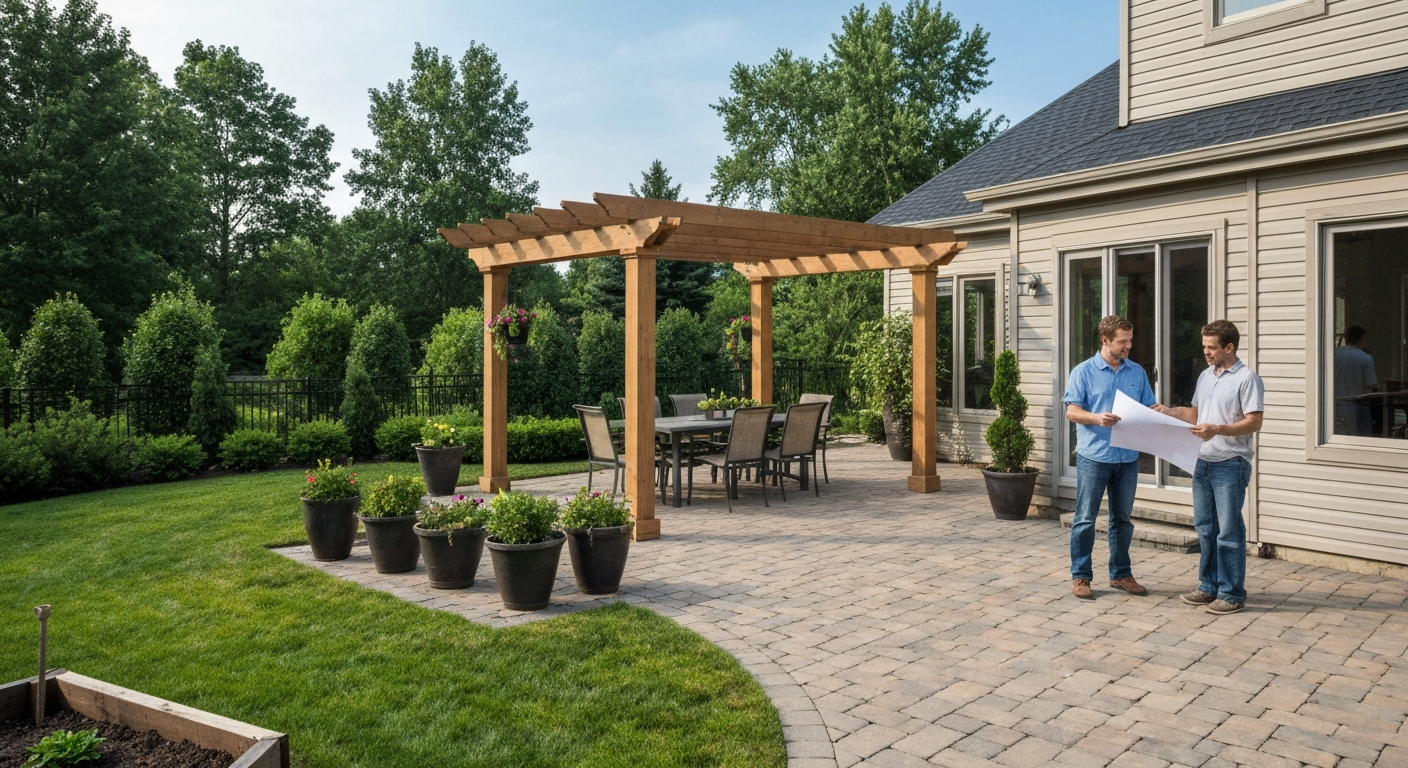
Outdoor living projects are large, often irreversible investments. A basic paver patio runs $20 to $40 per square foot installed. A motorized screen enclosure can cost $2,500 to $9,500 per opening. A full sunroom addition commonly lands between $21,000 and $74,000 depending on type and region. Those numbers make the stakes clear: a bad contractor or a misrepresented product is not a small inconvenience. That is why Patio Reviews Guide exists. We aggregate and organize customer feedback specifically for the patio, pool, and outdoor-living market in North America, so you can compare businesses and products before you commit.
Our editorial direction is built around transparency. Roughly 82 percent of U.S. adults use online reviews at least sometimes when shopping, yet about half of those readers have reservations about whether reviews are trustworthy. We take that skepticism seriously. Every review displayed on this site goes through a documented collection and moderation process (described below), and we follow FTC guidance on disclosing any material connection between a reviewer and a business. If a review was incentivized or came from an insider, we say so plainly, or we do not publish it.
Types of Reviews You Will See on This Site
Not every outdoor living review answers the same question. We organize reviews into four categories, and knowing which one you need saves time.
Company and Contractor Reviews
These cover full-service patio builders, hardscape contractors, deck construction companies, and outdoor design-build firms. Reviewers describe their experience from the first quote through project completion, including communication quality, whether the final cost matched the estimate, whether the crew showed up on schedule, and how the company handled problems. Because construction is what researchers call a credence good (you often cannot assess the quality until months later), we specifically prompt reviewers to update their submissions after the first full season of use.
Product and Brand Reviews
These reviews cover specific products: pavers, outdoor furniture, raised garden beds, planters, pergola kits, and similar items. A product review is only useful if it includes real-world performance details: how a material held up after one winter, whether assembly instructions matched reality, and whether the warranty claim process worked. Vague five-star reviews that say nothing more than 'love it!' do not help you decide whether a planter is right for a rooftop patio or a ground-level garden bed.
Installer and Enclosure Reviews
Enclosure projects, including screen rooms, three-season rooms, glass patios, and sunroom additions, introduce additional complexity: permits, structural engineering, and long-term weatherproofing. Reviews in this category should tell you whether the installer pulled the required permits, how long the project actually took versus the quoted timeline, and whether the finished enclosure performs as described in the sales materials. We flag reviews that mention permit issues or code violations because that information has direct legal and resale value implications for other homeowners.
Retailer Feedback
Specialty retailers, garden centers, and outdoor living showrooms serve a different role than contractors, and their reviews reflect that: delivery accuracy, return policies, product availability, showroom knowledge, and whether the staff understood installation requirements. If you are buying products to install yourself or supply to your own contractor, retailer reviews are the right starting point.
How to Search, Filter, and Use Local Reviews on Patio Reviews Guide
Here is a practical walkthrough for getting from the homepage to a useful shortlist.
- Start with your location. Enter your city, state, or Canadian province in the location search bar. Reviews are indexed by service area, not just business address, so a contractor based in a neighboring city who regularly works in your area will appear in your results.
- Select the right review category. Use the category filter to choose between Contractors, Products/Brands, Enclosure Installers, or Retailers. Mixing categories produces cluttered results when you have a specific need.
- Sort by recency first, then by volume. A business with 80 reviews averaging 4.3 stars is almost always more useful than one with 5 reviews averaging 5.0 stars. Sort by 'most reviewed' to surface businesses with enough data to spot patterns.
- Apply the verified-review filter. This limits results to reviews where the customer submitted a contract number, purchase receipt, or project address for confirmation. Unverified reviews remain visible but are labeled clearly.
- Read the 1-star and 2-star reviews before the 5-star ones. Critical reviews where a customer describes a specific problem (a missed permit, a cost overrun, a warranty refusal) are more informative than generic praise. Look for how the business responded.
- Check the date range. A company with a strong record from 2020 to 2023 but recent complaints in 2025 and 2026 may have changed ownership or staffing. Filter to the last 18 months when recency matters.
- Save your shortlist. Use the bookmark feature to collect three to five candidates before you start requesting quotes. Comparing them side by side during the quoting process is much easier than revisiting search results.
How Reviews Are Collected, Verified, and Moderated
We collect reviews through two channels: open submissions from any site visitor, and invited reviews sent to customers who have been matched to a listed business through our quote-request system. Open submissions go through automated checks first, screening for duplicate content, suspicious account activity (accounts created the same day as the review, single-review profiles on their first submission, and IP clustering that suggests coordinated posting). Tripadvisor Insights, How we maintain review quality documents that every posted review is subject to automated checks and, when flagged, manual review by content specialists Tripadvisor Insights — How we maintain review quality. Reviews that clear automated checks are published with a 'pending verification' label.
Invited reviews, where we send a follow-up email to a customer who used our site to contact a contractor, are labeled as 'verified via quote match' if the customer provides a project address or invoice reference. This approach mirrors what large platforms use: automated detection as a first pass, with human moderation for flagged cases. FTC guidance is explicit that platforms featuring customer reviews should have documented processes for collection, display, and moderation, and that undisclosed insider or incentivized reviews that distort average ratings can violate the FTC Act. We do not accept paid placement in review scores. Businesses can respond to reviews, but cannot edit, remove, or pay to suppress them.
If a business disputes a specific review as fraudulent, they submit a formal complaint with supporting documentation. Our moderation team reviews both the original review and the dispute, and the outcome (kept, removed, or labeled as disputed) is recorded in the review's metadata and visible to readers. We publish an editorial methodology page that covers our sourcing approach, moderation flow, fraud detection signals, and the appeals process.
Trust Signals and How to Interpret Ratings, Photos, Dates, and Reviewer Profiles
A star rating is only as useful as the context behind it. Here is what to look at before you trust a score.
- Verified badge: A 'verified purchase' or 'verified via quote match' label means the reviewer's connection to the business has been confirmed. Weight these reviews more heavily than unverified ones, especially for contractor and installer categories.
- Reviewer history: A reviewer who has submitted five or six reviews across different businesses on this site is more credible than a first-time submitter. Check the reviewer's profile to see their history and rating distribution.
- Review date: Construction and product quality can change quickly. A verified, detailed review from eight months ago is more useful than ten brief reviews from three years ago. Always note when a review was written.
- Photo evidence: Reviews that include dated job-site photos, photos of installed work, or product images showing wear after a season carry significantly more weight. We allow reviewers to upload up to ten photos per review.
- Provider response: A business that responds to critical reviews with specific, non-defensive explanations demonstrates accountability. A business that ignores complaints or responds only to positive reviews is a yellow flag.
- Review volume: Academic research on online reviews consistently shows that volume is a key trust signal. A pattern across 60 reviews is more reliable than any individual review, positive or negative.
- Third-party license verification: Where applicable, we display a contractor's license number alongside their listing and flag whether it has been checked against state or provincial licensing databases. In many U.S. states, any construction work valued at $1,000 or more in labor and materials requires a licensed contractor.
Practical Checklist Before You Shortlist Any Contractor or Product
Use this checklist when you move from browsing reviews to actually comparing your finalists. It applies to contractors, enclosure installers, and specialty retailers.
Contractor and Installer Checklist
- Cost range confirmed in writing: Get itemized quotes, not lump-sum figures. Basic paver patio installations typically run $20 to $40 per square foot installed; enclosures and screen rooms vary far more by specification.
- Installation timeline: Ask for a written project schedule with milestones. Ask specifically what happens to your timeline if materials are delayed.
- Warranty coverage: Distinguish between the manufacturer's warranty on materials and the contractor's workmanship warranty. A one-year workmanship warranty is common; anything less than that is a red flag.
- Permit responsibility: Ask directly who pulls the permits and who is named on them. In jurisdictions like Toronto and much of Ontario, decks attached to a house or elevated more than roughly 24 inches above grade typically require permits and plan submissions. This applies broadly across most North American municipalities for enclosed structures.
- License and insurance verification: Request the contractor's license number and verify it against your state or provincial licensing board. Ask for a certificate of insurance naming you as an additional insured, not just a verbal assurance.
- Maintenance requirements: For materials like natural stone, certain composites, or glass enclosures, ask for a written maintenance schedule. A contractor who cannot tell you how to maintain their work is a warning sign.
- References from the last 12 months: Ask for two or three references from projects completed in the past year, not a general portfolio. Call them.
Product Research Checklist
- Match the product specs to your actual use case: dimensions, weight capacity, material type, and climate suitability.
- Check the manufacturer's warranty period and the claim process before you buy, not after.
- Find reviews that mention at least one full seasonal cycle (winter freeze-thaw for northern climates, UV and heat exposure for southern ones).
- Confirm availability of replacement parts, especially for modular or assembled products.
- For products sold through retailers, check the retailer's return policy for large or assembled items separately from the manufacturer's warranty.
Questions to Ask Contractors and Installers Before You Sign
These are the questions I recommend asking during your first conversation or site visit. They are designed to surface problems early, not to be adversarial.
- 'Can you provide your contractor license number so I can verify it with the state licensing board?' A licensed contractor will not hesitate. Someone who deflects or says licensing 'isn't required for this type of work' is worth investigating further.
- 'Will you be pulling the permits, and will they be in your name or mine?' Permits in the contractor's name protect you if something goes wrong during inspection.
- 'What does your workmanship warranty cover, and how do I make a claim?' Get this in the contract, not just in conversation.
- 'Who are the subcontractors on this job, and are they covered by your insurance?' Many patio and enclosure projects involve subcontracted labor for electrical, roofing, or masonry work.
- 'What is your process if the project runs over budget or over the agreed timeline?' A vague answer or a dismissal of the question is a red flag.
- 'Can I see two or three completed projects similar to mine, and speak to those clients?' If the contractor only offers a photo portfolio and no direct references, proceed carefully.
- 'What maintenance will this installation require in year one and year five?' This question reveals both product knowledge and whether they are setting realistic expectations.
Red-flag responses to watch for: a contractor who cannot produce a license number on request; one who asks for more than 30 to 50 percent upfront before any work begins; one whose quote is dramatically lower than two other quotes without a clear explanation; and one who pressures you to sign the same day you receive the quote.
Using Aggregated Reviews to Compare Vendors
Here is an example of how to read a side-by-side comparison using aggregated review data from Patio Reviews Guide. The businesses below are hypothetical composites built from typical data patterns on the site, used here to illustrate how to interpret the table, not as endorsements of specific companies.
| Vendor Type | Avg. Rating | Verified Reviews | Typical Cost | Typical Timeline | Warranty | Standout Notes |
|---|---|---|---|---|---|---|
| Full-service patio contractor (regional chain) | 4.1 / 5 | 68 of 94 total | $28–$38/sq ft installed | 3–6 weeks for standard patio | 2-year workmanship, manufacturer warranty on materials | Strong permit compliance noted; some complaints about post-season cracking addressed under warranty |
| Independent hardscape installer (local) | 4.6 / 5 | 31 of 37 total | $22–$32/sq ft installed | 2–4 weeks | 1-year workmanship | High responsiveness scores; fewer reviews but strong recency (2025–2026) |
| Enclosure/screen room specialist | 3.9 / 5 | 44 of 71 total | $4,500–$8,500 per opening | 4–10 weeks | 5-year frame, 2-year screen | Mixed reviews on timeline accuracy; positive reviews emphasize wind-rating performance |
| Specialty outdoor retailer (showroom + install) | 4.3 / 5 | 52 of 60 total | $35–$55/sq ft for premium materials | 2–3 weeks after material delivery | Manufacturer warranty passed through | Consistently rated high for product knowledge; delivery delays noted in 2024 reviews but resolved by mid-2025 |
| Online retailer (ship-to-home, DIY products) | 3.7 / 5 | 89 of 210 total | $150–$900 per kit depending on product | Ships in 5–14 days | 1-year manufacturer warranty | Low verified-review ratio; watch for incentivized reviews; strong for planters and modular beds, weak on installation support |
How to read this table: the verified review count matters as much as the average rating. Vendor 5 has the highest total review volume but the lowest verified percentage, which should lower your confidence in its score. Vendor 2 has the highest rating but relatively few reviews; if you are in that contractor's service area and the reviews are recent, that is still a solid data set. Vendor 3's timeline complaints appear in a concentrated window, which could signal a staffing problem at a specific period rather than a systemic issue. Checking the review dates for that cluster would tell you whether it is resolved.
Mini case study: A homeowner in suburban Chicago used this site to research patio contractors for a 400-square-foot paver installation. She filtered to verified reviews, sorted by recency, and noticed one contractor with a 4.7 average had a cluster of 2-star reviews from a single six-week window in the spring of 2024. When she called references from 2025, every one was satisfied. The contractor explained they had experienced a key crew member leave that spring. She hired them, the project ran one day over schedule, and she submitted her own verified review eight months later after the first frost season. That is the review cycle that makes aggregated data useful over time.
Garden Gate Solutions for Patio Homes: What to Look for in Reviews and Installers
Garden gate installations for patio homes sit at the intersection of aesthetic choice and functional security. Reviews for this category are most useful when they cover three things: material durability after at least one season, installation accuracy (does the gate hang level and latch consistently), and whether the installer understood HOA or community-specific requirements that apply to patio home communities. If you are researching this type of project, look for reviews that describe the gate's condition after 12 to 18 months, not just installation day. Reviews focused specifically on garden gate patio homes are covered in detail in a dedicated section of this site. For more detail, see our garden gate patio homes reviews in the dedicated section (0726009b-3385-4098-8cca-11cee6491b2e).
Greenway Patio Product Reviews: Brand-Specific Considerations and Review Signals
When reading brand-specific reviews for products like those in the Greenway patio line, the most useful reviews describe how the product performs in the buyer's specific climate and use case, not just whether assembly went smoothly. Look for reviews that mention color fade after UV exposure, joint stability over time, and whether the product matched its listed dimensions and weight capacity. Be cautious of review clusters that appeared within a short window after a product launch; these are often incentivized or provided by early testers rather than long-term users. Our Greenway patio reviews section covers brand-specific patterns and flags any disclosure issues we have identified.
Garden Glass and Enclosed Patio Reviews: Installer, Permit, and Performance Criteria to Check
Glass enclosures and enclosed patio projects are among the most permit-sensitive categories on this site. Most jurisdictions treat a glass-enclosed patio addition as a structural change to the home, which means building permits, plan review, and in many cases engineering sign-off. In the Toronto/GTA, decks attached to a house or rising roughly 24 inches above grade commonly require permits and plan submissions; see Deck permits and bylaws in the GTA, what you actually need · Deck Cost Toronto for a municipal permit summary Deck permits and bylaws in the GTA — what you actually need · Deck Cost Toronto (municipal permit summary for Toronto/GTA). Reviews for this category are specifically valuable when they mention whether the installer handled permits correctly and whether the finished enclosure performs as described: thermal comfort, condensation management, wind and rain performance, and ease of cleaning. Reviews that skip over the permit question and focus only on how nice the space looks are useful but incomplete. Our garden glass and enclosed patio reviews section organizes feedback by installer region and includes permit-related flags.
VegTrug Patio Garden Planter Reviews: Durability, Sizing, and Use-Case Feedback to Watch For
VegTrug planters are a popular option for patio and balcony vegetable gardening, sold through major retailers including Tractor Supply. The most useful reviews for these products describe specific use cases: whether the product suits a full-sun rooftop versus a shaded ground-level patio, how the wood or metal components held up through a freeze-thaw cycle, and whether the assembly matched the instructions. Manufacturer specs, warranty language, and assembly documentation are available through the retailer product page and should be reviewed alongside customer feedback. The dedicated VegTrug patio garden reviews section on this site includes size-by-size feedback and flags any warranty claim patterns that have appeared in submitted reviews.
Warning Signs and Common Pitfalls
Fake and manipulated reviews are a real problem in the home services and outdoor products category. Here is what to watch for when reading any review set, whether on this site or elsewhere.
- Sudden spikes in 5-star reviews: A business that receives 15 glowing reviews in a two-week window after years of thin coverage is a pattern worth questioning. This can indicate a coordinated review campaign.
- Reviews with no verified badge and a single-review account: A reviewer who joined the platform the same day they submitted a review and has no other history is a credibility concern, especially if their review is unusually generic.
- Repetitive phrasing across multiple reviews: If several reviews use nearly identical language or structure, they may have been written from a template. Read a sample of reviews aloud; real customer writing has natural variation.
- No critical reviews at all: A business with 100 percent positive reviews and zero complaints across dozens of submissions is statistically unlikely unless the volume is very low. A healthy review profile usually includes some 3-star and 4-star reviews with specific feedback.
- Overly polished portfolios without job-site photos: A contractor who shows only professional photography without any candid progress photos, permit boards visible in the image, or dated project documentation is showing you marketing material, not evidence of work.
- Unrealistic timelines in quotes: If a contractor quotes two weeks for a project that comparable businesses estimate at six to eight weeks, ask specifically how they achieve that. Rushed projects often cut corners on site prep, curing time, or permit compliance.
- Contracts without a detailed scope of work: Lump-sum contracts that do not specify materials, dimensions, installation method, and permit responsibility leave you with no recourse if the finished work does not match the sales conversation.
- Pressure to sign before you can check references: Any contractor who tells you the price is only valid today is applying a sales tactic, not managing a legitimate scheduling constraint.
Next Steps: Requesting Quotes, Contacting Vetted Pros, and Where to Go on This Site
Once you have a shortlist from your review research, the practical next steps are straightforward. Request itemized quotes from at least three businesses, using the checklist in this article as your baseline for what to ask. Use the quote-request feature on Patio Reviews Guide to contact listed contractors directly; requests submitted through this site generate the quote-match data that enables verified reviews, which in turn improves the data quality for the next homeowner researching the same businesses.
If you are researching a specific product category, the sibling review sections on this site go deeper: garden gate solutions for patio homes, Greenway patio products, garden glass and enclosed patios, and VegTrug patio planters each have their own dedicated pages with category-specific filters and reviewer prompts designed to surface the information that matters for those particular purchases.
After your project is complete, please submit a review. The most useful submissions include a project address or invoice reference for verification, photos from different stages or after one full season, and honest notes about anything that did not go as expected. A review that says 'the contractor was three days late but fixed a drainage issue I had not noticed and the patio has been perfect since' is ten times more useful to the next reader than 'five stars, great job.' That kind of specificity is what makes this kind of resource worth using.
Visual Aids That Help Clarify Your Research
Several types of visual content make the research process faster and less error-prone. Here is what is worth looking for or creating as you work through your shortlist.
- Comparison table screenshot or printout: Export or screenshot the vendor comparison table from your Patio Reviews Guide search results and annotate it with your own notes from reference calls. Seeing your notes alongside review data in one document prevents the confusion that comes from switching between browser tabs during contractor conversations.
- Installer checklist diagram: A single-page checklist (license number field, insurance certificate field, permit responsibility field, workmanship warranty field, and payment schedule field) kept with your contract documents gives you a clear record of what was confirmed before signing.
- Before-and-after photo guidance: When requesting photos from a contractor, ask specifically for photos taken before site prep, during construction, and at least 90 days after completion. Photos taken immediately after installation do not show settling, drainage performance, or material wear. When submitting your own review, the same three-stage photo set is the most useful to other readers.
- Permit board photo: In most North American jurisdictions, a permit card or board is posted visibly on a job site. If you are hiring a contractor for an enclosed or structural project, a photo of the permit board (showing the permit number and issuing authority) is a simple, verifiable record that permits were actually pulled.
- Rating distribution chart: When evaluating a business on this site, look at the full rating distribution bar chart rather than just the average. A business with a 4.2 average made up of mostly 5-star and mostly 1-star reviews (a bimodal distribution) tells a very different story than a 4.2 average with most reviews clustered between 3 and 5 stars.
FAQ
What primary research questions must I answer to explain “garden and patio reviews” comprehensively for North American homeowners?
List the core consumer-facing questions: What review types exist (company, product/brand, installer/enclosure, retailer)? How do homeowners find and filter local reviews on Patio Reviews Guide (search fields, radius, categories, verified-purchase filters, recency, ratings distribution)? How are reviews collected, moderated, and verified? Which trust signals should readers prioritize (verified purchase, reviewer history, timestamps, photos, provider responses, licenses)? What local regulations, permits, and licensing checks apply in typical jurisdictions? What are expected cost ranges and timelines for common project scopes (paver patio, screened/motorized screens, glass enclosures/sunrooms, raised-bed planters)? How should readers compare vendors (checklists, warranty, maintenance, references, sample questions)? What warning signs indicate manipulated or low-quality reviews? What next steps should homeowners take (request quotes, check credentials, get written scopes)? Include sibling/variant research questions for garden gates, Greenway products, garden glass/enclosures, and VegTrug planters.
Which source categories are required to support factual claims and comparison guidance?
Authoritative regulatory sources (FTC guidance and Consumer Reviews Rule, provincial/state contractor boards like CSLB); platform & methodology models (Consumer Reports, TripAdvisor moderation docs); academic research on review trust signals and service‑provider reviews; municipal building‑permit guides for representative jurisdictions; industry cost and timeline guides (Remodeling Cost vs. Value, RSMeans, reputable installers); manufacturer/retailer product pages and manuals (VegTrug, Greenway product docs); consumer‑facing articles on spotting fake reviews (Forbes) and review‑audit practices; sample contractor/installer portfolios and warranty documents; and internal site docs: editorial policy, ‘how we collect & verify reviews’ page, and site search/filter documentation.
What specific data fields should Patio Reviews Guide capture for each review to maximize transparency and usefulness?
Required fields: reviewer name/handle, verified-purchase flag, service/product purchased (model number where applicable), project location (city/zip), review date, star rating, detailed written pros/cons, photos/videos, cost paid (range or exact if provided), installation timeline, provider response (if any), contractor license number/verification link, permit status, warranty terms cited, reviewer history (#reviews, average rating), and moderation status (flagged/verified). Include metadata: submission method (invited/email, site submission, third‑party import), IP/technical provenance (for fraud detection), and review ID/timestamp for audits.
How should I document and explain the review-collection & verification process on the site?
Publish a clear ‘How we collect & verify reviews’ page detailing sourcing (invited, open, harvested), verified‑purchase checks (order IDs, invoices), automated fraud detection (anomaly detection, pattern flags), human moderation workflow (sampling, appeals), labeling (staff reviews vs. user reviews), conflict‑of‑interest disclosures, and update cadence. Describe remediation and reporting paths for vendors and consumers and provide a public glossary of badges/banners used (verified, longterm reviewer, vetted contractor). Reference FTC guidance and OECD recommendations as the policy baseline.
What trust signals should the article highlight and why?
Highlight these evidence-backed trust signals: verified‑purchase badge (provenance), review recency (timeliness), review volume (statistical robustness), reviewer history (reliability), detailed content and photos (specificity), provider responses (responsiveness/accountability), contractor license/permit verification (legal compliance), third‑party inspections or warranties (independent assurance), and aggregated ratings distributions (not just average stars). Cite academic and OECD sources that correlate these signals with perceived credibility.
Which local-legal and licensing checks must homeowners perform and which representative sources should be cited?
Advise homeowners to verify contractor licenses and insurance with their state/provincial contractor board (example: California CSLB), confirm permit requirements with local building departments (provide sample Toronto/GTA permit guidance), and check bonding/worker’s comp where required. Cite CSLB and representative municipal permit sources and recommend homeowners demand license numbers and check them against official registries before hiring.
Next Article
VegTrug Patio Garden Reviews: Worth It and Best Setup
VegTrug patio garden reviews: pros, cons, sizing, setup tips, and troubleshooting to decide if it fits your balcony.