
Kellogg Patio Plus Premium Outdoor Potting Mix is a solid base soil for container and patio gardening that works well for most flowers, vegetables, and herbs when you supplement it with a granular organic fertilizer at planting. It earns a 4.6 out of 5 rating across more than 2,500 Home Depot reviews, and most buyers are happy with it. But there are real batch-consistency issues worth knowing about before you grab a bag, and the base NPK (0.30-0.10-0.10) is low enough that skipping supplemental feeding will hurt your results.
Kellogg Patio Plus Potting Soil Review for Containers

Vera Grady
19 Jun 2026
Quick verdict: is Kellogg Patio Plus worth buying?
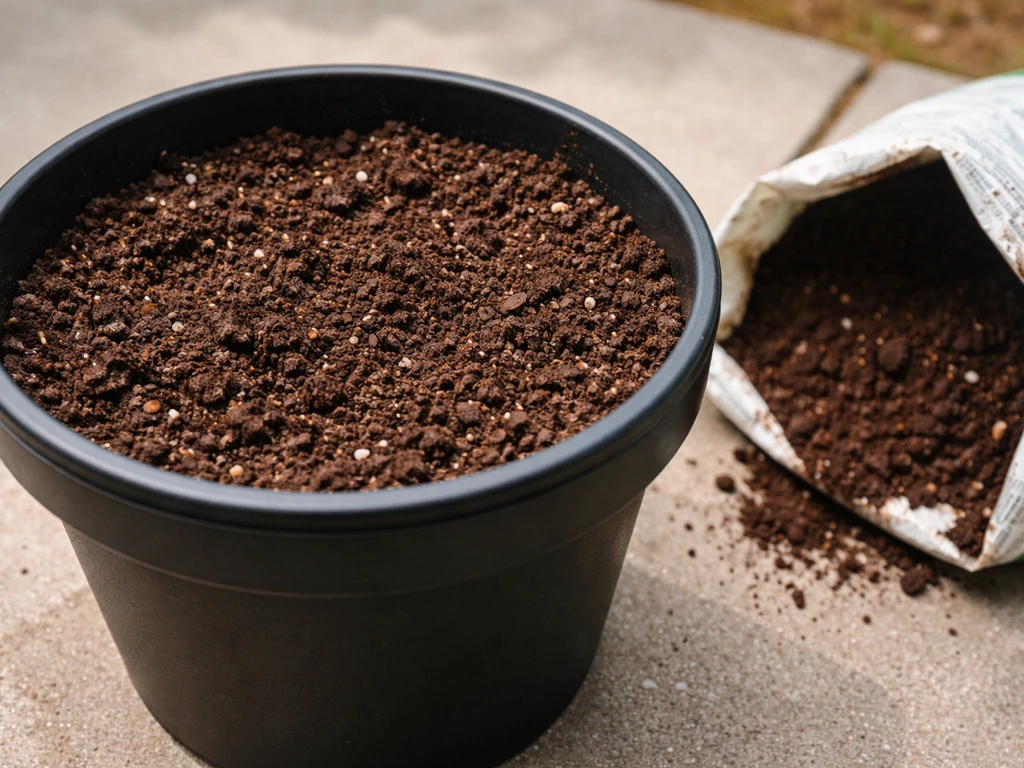
For most patio gardeners, yes. The 78% recommendation rate and 4.6-star score from over 2,500 buyers make a strong case. The ingredient list is genuinely good: aged forest products, rice hulls, composted poultry manure, perlite, peat moss, worm castings, bat guano, and kelp meal. blank" rel="noopener noreferrer">It's OMRI-listed for organic use, and the pH range (5.8 to 7.5) is wide enough to support most common container plants.
The caveats are real, though. A meaningful minority of recent reviews (including complaints from May 2026) describe bags that were dominated by large wood chips rather than fine potting mix, and a few buyers reported plant failure they blamed on freshly added manure or biological issues like mold and fungus gnats right out of the bag. These aren't universal problems, but they're consistent enough to flag.
Bottom line: buy it if you can inspect the bag for texture before opening, plan to add supplemental fertilizer, and are growing annuals, perennials, herbs, or vegetables in outdoor pots. If you've had a bad batch before or you're in a region where bag turnover at the store is slow, check the alternatives section below.
What Kellogg Patio Plus actually is, and who it's for
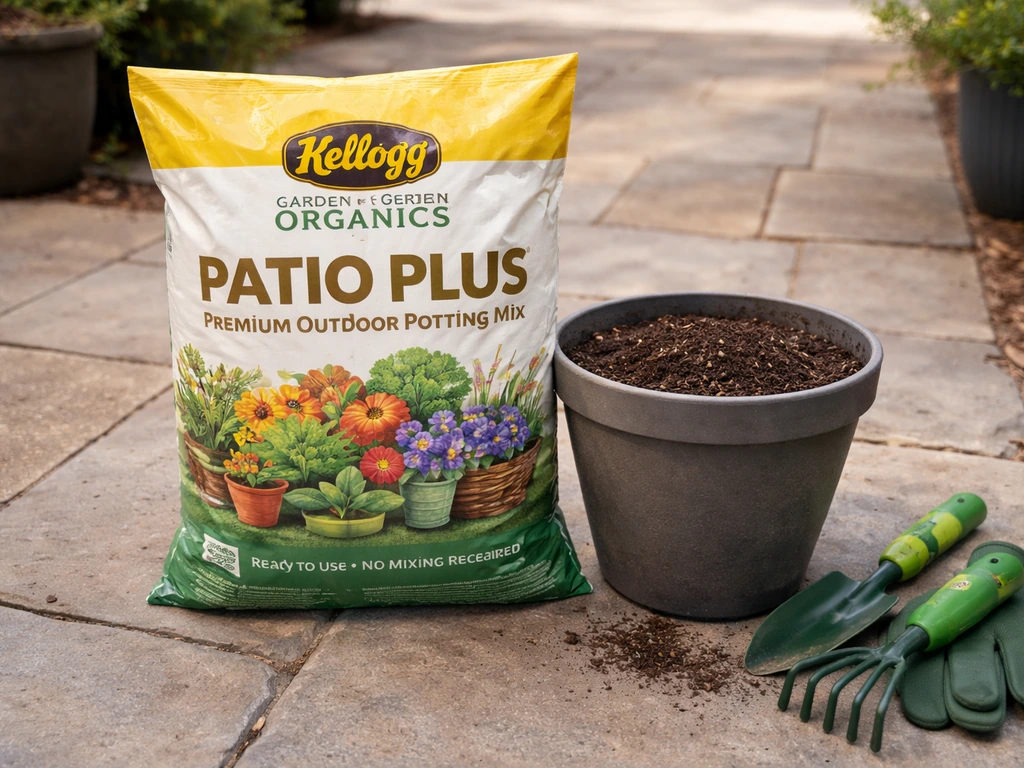
The full name is Kellogg Garden Organics Patio Plus Premium Outdoor Potting Mix, made by Kellogg Garden Products. Don't confuse it with other Kellogg soils like their All Natural Garden Soil or their raised bed mixes. This one is specifically formulated for containers and comes in a 1.5 cubic foot bag (about 42.4 liters), which the manufacturer says fills fifteen 6-inch pots, three 12-inch pots, or five 1-gallon containers.
The product is marketed as 'ready to use, no mixing required' for annuals and perennials, vegetables, herbs, hanging baskets, and raised beds. The official framing is outdoor container use, which aligns perfectly with what most patio gardeners are actually doing: filling decorative planters, window boxes, and raised patio beds.
The OMRI certification matters if you're growing edibles organically. This isn't just a marketing badge: the ingredients are genuinely organic-approved, including bat guano, worm castings, kelp meal, hydrolyzed feather meal, and composted poultry manure as nutrient sources, with dolomite and oyster shell lime handling pH adjustment.
What real buyers are saying: the wins and the complaints
The majority of reviews describe exactly what you'd hope for: good moisture retention, healthy plant growth, and a mix that feels like quality soil. If you want a quick patio chips review-style takeaway, focus on texture consistency, moisture behavior, and whether the bag actually matches what you expect when you open it. Phrases like 'works just as expected,' 'solid purchase,' and 'good drainage' show up repeatedly. Buyers growing flowers and ornamentals in patio pots tend to report the most consistent positive outcomes.
The complaints fall into a few distinct categories, and they're worth taking seriously because several of them appeared in 2026 reviews, meaning they're not just old isolated incidents.
- Wood chip overload: A May 2026 reviewer opened a bag to find it 'filled with wood chips,' repotted cucumbers into it, and reported the plants dying within about a week. This is a texture/structure complaint that points to batch inconsistency rather than a product design flaw.
- Mold on opening: At least one buyer described visible mold when first opening the bag, followed by a fungus gnat infestation after planting. Mold in bagged soil isn't always harmful to plants, but gnat infestations are a genuine nuisance that many container gardeners struggle to resolve.
- Heavy bark content: A separate reviewer on the same page noted 'heavy bark content' and flagged past fungus gnat problems with Kellogg mixes specifically.
- Possible fresh manure burns: A March 2026 review from a pallet purchase described plants dying and speculated that 'heat-causing fresh manure' had been added in a recent batch, suggesting the composting process may not have been fully complete in that run.
- Low nutrient content out of the bag: The NPK of 0.30-0.10-0.10 is intentionally low for an organic base mix. Buyers who don't supplement often get disappointing growth and blame the soil, when the real fix is adding fertilizer.
On Reddit, the picture is a bit more nuanced. Several gardeners who use Kellogg Patio Plus successfully describe combining it with compost, worm castings, and an Espoma fertilizer. One commenter noted they use it to 'top off my beds' and amend regularly. Another mentioned reusing the same mix year over year with amendments. The pattern is clear: informed buyers treat this as a base, not a complete solution.
How it behaves in pots: drainage, moisture, compaction, and consistency
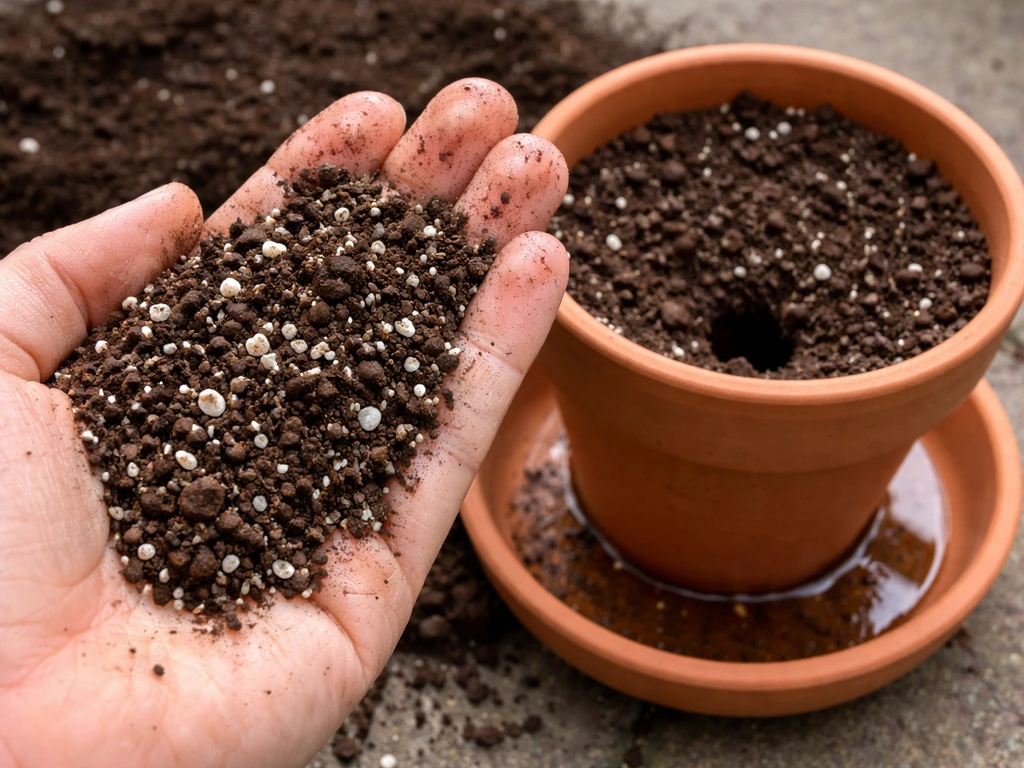
When the bag is a good one (consistent texture, no excessive bark chunks), Kellogg Patio Plus performs well structurally. The perlite in the mix supports drainage while peat moss and the organic matter help retain moisture. Buyers describe it as absorbing water quickly without staying waterlogged, which is exactly what you want in a container.
Compaction is the longer-term concern. Like most peat-based mixes, it will compact over a growing season, especially in large containers that go through many wet-dry cycles. If you're reusing soil from a prior season, you'll likely need to loosen and amend it before planting again. In a r/containergardening thread, at least one user reused the same Kellogg potting mix from the prior year and “refreshed it by amending.”. Rice hulls in the formula help slow this process compared to straight peat-heavy mixes, but they're not a permanent fix.
The batch consistency issue is the most frustrating part of this product. The same mix from the same brand can vary noticeably depending on when and where the bag was produced. Bags with excess wood chips won't compact the same way as properly textured bags, and they can create air pockets around roots, which is likely what contributed to the plant failures some reviewers described. Buying from a store with high turnover reduces your risk of getting an off batch.
Best uses: where it shines and where it struggles
This mix is best suited for outdoor container growing of annuals, perennials, herbs, and most vegetables. Patio tomatoes, petunias, geraniums, basil, and similar plants that tolerate a moderate-fertility environment respond well. If you’re specifically looking for a patio tomato review, this is the kind of performance and nutrient-balance guidance that helps you choose the right potting mix upfront Patio tomatoes. The broad pH range (5.8 to 7.5) handles both slightly acid-loving plants and those that prefer neutral soil.
It struggles in a few situations. Cucumbers and other heavy feeders seem particularly vulnerable to bad batches, as the wood chip complaints came specifically from a cucumber grower. If you're looking for a patio snacker cucumber review angle, this is the part that matters most. Very moisture-sensitive plants in large pots may hit compaction issues by midsummer if you don't amend or refresh the mix. And if you're gardening in a region with slow retail turnover (rural stores, off-season restocking), the risk of an older or poorly cured batch goes up.
- Works well for: annuals and perennials in patio pots, herbs, tomatoes, leafy greens, hanging baskets, and raised patio beds
- Works adequately for: squash, peppers, and other vegetables with consistent supplemental feeding
- Use caution for: cucumbers and other plants sensitive to irregular soil texture, or any high-water-demand crops if you get a wood-chip-heavy bag
- Avoid relying on it alone for: heavy-feeding crops over a long season without added fertilizer
How to use Kellogg Patio Plus the right way
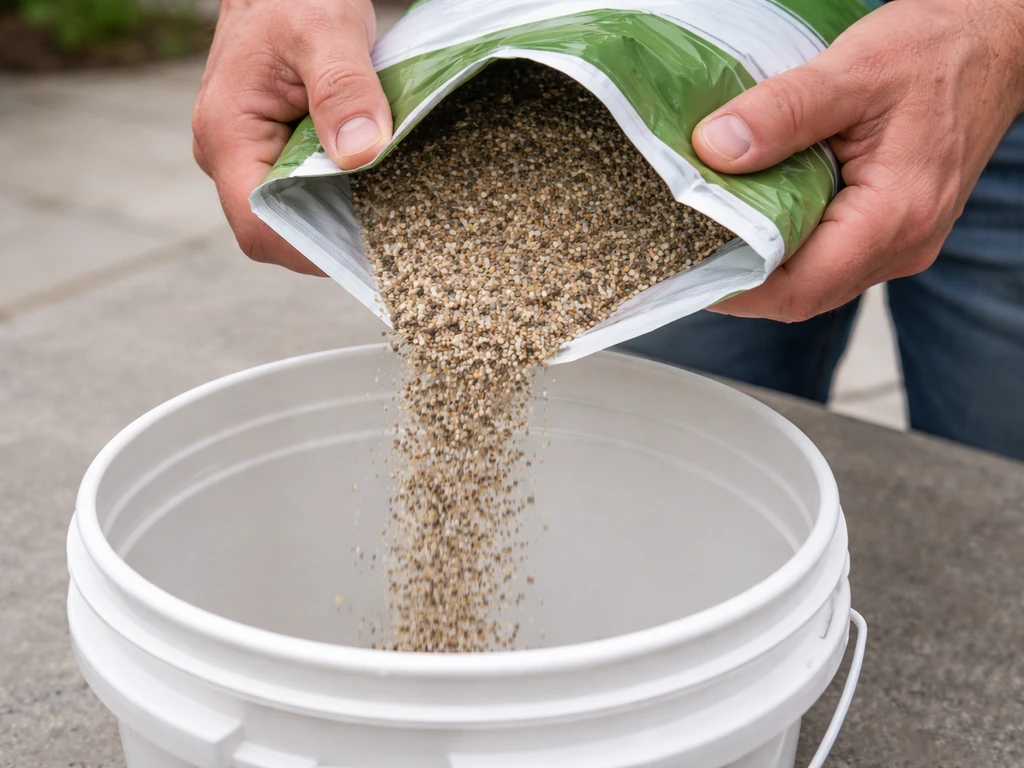
The 'no mixing required' claim on the bag is technically true but practically incomplete. Here's how to actually set yourself up for good results:
- Open the bag and check the texture before using it. A good bag should have a mix of fine and coarse particles with minimal oversized wood chunks. If more than a quarter of the bag looks like mulch rather than potting soil, that's a red flag.
- Fill pots to within about an inch of the rim. For large containers (12 inches or bigger), filling one-third of the way, placing your plant, then filling around it gives you better root-to-soil contact.
- Water thoroughly at planting to rehydrate the mix. Peat moss can be hydrophobic when very dry, so a slow first watering or a brief soak helps the mix absorb moisture evenly rather than sheeting off the sides.
- Add a granular organic fertilizer at planting. Kellogg's own experts recommend this, and the low base NPK (0.30-0.10-0.10) makes it necessary for most edibles. Their Tomato, Vegetable, and Herb Fertilizer or their All Purpose Fertilizer are designed to pair with this mix. Espoma or similar organic granulars work just as well.
- Reapply fertilizer every 5 to 6 weeks for edibles through the growing season. For ornamentals, every 6 to 8 weeks is usually sufficient.
- If you're growing in a pot that had fungus gnats before, let the top inch of soil dry out between waterings. This breaks the gnat life cycle without harming most container plants.
- For second-year use, loosen the old mix, remove any compacted clumps, and amend with fresh compost or worm castings before replanting. Adding 10 to 20% perlite by volume improves drainage in reused mix.
How it compares to Espoma and Miracle-Gro
If you're deciding between Kellogg Patio Plus and other popular potting mixes, here's a straightforward comparison based on what the manufacturers publish and what buyers report:
| Feature | Kellogg Patio Plus | Espoma Organic Potting Mix | Miracle-Gro Potting Mix |
|---|---|---|---|
| OMRI organic certification | Yes | Yes | No |
| NPK (base) | 0.30-0.10-0.10 | Not published (organic slow-release) | 0.21-0.11-0.16 |
| Key drainage ingredient | Perlite + rice hulls | Perlite | Perlite |
| Moisture retention | Good (peat + organics) | Good (sphagnum peat) | Very good (up to 33% more than basic soil in moisture control version) |
| Fertilizer included | Low baseline, needs supplementing | Low baseline, feed monthly after 2 weeks | Some formulas include 6-month plant food |
| Bag size available | 1.5 cu. ft. | Multiple sizes | Multiple sizes |
| Batch consistency concerns | Some reported by buyers | Fewer reported | Generally consistent |
| Best for | Organic patio containers, edibles | Organic containers, edibles | General container use, fast results |
If organic certification matters to you and you want a comparable alternative to Kellogg, Espoma is the most direct swap. Its ingredient base is similar and its buyer feedback is more consistent on texture. Miracle-Gro is a better pick if you want built-in plant food for 6 months and don't need organic certification. For patio container gardening specifically, all three work, but Kellogg's batch inconsistency is the main reason to consider Espoma if you've had a bad experience. If you want more detail before buying, these patio egg reviews break down what to watch for in real-world results patio container gardening specifically.
Buying checklist: what to check before you grab a bag
Given the batch-to-batch variation some buyers have reported, a few quick checks at the store can save you a lot of frustration. If you are also looking for gaming build ideas, check our Sims 4 Perfect Patio Stuff review for patio-themed options and how they hold up.
- Look for the full name: Kellogg Garden Organics Patio Plus Premium Outdoor Potting Mix. Don't grab a differently named Kellogg bag by accident, especially if the store stocks multiple Kellogg products.
- Check that it's OMRI-listed if organic certification matters to your growing goals.
- Squeeze or press the bag before buying. It should feel uniformly dense and slightly compressible, not lumpy with large hard chunks (which would indicate excessive wood material).
- Buy from a store with visible high turnover (busy garden centers in spring/summer). Avoid bags that have been sitting exposed to weather for extended periods.
- If the bag feels unusually warm, skip it. Warmth can indicate active decomposition, which is the 'fresh manure' issue that a 2026 reviewer flagged.
- The 1.5 cu. ft. bag covers fifteen 6-inch pots or three 12-inch pots, so size your purchase to what you're actually filling to avoid storing half-open bags.
Troubleshooting: what to do if results aren't great
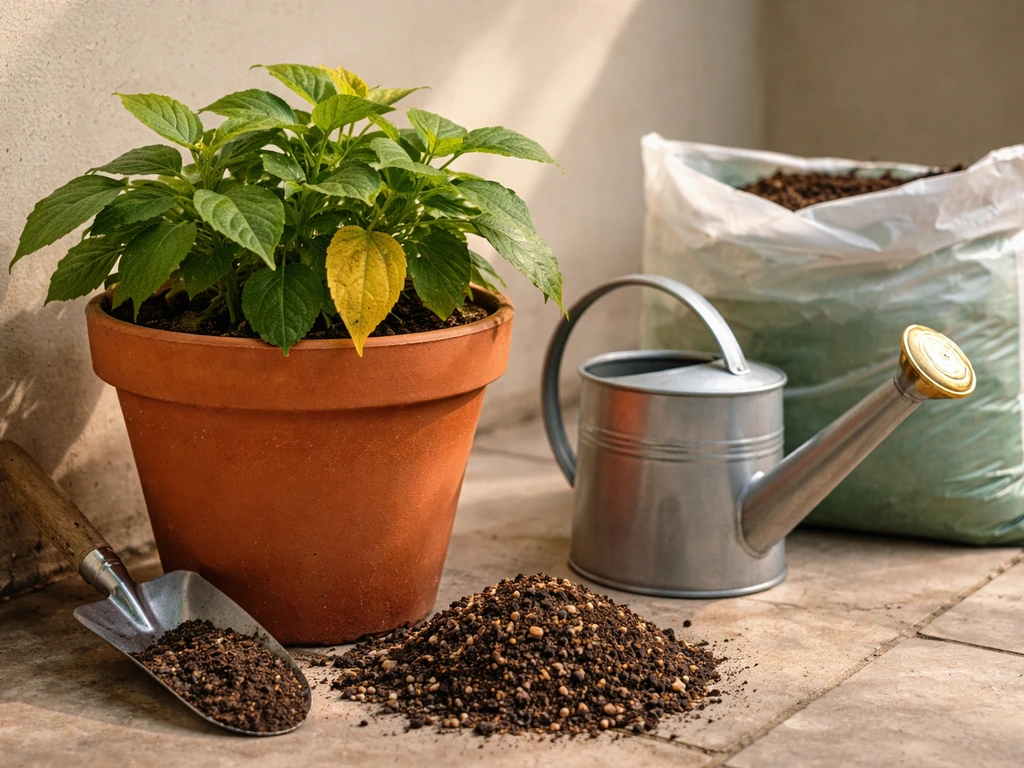
If your plants aren't performing well in Kellogg Patio Plus, here's how to diagnose the actual problem before writing off the soil entirely.
Slow growth or yellowing leaves almost always point to a nutrition issue, not a soil structure problem. Remember the base NPK is 0.30-0.10-0.10. Add a balanced organic granular fertilizer right away and water it in. If you're still deciding whether to invest in a patio espresso setup, checking patio espresso reviews can help you pick a reliable model for your space. If growth doesn't pick up within two weeks, add a liquid fertilizer (fish emulsion or kelp) for faster uptake.
If the soil dries out very fast or water runs straight through without absorbing, the peat has gone hydrophobic. Fix it by watering very slowly from the top or placing the pot in a tray of water for 20 to 30 minutes to rehydrate from the bottom. Adding a small amount of worm castings or moisture-retaining compost when you next repot will reduce this issue.
If you're dealing with fungus gnats, let the top inch of soil dry out fully between waterings. If you’re seeing skeeter screen patio egg reviews mention gnat eggs, use the same dry-down and sticky-trap approach to break the cycle quickly fungus gnats. Sticky traps can help reduce the adult population while the dry-down kills larvae. If the problem persists, consider top-dressing the container with a half-inch of sand, which dries faster than potting mix and discourages egg-laying.
If you opened a bag that was clearly off (very large wood chunks, unusual heat, or a strong ammonia smell from incompletely composted manure), the practical move is to return it. Home Depot typically accepts returns on bagged soil. If you already used it, remove as much as you can from the affected containers, repot with a fresh bag or an alternative mix, and start the fertilizing process fresh. Plants that have been in bad soil for less than two weeks often recover well once moved to a better medium.
For ongoing patio container gardening, the readers who get the best long-term results with this mix are the ones who treat it as a base rather than a complete system. Amending with compost, feeding consistently, and checking soil structure at the start of each season makes a bigger difference than the brand of base mix. If you want more specifics on how the product performs in real home setups, this Kellogg Patio Plus review covers the most important takeaways. That's true whether you're growing patio tomatoes, herbs, or ornamental flowers in your outdoor pots.
FAQ
Is Kellogg Patio Plus safe to use in containers for edible herbs and vegetables right away?
Yes, but treat it as a base and start with a gentle feeding plan. Even though it is OMRI-listed, the provided nutrient level is low, so for leafy greens, basil, and patio tomatoes you will usually see faster, steadier results if you add a balanced organic granular fertilizer at planting and then re-feed lightly after the first couple of weeks.
What should I look for inside the bag when I’m checking it at the store to avoid the “wood chip” batch issue?
Aim for a mostly fine, soil-like texture with small pieces dispersed evenly. If you can easily pick out large chunks or see a disproportionate amount of bulky wood, skip that bag. Also avoid bags that smell strongly like ammonia or show signs of incomplete composting, those are red flags even if the label looks correct.
Can I mix Kellogg Patio Plus with garden soil or compost, or will that cause problems?
You can, but do it intentionally. Garden soil often compacts in pots and can reduce drainage, so if you blend, keep it mostly potting mix and add compost in modest amounts. A common approach is to start with mostly Kellogg Patio Plus and then add a smaller portion of compost or worm castings for nutrients and microbial support, not as a full replacement.
How do I prevent compaction if I reuse soil from last year’s containers?
Loosen and partially refresh before replanting. Remove any visible debris, break up the older material, and amend with compost and some fresh potting mix. If the mix has tightened up or holds water unusually long, consider fully replacing the worst portion, especially in large pots where wet-dry cycling accelerates compaction.
Why does my mix seem to drain fine at first but water later runs through too fast?
That often points to either poor potting habits or gradual structure breakdown. Confirm your pot has drainage holes, then check whether the mix is becoming hydrophobic as it dries out. The fix is to rehydrate slowly (top watering very slowly or bottom soaking for 20 to 30 minutes) and then improve future watering consistency rather than immediately switching soils.
Does the low NPK mean I should fertilize immediately, or can I wait?
For most container plants, waiting too long usually shows up as slow growth or yellowing leaves. Since the base NPK is relatively low, plan to fertilize at planting or within the first week or two. If you see no improvement after about two weeks, switch to a faster-uptake liquid fertilizer for a short push, then return to your normal feeding rhythm.
Is Kellogg Patio Plus a good choice for cucumbers in pots?
It can work, but it is more likely to disappoint in cucumber and other heavy-feeding setups, especially if you get a poor-texture batch. If you grow cucumbers, prioritize a bag with consistent fine texture, use a larger pot, and consider more frequent feeding and topping up during the season to offset nutrient depletion.
What’s the best way to deal with fungus gnats if I just potted with this mix?
Start with moisture management. Let the top inch dry between waterings, use sticky traps to reduce adults, and avoid constantly wet surface conditions. If you are still getting activity, top-dressing with a thin layer that dries faster (such as a light sand layer) can discourage egg-laying and help break the cycle.
If my plants fail after potting with one bag, how long should I wait before I conclude the mix is the cause?
If the issue is acute, you will usually see symptoms within the first couple of weeks, such as wilting, repeated yellowing, or failure to bounce back after normal watering. If it does not improve after you correct fertilizing and watering conditions, do a container-level intervention, repot with a fresh bag or an alternative mix, and restart your fertilizing schedule.
Does the “ready to use, no mixing required” claim still matter if I want better results?
It matters for convenience, but it is not a substitute for plant-specific care. Treat it as ready to use structurally, then supply what containers typically need: supplemental organic fertilizer, periodic amendment if reusing soil, and regular checks of moisture retention and pot drainage. Those steps usually matter more than minor differences between brands.
Next Article
Sims 4 Perfect Patio Stuff Review for Outdoor Builds
Sims 4 Perfect Patio Stuff review: what to build, best outdoor items, swatches, buildability, value, and who should buy.