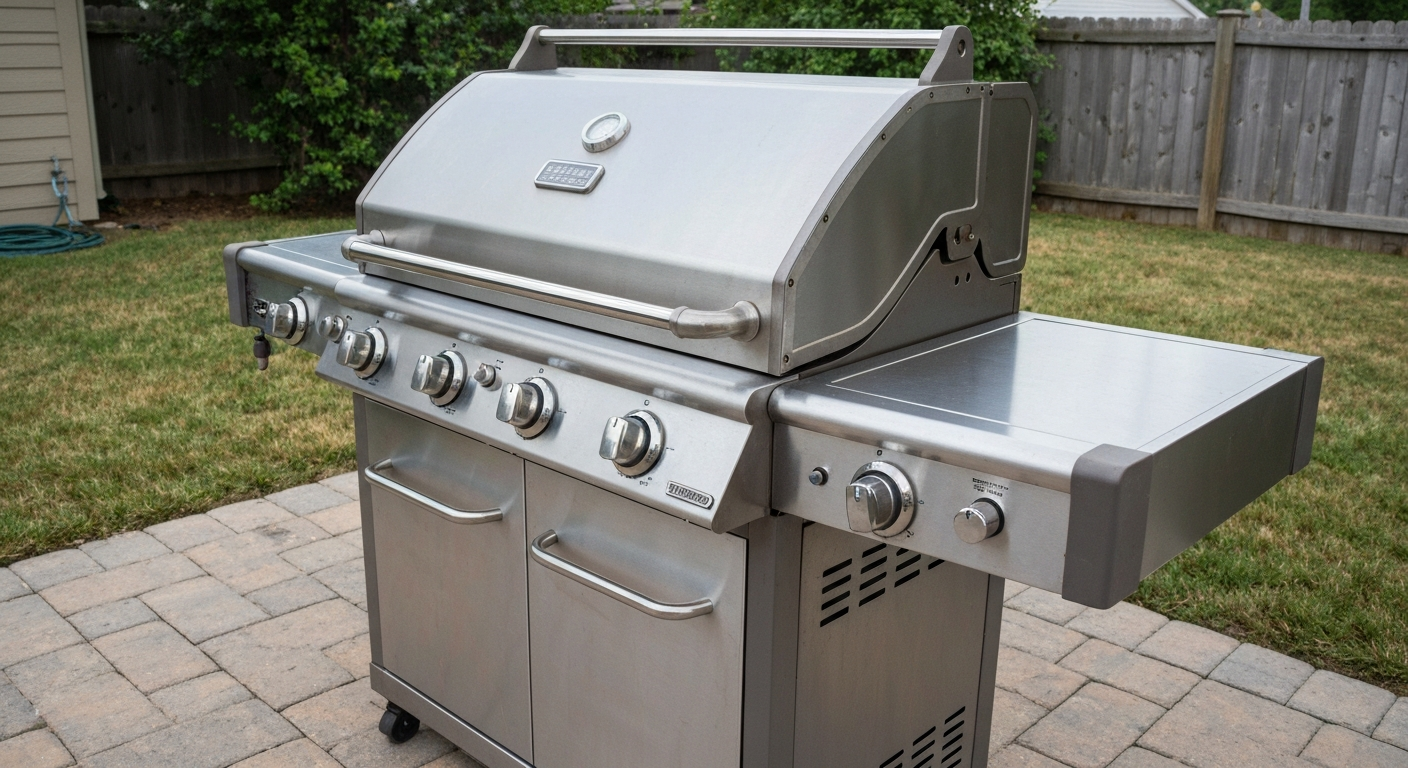
Patio Range is a mid-tier gas grill brand supplied by S.R. Potten Ltd. that shows up in Canadian and North American outdoor-living markets under model numbers like the CG7200, CG8400, and SS50072NG. Based on aggregated owner feedback, parts-replacement patterns, and the brand's own documentation, it's a functional backyard grill with legitimate stainless steel construction and a reasonable warranty on paper, but one that has a documented history of ignition failures, burner corrosion, and uneven heat distribution that you'll want to factor into your buying decision before spending your money.
Patio Range BBQ Review: Models, Ratings & Installation Tips

Vera Grady
13 Aug 2026
Quick verdict
Patio Range grills sit in the value-to-mid-range segment. The brand offers a full 1-year warranty and lifetime coverage on stainless steel parts (with notable carve-outs for discoloration and scratches), which looks attractive on paper. In practice, the most consistent complaints from owners cluster around three areas: igniters that fail within the first couple of seasons, burners and heat plates that show rust ahead of what the warranty covers, and cold spots during cooking. None of these are dealbreakers for a mechanically inclined buyer who is comfortable replacing affordable aftermarket parts, but they are real costs to factor in. If you need a set-it-and-forget-it grill with minimal maintenance, there are better-supported options in the same price range. If you're a hands-on griller who wants a big cooking surface, can work with natural gas or propane (but not both, conversions are not permitted), and doesn't mind occasional part swaps, Patio Range is serviceable.
At-a-glance ratings summary
There is no single large verified-purchase review pool for Patio Range the way you'd find for Weber or Broil King, which is itself worth noting. Ratings and feedback come from a mix of parts-retailer comments, regional forum posts, international product-review platforms, and community discussions. Aggregating those sources, here's how the brand tends to score across key categories.
| Category | Aggregated Rating (out of 5) | Notes from owners |
|---|---|---|
| Cooking performance | 3.5 / 5 | Adequate heat output; cold spots reported near edges |
| Ignition reliability | 2.5 / 5 | Battery-spark igniters fail within 1-2 seasons for many owners |
| Build quality / materials | 3.0 / 5 | Stainless steel construction is genuine but lighter gauge than premium brands |
| Durability over 3+ years | 2.5 / 5 | Rust on burners, grids, and heat plates is a recurring complaint |
| Warranty and support | 3.0 / 5 | Warranty terms are decent; exclusions for surface rust limit real-world usefulness |
| Value for money | 3.5 / 5 | Competitive at initial price point; ongoing parts costs reduce long-term value |
| Ease of assembly | 3.5 / 5 | Owner's manual (31 pages) is reasonably detailed; no major assembly complaints found |
These ratings reflect patterns in available customer feedback, not a statistically controlled sample. I'm being transparent about that. If you've owned a Patio Range grill and want to add your experience to the record, scroll to the bottom of this page, this site exists to build exactly that kind of data.
Who should consider the Patio Range
Patio Range isn't the right grill for everyone, but there's a clear buyer profile where it makes sense. Here's who tends to be satisfied and who tends to regret the purchase.
- Good fit: Homeowners who grill frequently and are comfortable doing light maintenance, including replacing igniters and burners with widely available aftermarket parts
- Good fit: Canadian buyers shopping through S.R. Potten Ltd.-stocked retailers who want a North American-warranted product with local phone support (1-800-667-7313)
- Good fit: Buyers committed to a single fuel type (either LP or NG) who won't need to switch, since fuel conversion is not available on any Patio Range model
- Good fit: Households that want a larger cooking footprint at a mid-range price point and plan to use a rotisserie burner
- Not a great fit: Buyers who want a low-maintenance grill that holds up for 5-plus years without part replacements
- Not a great fit: Anyone expecting to convert from propane to natural gas later, or who rents and moves frequently — the fuel type you buy is permanent
- Not a great fit: Buyers in coastal or high-humidity environments where corrosion accelerates, unless they are willing to do seasonal maintenance diligently
Models, specifications, and key features
Parts retailers and manufacturer documentation reference at least seven distinct Patio Range model numbers. The most commonly referenced in parts databases and owner manuals include the following. Note that some models share the same frame with LP or NG fuel variants distinguished only by a suffix.
| Model Number | Fuel Type | Notes |
|---|---|---|
| CG7200 / CG7200LP | Liquid Propane | One of the most widely listed models; extensive aftermarket parts availability |
| CG7200NG | Natural Gas | Natural gas variant of the CG7200 frame; not interconvertible with LP version |
| CG8400 / CG8400NG | Natural Gas (NG variant) | Larger format model; NG suffix denotes natural gas configuration |
| SS50072NG | Natural Gas | Model with available 31-page owner's manual from ApplianceFactoryParts; stainless steel construction confirmed |
| CG587 | Propane (likely) | Listed in cross-reference parts databases; limited independent documentation |
| SK472B | Propane (likely) | Listed in parts catalogs; fewer aftermarket part listings than CG7200 family |
Key features documented across the Patio Range line include stainless steel primary cooking grids, stainless steel burners (covered under the 5-year limited warranty), battery-powered spark ignition (AA battery units, part numbers 03350 / IG-17B / IG-17 referenced in parts listings), heat plates or savor plates positioned over burners, and a rear rotisserie burner on certain models. The LP configurations are designed for a standard 20 lb tank with a maximum diameter of approximately 12 inches and height of 18.5 inches; OPD (overfill prevention device) tanks are required by the manual.
Cooking performance, fuel types, heat control, and capacity
The owner's manual for the SS50072NG recommends a 3-to-5-minute preheat on the high setting for high-temperature cooking and roughly 3 minutes for lower-temperature sessions. New grills are instructed to be burned off for 3 to 5 minutes before first use. Rotisserie cooking is supported, with the manual noting a maximum lid-closed temperature of around 325 to 350 degrees Fahrenheit when using the rotisserie and rear burner, that's lower than you might expect for rotisserie chicken if you're used to gas grills that push 450 to 500 degrees with the lid down, so plan your cook times accordingly.
On fuel types: Patio Range models are manufactured specifically for either liquid propane or natural gas, and the manual is explicit that conversion between the two is not permitted and that no conversion kits are available. Attempting a conversion voids the warranty entirely. This is a harder restriction than you'll find on some competing brands that offer conversion kits as add-ons, so treat the fuel type you select at purchase as permanent.
On heat distribution, the most consistent real-world complaint across forums and review platforms is cold spots, particularly toward the edges of the cooking surface. This appears to be a heat-plate and burner-placement issue rather than a BTU deficiency. Owners who upgraded to aftermarket heat plates report some improvement, though the issue is not fully resolved in most accounts. For casual grilling and family cookouts it's manageable; for high-volume or precision cooking it becomes frustrating.
Durability, materials, and common failure points
Patio Range advertises stainless steel construction, and based on parts documentation this appears to be accurate for the primary cooking grids and burners. The warranty covers stainless steel parts for life and burners for 5 years. However, the warranty explicitly excludes surface rust, natural oxidation, paint loss, and discoloration, and these are precisely the failure modes owners report most often. That exclusion is standard in the grill industry but is worth reading carefully before assuming your rusted burner is a warranty claim.
The three failure points that come up most consistently in owner feedback are ignition failure, burner and heat-plate corrosion, and cold spots. Igniter failures are the most commonly reported short-term issue, the battery-powered spark generators in these units are the same standardized components (part 03350 / IG-17B) used across many mid-range gas grills, which means replacement parts are cheap and widely available. One Reddit user described replacing a failed igniter with a generic part from an online parts retailer for a modest cost, which is representative of the typical repair path. Burner and heat-plate rust appears in a longer timeframe, typically after 2 to 3 seasons depending on climate and storage habits. Blog posts and user comments associated with S.R. Potten Ltd. reference this pattern directly. See S.R. Potten Ltd., blog post and user comments referencing Patio Range rust/burner issues (S.R. Potten blog) for examples of consumer reports of burner corrosion and cold spots See S.R. Potten Ltd. — blog post and user comments referencing Patio Range rust/burner issues (S.R. Potten blog) for examples of consumer reports of burner corrosion and cold spots.. Cooking-grid corrosion is also reported but less frequently than burner-side issues.
- Igniter failure: Battery-spark units fail within 1-2 seasons for a notable share of owners; AA battery replacement and electrode tip cleaning are first steps before replacing the assembly
- Burner corrosion: Stainless steel burners show surface rust on exposed welds and perforations; warranty excludes discoloration, so most owners replace with aftermarket units (SCTB3 or SCTB5 cross-reference parts are widely listed)
- Heat plates / savor plates: Reported to pit and rust; aftermarket replacements are available and are a common DIY fix
- Cold spots: Heat distribution issue linked to burner and plate placement; partial mitigation with aftermarket heat plates but not fully resolved in user reports
- Cooking grid rust: Less common than burner-side corrosion but reported; 506S3-referenced replacement grids are available from parts suppliers
Pros and cons from real owner feedback
| Pros | Cons |
|---|---|
| Stainless steel burners and cooking grids (genuine, not plated) | Ignition systems fail relatively early; battery-spark units are a known weak point |
| Decent aftermarket parts ecosystem — replacement burners, igniters, grids all widely available | Fuel conversion (LP to NG or vice versa) is not possible; no conversion kits exist |
| 5-year burner warranty and lifetime stainless steel parts coverage on paper | Warranty excludes surface rust, oxidation, and discoloration — the most common real-world complaints |
| Rotisserie-capable on applicable models | Cold spots at cooking surface edges reported by multiple owners |
| 31-page manual with clear troubleshooting steps and a documented purge/reset procedure for low-flame issues | Surface rust and corrosion appear within 2-3 seasons for owners in humid or coastal climates |
| Standardized parts compatible with several other grill brands (Kenmore, Nexgrill, Grand Hall) | Limited visibility into current retail availability and pricing compared to national grill brands |
| Direct customer service phone line (1-800-667-7313) documented in owner's manual | Cross-brand parts compatibility means repair history can be inconsistent across used units |
How Patio Range stacks up against similar brands
If you're comparing Patio Range to other patio-focused brands, it's worth putting the key differences on the table. Patio Chef and Patio Gourmet target a similar homeowner audience with comparable cooking footprints, while Pangaea Patio operates more in the landscaping and outdoor design space. I've done full breakdowns of each elsewhere on this site, so I'll keep the comparison here focused on the grill-buying decision specifically.
| Brand | Segment | Fuel Conversion Available | Warranty Highlight | Key Differentiator | Reported Weak Point |
|---|---|---|---|---|---|
| Patio Range | Mid-range gas grill | No — LP and NG are fixed at manufacture | 1-year full; lifetime stainless; 5-year burners | Wide aftermarket parts availability; detailed owner's manual | Igniter failure; surface rust not covered by warranty |
| Patio Chef BBQ | Mid-range gas grill | Varies by model | Comparable to mid-tier segment | Brand identity focused on cooking versatility | See Patio Chef BBQ reviews for detailed breakdown |
| Patio Gourmet | Mid-to-upper casual grill | Varies by model | Comparable warranty terms | Emphasis on cooking features and aesthetics | See Patio Gourmet reviews for detailed breakdown |
| Pangaea Patio | Outdoor design and patio products (broader) | N/A (not a grill brand) | Product-specific | Landscaping, paving, and outdoor living focus | See Pangaea Patio reviews for service and installation feedback |
| Patio fire pit (category) | Ambient heating / outdoor ambiance | N/A | Varies by manufacturer | Complements a grill setup; adds heating and ambiance | See patio fire pit reviews for safety and durability data |
The honest summary here is that Patio Range competes on parts availability and warranty language more than on cooking innovation or build quality. If brand-specific cooking features matter to you, Patio Chef and Patio Gourmet are worth reading up on before committing. If you're building out a full outdoor living space and want fire-pit options alongside a grill, that's a separate purchase decision with its own set of trade-offs. For comparisons and buyer feedback on fire pits and how they integrate with outdoor kitchens, see our patio fire pit reviews.
Maintenance and warranty guidance
The Patio Range warranty structure has three tiers: a full 1-year warranty covering the entire grill (repair or replace at the manufacturer's option), a 5-year limited warranty on stainless steel burners, and a lifetime limited warranty on stainless steel parts. The lifetime warranty sounds impressive but the exclusions are significant: surface rust, natural oxidation, paint loss, and discoloration are all explicitly excluded. In a practical sense, this means the warranty is most useful for structural failures or defective components in the first year, and for burner replacement due to failure (not corrosion) within 5 years. For warranty service, the contact number listed in the owner's manual is 1-800-667-7313.
To get the most life out of a Patio Range grill, consistent maintenance matters more than it does with premium stainless builds. After each cooking session, brush and wipe down the cooking grids while warm. At the start and end of each season, remove and inspect heat plates for rust and replace them proactively if pitting is visible, aftermarket plates are inexpensive and this is the single maintenance step that will do the most to extend the cooking surface's useful life. Store the grill covered or indoors during extended off-season periods, especially in regions with winter precipitation or salt air.
Troubleshooting the most common issues
The owner's manual documents two troubleshooting routines that cover the majority of real-world problems owners report. For ignition failures, the sequence is: replace the AA battery first, then inspect electrode tips for debris or carbon buildup and clean or adjust the gap, then check that wiring is connected and not damaged, and finally verify burner tubes are seated over valve orifices correctly. If none of those steps resolve it, the igniter assembly itself is the likely culprit, and as noted above, replacement units (03350 / IG-17B / IG-17) are available from multiple parts retailers for a modest cost.
For low-flame output, which owners sometimes describe as the grill 'not getting hot enough,' the manual prescribes a specific regulator purge and reset procedure: disconnect the regulator from the tank, allow the system to stand for 5 minutes to bleed pressure, then reconnect and open the tank valve slowly (not quickly), and ignite starting with the burner farthest from the tank. This resets the regulator's internal bypass valve, which can get stuck in a low-flow position if the tank valve was opened too quickly. This is a documented fix and worth trying before purchasing parts.
- Igniter doesn't spark: Replace AA battery, clean electrode tip, check wiring connections, verify burner tube alignment over orifice
- Grill won't reach temperature: Run the regulator purge procedure (disconnect, wait 5 minutes, reconnect slowly, ignite farthest burner first)
- Uneven heat / cold spots: Inspect heat plates for warping or excessive rust; replace with aftermarket heat plates compatible with your model
- Rust on burners or grids: Clean with a stainless brush, apply a thin coat of high-heat cooking oil after cleaning; replace with SCTB3/SCTB5 or 506S3 cross-reference parts if structurally compromised
- Persistent issues after above steps: Contact Patio Range customer service at 1-800-667-7313 with your model number and describe the failure
Installation, delivery, and service considerations
Patio Range gas grills are not plug-and-play installations if you're connecting to a natural gas line. The owner's manual specifies that installation must conform to local codes and, depending on jurisdiction, either ANSI Z223.1/NFPA 54 (the National Fuel Gas Code) in the United States or CAN/CGA-B149.1 in Canada. That means a licensed gas contractor is typically required for natural gas hookup, and that's not optional guidance, it's a code compliance requirement in most jurisdictions. Budget for that service call when comparing the real cost of an NG model versus a propane unit you hook up yourself.
For propane models, setup is more straightforward: attach a standard 20 lb OPD tank (no larger than 12 inches in diameter and 18.5 inches in height per the manual), connect the regulator, and follow the lighting procedure in the manual. Even so, if you're integrating a propane grill into a built-in outdoor kitchen or patio enclosure, a local patio contractor or outdoor kitchen specialist should review the installation for clearances and ventilation before first use.
Delivery and retail logistics for Patio Range vary by region. Because S.R. Potten Ltd. distributes primarily through regional Canadian and North American retailers rather than large national chains, availability in your area may be limited. Before purchasing, confirm that a local retailer can support warranty claims and has access to parts, buying through a retailer without a local parts or service relationship means you're handling all repairs through mail-order parts suppliers, which is manageable but adds friction. When researching local retailers that carry Patio Range or comparable grill brands, use the search tools on this site to find verified customer reviews of outdoor living retailers and patio contractors in your area. See our patio gourmet reviews for retailer comparisons, verified customer feedback, and parts-availability notes to help choose a local seller.
Practical buying checklist
Before you commit to a Patio Range grill, run through these questions. They're the ones I'd want answered before spending money on any mid-range gas grill, and they're particularly relevant for this brand.
- What fuel source is available at your home? Confirm natural gas stub-out or propane before selecting a model — you cannot convert after purchase
- If choosing NG, do you have a licensed gas contractor lined up to handle the hookup? Get that quote before finalizing your grill budget
- Is there a local retailer stocking Patio Range who can support warranty claims in person, or will you be handling warranty and parts entirely through phone and mail-order?
- Are you in a high-humidity, coastal, or wet-climate region? If so, budget for a quality grill cover and plan on annual heat-plate inspection and replacement as ongoing costs
- Have you compared the Patio Chef BBQ line and Patio Gourmet options at similar price points? Both serve a similar audience and are worth reading before deciding
- Does the model you're considering include a rear rotisserie burner, and if so, are you comfortable with the 325-350 degree lid-down limitation for rotisserie cooking?
- Do you have a replacement igniter kit (03350 / IG-17B) bookmarked or on hand? Given the documented failure rate, having one ready before you need it is a practical move
- Are you planning a full outdoor living setup with a fire pit, patio enclosure, or built-in kitchen? If so, consider hiring a local patio contractor with outdoor kitchen experience rather than handling installation piecemeal
FAQ
What primary product details must be collected for a comprehensive Patio Range BBQ review?
Collect model numbers and variants (e.g., CG7200, CG7200LP/NG, CG8400, SS50072NG, SK472B), full specifications (dimensions, BTU ratings per burner, fuel type: LP vs NG, tank size constraints), manufacturer/supplier info (S.R. Potten Ltd referenced in the owner’s manual), owner’s manual content (assembly, safety, preheat/cooking guidance, rotisserie limits), and parts/aftermarket ecosystem (common replacement part numbers and compatibility). Use authoritative sources such as the SS50072NG owner’s manual (ApplianceFactoryParts) and parts indexes for accuracy.
Which aggregated customer‑experience evidence is required and where can it be found?
Aggregate reports on ignition reliability, burner performance, heat distribution (cold spots), corrosion/rust, and longevity from multiple sources: owner forums (Reddit), product reviews on retail and international review sites, and replacement‑parts vendor listings that imply repair frequency. Cite patterns rather than single anecdotes; for Patio Range this includes forum reports of igniter failures and rust/corrosion issues across years, and parts vendors showing common replacement burner/igniter sales (e.g., IG‑17, 03350).
What warranty and maintenance details must be included?
Summarize warranty terms from the owner’s manual: full 1‑year repair/replace option, limited lifetime coverage for stainless steel parts with exclusions, 5‑year stainless‑steel burner warranty, and contact phone (1‑800‑667‑7313). Note warranty exclusions: surface rust, paint loss, discoloration and normal oxidation are not covered. Include recommended maintenance from the manual (burn‑off new grills 3–5 minutes, preheat guidance, cleaning instructions) and list routine checks (burner/igniter, electrode tips, wiring, regulator/hoses).
What installation and fuel‑type information is required for readers hiring installers or buying locally?
State that LP and NG models exist but manufacturer forbids LP↔NG conversions (conversion kits not available; attempting conversion voids warranty). Cite installation code guidance: install per local codes or ANSI Z223.1/NFPA 54 or CAN/CGA‑B149.1. For LP models specify standard 20 lb tank max dimensions (~12" dia × 18½" high) and OPD requirement. Advise readers to hire certified gas appliance installers or local retailers that perform gas hookup and to confirm installer familiarity with the specific model and local code compliance.
Which common failure points and troubleshooting steps must be documented?
Document recurring user complaints: ignition failures, burner deterioration/cold spots, surface rust and heat‑plate corrosion. Provide manual‑sourced troubleshooting steps to test and fix ignition/low‑flame: purge/regulator reset (disconnect regulator, 5‑minute wait, reconnect, open tank valve slowly, ignite farthest burner first), replace AA battery in igniter, inspect electrode tips/wiring and burner tube positioning. Recommend contacting Customer Service if obstructions or unresolved malfunctions persist. Note that many owners replace igniters or burners with aftermarket parts (IG‑17/03350, SCTB burners).
What cooking‑performance details should the review verify and report?
Verify preheat times (3–5 minutes for high temp as in the manual), burn‑off guidance for new grills, rotisserie temperature limits (lid‑closed max ~325–350°F), observed heat distribution and presence of cold spots from aggregated user reports, and real‑world BTU/performance if available. Report how fuel type (LP vs NG) and damaged burners/heat plates affect heat output. Use owner manual guidance combined with customer patterns to avoid unsupported performance claims.
Next Article
Patio Fire Pit Reviews: Top Picks, Buying & Installation
Patio fire pit reviews: vetted ratings, top models, buying checklist, installation & safety tips.