
The world of patio reviews is bigger and messier than most homeowners expect. You've got Google, Yelp, BBB, Angi, Nextdoor, dedicated outdoor living review sites, and word-of-mouth from neighbors, all pulling in different directions, all with their own blind spots. The smartest move is to use multiple sources in combination, read the written reviews (not just the star counts), match what you find to your specific project type, and treat any single platform's rating as a starting point rather than a verdict. That's the whole framework, and everything below shows you exactly how to execute it.
The World of Patio Reviews: A Step-by-Step Guide

Vera Grady
29 Jun 2026

Where to look for patio reviews (and what sources actually matter)

No single platform gives you the full picture. Each one has structural quirks that shape what you see, so knowing how they work helps you weigh them correctly.
Google Business Profiles are the first place most people land, and volume is their biggest strength. A patio contractor with 80 Google reviews gives you more statistical signal than one with 12. But Google has acknowledged that reviews can be temporarily disabled or go missing in some situations, and getting fake or retaliatory reviews removed is notoriously frustrating, the dispute process can drag on for weeks with no resolution. Use Google for a broad volume read, not as your only stop.
Yelp filters aggressively. By their own admission, a meaningful portion of submitted reviews are flagged as 'not recommended' and pushed off the main profile page, some estimates put this around 25% of all submissions. Those reviews are still technically accessible if you scroll to the bottom and click the greyed-out link, and they're often worth reading. A company with a 4.5-star average but 30 hidden reviews deserves a second look.
The BBB is useful for complaints history, not ratings. BBB itself is clear that its ratings reflect their assessment of how a business is likely to interact with customers, not a guarantee of quality or performance. An A+ rating with zero reviews tells you almost nothing about workmanship. But a BBB profile with three unresolved complaints in the past two years tells you quite a bit.
Angi (formerly Angie's List) has a verification process that screens out bots, employees, and obvious competitor attacks. That's genuinely useful for outdoor contractors where fake reviews are common. But remember: it's still a platform process, not an independent audit. Treat verified reviews there as more trustworthy than anonymous posts, not as gospel.
Nextdoor is great for hyper-local gut checks. If three of your actual neighbors used the same patio company and loved them, that's hard to fake. The downside is that Nextdoor moderation is inconsistent, content gets flagged or removed in ways that seem arbitrary, and the recommendation pool is small enough that a single vocal neighbor can skew the conversation. Use it to surface names you haven't heard of yet, then verify elsewhere.
Dedicated outdoor living and patio review aggregators sit in a different category from all of the above. Sites that compile customer experiences specifically for patio contractors, enclosure installers, pool builders, and outdoor retailers give you context that general platforms can't. Reviews on a niche aggregator tend to be written by homeowners who've gone through the same decision you're facing right now, they know to mention material quality, lead times, permit handling, and post-installation support, because those are the things that matter in outdoor living projects. If you want a practical starting point, Pete's Patio and Garden Reviews can help you scan the kind of experiences to look for.
How to read patio and outdoor reviews without getting fooled
The FTC has been direct about this: don't rely on star ratings alone. Since October 2024, the FTC's Consumer Reviews and Testimonials Rule (16 CFR Part 465) specifically addresses deceptive practices involving consumer reviews, including fake or false testimonials. The rule exists because the problem is real and widespread. Here's how to protect yourself at the reading stage.
- Read the 3-star reviews first. Five-star reviews are often enthusiastic but vague ('amazing work, love our new patio!'). One-star reviews can be emotional and one-sided. The 3-star reviews tend to be the most honest — they describe what went right and what didn't, which is exactly the information you need.
- Look for operational detail. Real customer reviews mention specific things: the crew showed up late on day two, the pavers had to be re-leveled after a month, the sales rep never returned calls after deposit. Fake or incentivized reviews tend to stay generic.
- Check the reviewer's profile history. On Google and Yelp, you can click on a reviewer's name. If someone has written one review ever — for this exact contractor — treat it with skepticism in both directions (could be fake positive or a competitor's fake negative).
- Notice the response pattern from the business. A contractor who responds to every negative review with a thoughtful explanation, not a defensive wall of text, is showing you something important about how they handle problems.
- Watch for review clusters. A sudden burst of 5-star reviews over a two-week period, especially after a long gap, is a classic sign of a review campaign — real or manufactured. Healthy review profiles accumulate gradually.
- Cross-reference across platforms. If a company has 4.8 stars on Google but unresolved BBB complaints and a string of hidden Yelp reviews, the composite picture is very different from the Google number alone.
Figure out which project type you're actually researching
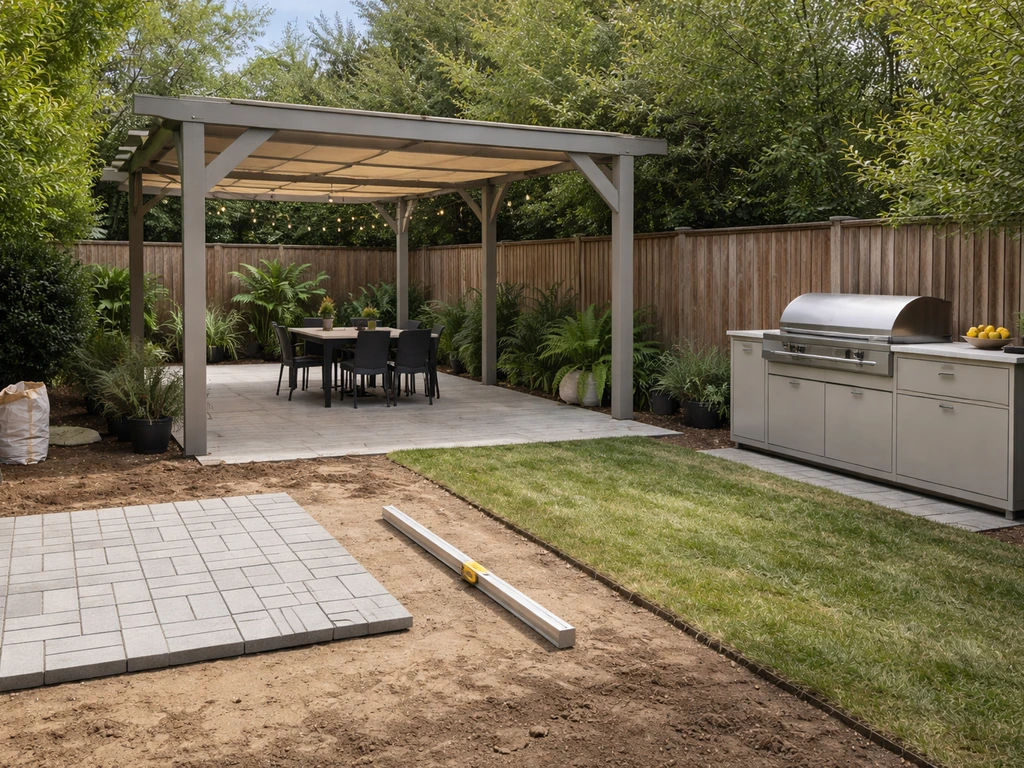
This step sounds obvious but gets skipped constantly, and it leads to homeowners comparing apples to bowling balls. The outdoor living industry covers several distinct project categories, and a contractor who's great at one may be entirely wrong for another. Before you go deep on any company's reviews, get clear on what you're actually buying.
| Project Type | What It Involves | Key Review Terms to Search |
|---|---|---|
| Patio construction / hardscaping | Pavers, stamped concrete, natural stone, grading, drainage | pavers, concrete work, grading, drainage, timeline, warranty |
| Pergolas, shade structures, decks | Wood, aluminum, or vinyl structures; often with electrical or fan wiring | pergola install, deck build, structural quality, post footings, HOA approval |
| Screen rooms / enclosures / covers | Screen enclosures, patio covers, sunrooms, louvered roof systems | screen room, enclosure, louvered roof, leaking, screen replacement |
| Pool-related outdoor work | Pool decking, coping, surrounding landscaping, outdoor kitchens near pools | pool deck, coping, tile work, heat, slip resistance |
| Outdoor specialty retail | Buying furniture, fire pits, grills, planters, lighting from a retailer | delivery, assembly, product quality, warranty claim, returns |
When you search reviews, use the specific terms from your project type rather than just the company name. On platforms that support keyword search within reviews (some aggregators do, Google does partially), searching 'pergola' or 'screen enclosure' will surface the most relevant customer experiences fast.
Contractors vs enclosure installers vs specialty retailers: who you're hiring matters
The review criteria that matter most shift depending on which type of business you're evaluating. Here's how to think about each one.
General patio contractors
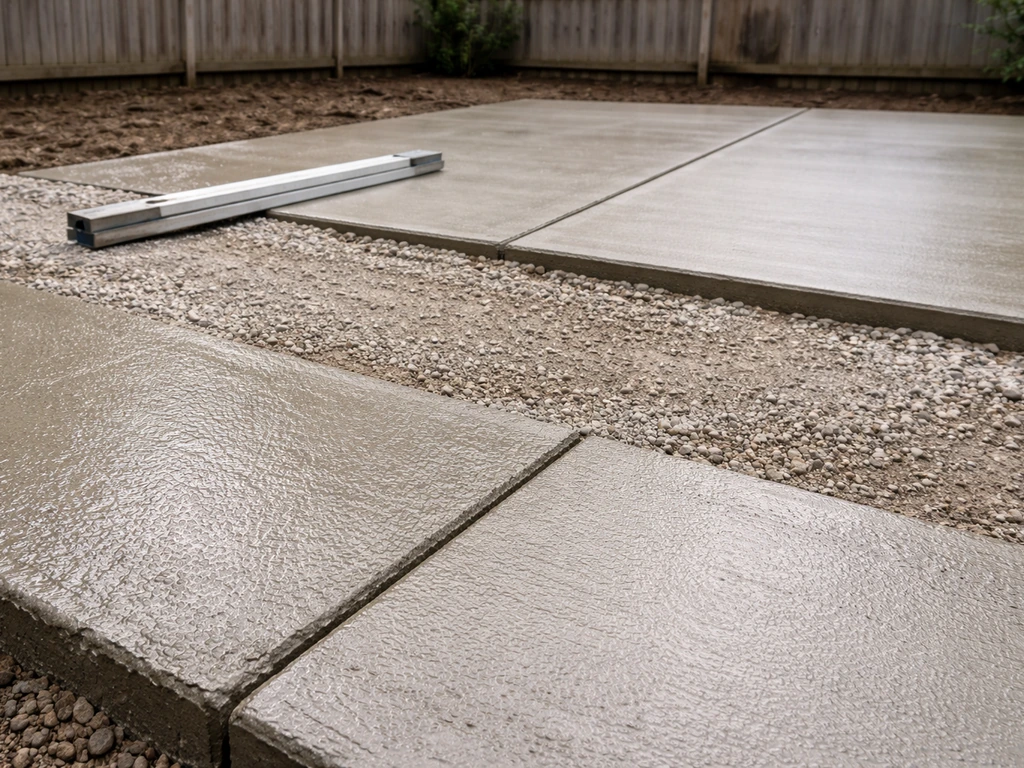
These are the companies building your hardscape from scratch, laying pavers, pouring concrete, building retaining walls, grading slopes. In reviews, prioritize mentions of timeline adherence, crew professionalism, permit handling, and how the site looked after completion (cleanup matters). The most valuable reviews describe what happened when something went wrong and how the contractor responded.
Enclosure and cover installers
Screen rooms, patio covers, louvered roofs, and sunrooms involve structural attachment to your home, which means permits, load calculations, and waterproofing are non-negotiable topics. Reviews that mention leaking within the first year, screen panels blowing out in wind, or difficulty getting warranty service back to fix problems are the ones to weight heavily. A company that's great at selling and slow at warranty callbacks will show a specific pattern across reviews: early positive sentiment, then a trail of frustrated follow-up complaints.
Outdoor specialty retailers
If you're buying patio furniture, fire features, or outdoor kitchen equipment, the review concerns are different. What matters here: did the product arrive as described, was delivery damage handled gracefully, how easy is it to get warranty or replacement parts, and does the showroom staff actually know the products? Look for review patterns around post-purchase support rather than just the in-store experience.
How to shortlist companies using review signals
Once you've got a list of 8 to 10 candidates from your research, you need to cut it to 3 to 4 for quotes. These are the signals to use.
Photos: the most underused filter
Customer-submitted photos in reviews are worth more than the text around them. They show actual completed work, not the portfolio shots the company hand-picks for their website. Look for photos that show the full installation, not just a glamour close-up. Edge work, transitions between materials, how the structure meets the house, and the finish quality on corners and cuts all tell you whether this crew is meticulous or just fast.
Recency: reviews over 18 months old have limited relevance
Crews turn over. Ownership changes. A company that was stellar in 2022 may have lost its best lead installer and gone downhill. Prioritize reviews from the last 12 months, and give extra weight to the last 6. If a company's recent reviews are noticeably worse than their older ones, that's a red flag worth investigating. Ask them directly: has there been any change in ownership, management, or key crew members recently?
Consistency across multiple reviews
You're not looking for a perfect score, you're looking for pattern consistency. If 14 out of 18 reviews mention that the crew was respectful and the project finished close to the quoted timeline, that's a meaningful signal. If reviews wildly disagree on basic things like communication and cleanup, the company probably has an inconsistent crew situation, some jobs go great, others go badly, and you can't predict which you'll get.
Review volume thresholds worth trusting
For a local patio contractor, 30 or more reviews across multiple platforms gives you enough data to see real patterns. Under 15 reviews, you're working with a thin sample that a single outlier can distort. This doesn't mean a newer company with fewer reviews is bad, it may just be small or newer, but you need to compensate by asking for direct references you can call.
Questions to ask and things to verify before you sign anything
Reviews tell you what past customers experienced. These questions help you confirm whether that experience is likely to be yours.
- Are you licensed and insured in this state, and can I see the current certificate? Licensing requirements for patio/hardscape contractors vary by state and even county. General liability and workers' comp are non-negotiable — if a crew member is injured on your property and the contractor isn't insured, you're exposed.
- Who specifically will be doing the work? Is it your direct employees or subcontractors? Reviews are often about the actual crew on-site, not the company name. Knowing whether subs are involved helps you understand how much direct quality control the company maintains.
- What permits are required for this project, and who pulls them? Any structural addition to your property — enclosure, pergola, deck — almost certainly requires permits. If a contractor tells you 'we don't usually bother with permits for this,' walk away.
- What is the payment schedule, and what triggers each payment? A standard healthy structure is a deposit (typically 10 to 30%), a progress payment at a defined milestone, and a final payment only after completion and your sign-off. Never pay 50% or more upfront.
- What exactly is included in the quote, in writing? Material specifications (brand, grade, color), square footage, site prep, hauling away debris, sealing — every item that matters should be line-itemed. Vague quotes lead to scope disputes.
- What is the project timeline and what happens if it runs over? Get a start date and an estimated completion window in writing. Ask what compensation or remedy is available if the timeline slips significantly.
- What is your warranty, and how do I make a claim? Get the warranty terms in writing, specifying what's covered (materials, labor, or both), for how long, and exactly how to initiate a claim. Reviews often reveal whether companies actually honor their warranties or go quiet after payment.
- Can you provide two or three recent customer references I can call — not email? A contractor who hesitates to provide direct phone references for completed jobs is giving you important information.
Red flags in reviews and how to protect yourself during the project

Some patterns in reviews are nearly always a warning sign. Here's what to watch for before you hire, and what to do if problems emerge during the project.
Red flags to catch before hiring
- Multiple reviews mentioning the contractor went silent after receiving a large payment. This is the most dangerous pattern in patio/outdoor contracting.
- Recurring mentions of a mismatch between the quote and the final invoice — scope creep that wasn't communicated until the bill arrived.
- Reviews describing work that failed within one season: pavers shifting, screens tearing, enclosure leaking — especially when combined with difficulty reaching the company for warranty service.
- A contractor who can't start for more than six months but wants a large deposit now. Holding significant money that far out creates unnecessary risk.
- Responses to negative reviews that attack the customer, dismiss the complaint, or threaten legal action. This tells you a lot about how disputes get handled.
- No physical business address, no local phone number, and a website that's only a few months old. In the patio industry, fly-by-night operators after storms or busy seasons are a real problem.
How to protect yourself once work begins
Document everything in writing, even if it feels overly formal. Send a quick email summarizing any verbal conversations about changes, timelines, or materials, something like 'just confirming what we discussed today.' Keep a dated photo log of the project from day one through completion. If the contractor asks to deviate from the original scope or substitute materials, get it in writing with the price impact before they proceed.
Hold your final payment until you've done a proper walkthrough and identified anything that needs to be corrected. A reputable contractor expects this. The final payment is your last real leverage, once it's released, your options narrow significantly. This is also where the review you eventually write becomes a tool: contractors who know their reputation is on the line through platforms that publish verified customer experiences tend to be more responsive at punch-list time.
When you do write your review after the project, include the specific details that would have helped you make your decision: the actual timeline versus the quoted timeline, how the crew handled the site, whether the final product matched the description in the contract, and how the company responded to any issues. That kind of specificity is exactly what the next homeowner searching through the world of patio reviews needs to see, and it's how the whole ecosystem of outdoor living reviews gets better over time.
If you're researching a specific type of business, a local patio company, a specialty outdoor retailer, or a particular contractor, it also helps to look at how other homeowners describe their experiences with similar business types. Review collections focused on specific companies like Dan's Porch and Patio or Pete's Patio and Garden, for example, can give you a useful benchmark for what good contractor communication, installation quality, and post-sale support actually look like in practice, which makes your comparisons sharper when you're evaluating local candidates.
FAQ
How do I handle it if reviews seem linked to the wrong location or company name?
Yes. If the contractor has multiple locations or is hired as a subcontractor, reviews may be attached to the parent brand, the sales office, or the installer. In that case, prioritize the listing tied to your city or the exact business name on the contract, then match review dates to the timeframe when that crew was doing work in your area.
What’s the best way to interpret a bad patio review without overreacting?
Don’t assume a negative review means the work is bad. Look for recurring operational themes, like repeated complaints about permits, warranty response timelines, or cleanup, and check whether the contractor replies with specific remediation steps. One upset customer with no technical details is less predictive than multiple reviews describing the same failure mode.
Which parts of a patio review should I treat as more important than others?
Use the project’s material and scope clues to decide what to ignore. For example, a paver job with consistent complaints about edge finishing matters more than complaints about “design taste.” For screen rooms or covers, prioritize any mention of waterproofing, fastener issues, or leaks within the first year, because those are often structural and expensive to fix.
How can I use review photos to avoid being fooled by marketing images?
If an aggregator’s photos show mostly glamour shots, weight them less and rely on reviews that include wider angles, progress photos, or full-install images (including transitions to the house and corners). Also check whether multiple reviewers show similar work details, that’s stronger evidence than one unusually good photo.
What should I do if a company’s rating looks like it improved recently?
It can help, but don’t use it as a tie-breaker alone. A sudden jump in star rating can occur when a business changes its name or when old reviews get buried. Look for consistency in the last 6 months and compare wording patterns, crew mentions, and whether warranty/service complaints still appear.
How do I use reviews about “timeline problems” if my project depends on permits or weather?
Yes. If a review mentions timing issues, then compare it to your own local planning constraints. Ask for their permitting lead times and whether they schedule concrete curing or weather-driven delays in advance. Also verify they can provide a construction timeline that includes inspection checkpoints, not just a start and end date.
What warranty-related questions should I ask if reviews mention service delays?
If most reviews mention difficulty getting warranty service, ask for a written warranty summary (what’s covered, response time, and what triggers denial). Then ask how they handle repeat site visits when a fix involves waterproofing, settling, or hardware replacement, since those often require rework rather than a quick patch.
What if I find a review that doesn’t match the type of patio project I’m hiring for?
If you find a review that seems retaliatory or unrelated to your exact scope, document it and verify with other platforms and direct references. Ask candidates to provide two recent references for the same category (for example, patio covers or screen enclosures), not just general outdoor work, and confirm whether they encountered the issue described.
Is review volume enough, or should I still qualify the contractor by project type?
Not necessarily. Even with a good review count, you can still get a poor outcome if you hire outside the company’s best niche. Use the review-filtering steps from your research, then confirm their process in writing, including how they handle cleanup, site protection, and change orders.
How should I adjust my approach if the contractor has very few reviews or is brand new?
For new companies, expand your evidence beyond star counts. Request references for recent jobs even if they do not have many public reviews, ask about the lead installer’s prior experience, and look for reviews on the contractor’s team members or related business registrations. Also set tighter checkpoints during the first phase of your project.
Should I read filtered or hidden reviews, and what should I look for?
When platforms let you access hidden or filtered reviews, read them for content patterns rather than just sentiment. If the “not recommended” reviews share the same technical complaints or communication failures, that’s meaningful, even if the average rating stays high.
How can I write a patio review that’s actually helpful and hard to dismiss?
If you plan to write a review yourself, keep it aligned to what you can verify, timeline vs. actual, photos of key milestones, whether the contract scope was followed, and how issues were resolved. Avoid general claims without specifics, because vague reviews are less useful and can be easier to dispute.
Next Article
Dan’s Porch and Patio Reviews: How to Decide to Hire
Step-by-step guide to using Dan’s porch and patio reviews to vet outdoor contractors on quality, materials, and reliabil