Deck and patio company reviews are genuinely useful for hiring decisions, but only if you know how to read them. A 4.6-star average tells you almost nothing on its own. What actually predicts a good contractor experience is the pattern inside those reviews: how consistent the feedback is across different project types, how the company responds when things go wrong, and whether the written comments match the star rating. This guide walks you through finding trustworthy reviews, interpreting them correctly, and turning what you learn into a solid shortlist and a contract that protects you.
Deck and Patio Company Reviews: How to Choose Wisely

Vera Grady
5 Jul 2026

Where to find legit deck and patio reviews (and how to filter)
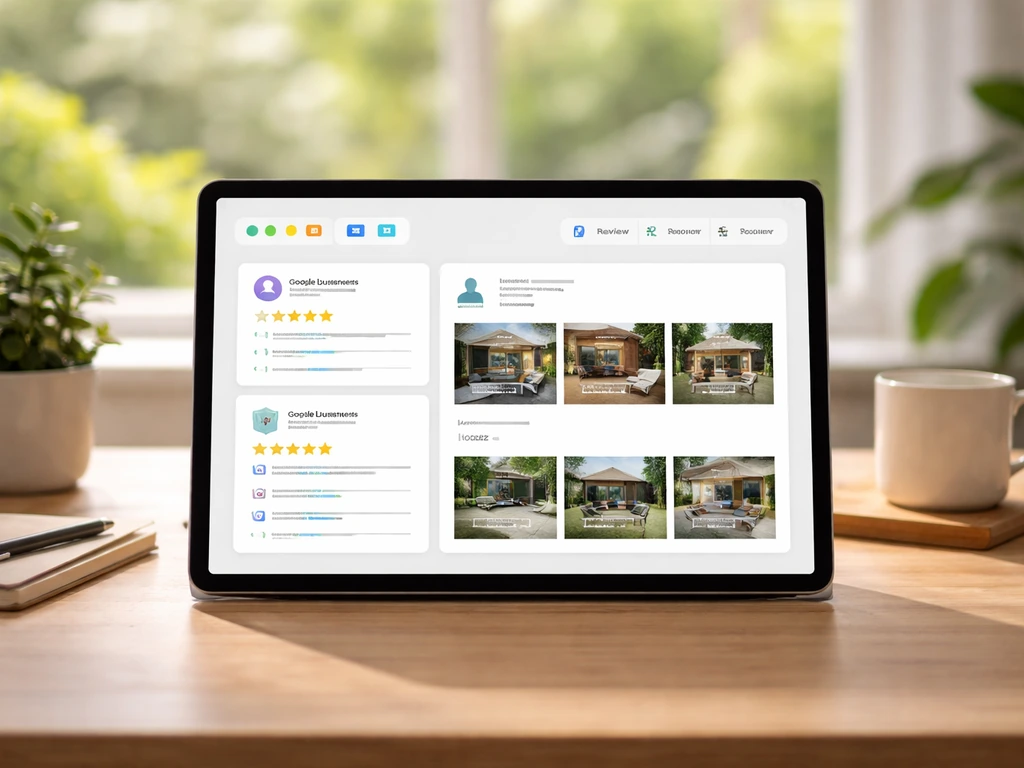
Start with platforms that make it hard to fake reviews at scale. Google Business Profile, the BBB, Houzz, and dedicated outdoor-living review aggregators (like this one) are the most reliable starting points for deck builders and patio contractors. If you want to dig in on real-world experiences, browsing maryland deck and patio reviews can help you spot which builders actually deliver. Each has a different strength. Google has volume and recency. The BBB tracks complaint resolution and lets you see whether a company actually responds to problems. Houzz tends to attract more detailed, project-specific feedback with photos. Specialty aggregators that focus exclusively on outdoor living companies let you filter by service type, which saves a lot of time.
Filtering matters as much as finding. On Google, you can sort reviews by recency to see what the company is doing right now, not just what they did well three years ago. On Yelp, keep in mind that the default sort is not purely chronological. Yelp's algorithm weights recency along with user voting and review quality signals, so a review from last month might still appear below an older one. Use the "Date" sort option to get true chronological order. On review aggregators, filter by your specific service type. A company might have glowing reviews for pergola installations but mediocre feedback on composite deck builds. That distinction matters when your project is a deck.
- Google Business Profile: best for volume and recency; sort by "Newest" to see current performance
- BBB: best for complaint history and resolution tracking; note that the BBB letter grade is calculated separately from customer reviews, so check both
- Houzz: best for photo-backed, project-specific reviews with detailed written feedback
- Outdoor living review aggregators: best for filtering by contractor type (deck builder, patio contractor, enclosure installer, pergola/awning company)
- Nextdoor and local Facebook groups: good for hyper-local reputation checks, but no formal verification
When using a regional aggregator, search by your city or zip code and narrow to the specific service you need. If you are looking at enclosure installers or companies that do pergolas, awnings, or screen rooms, filter to those categories specifically. Companies that work across multiple outdoor categories sometimes have inconsistent quality across services, and aggregated reviews can hide that.
How to read ratings vs written feedback (what actually matters)
The star rating is a headline, not the story. Two companies can both sit at 4.5 stars and have completely different realities behind that number. One might have earned it through 200 detailed, verified reviews over five years. The other might have 18 reviews, half of which were left in a two-week window. Written feedback is where you actually learn whether a contractor is worth calling.
When you read written reviews, look for operational specifics, not just sentiment. Phrases like 'the crew showed up when they said they would,' 'the project came in $400 under the original estimate,' or 'they flagged a drainage issue we hadn't noticed' are far more useful than 'great work! If you are comparing paint options for floors or patios, a benjamin moore floor and patio paint review can also help you judge durability and coverage before you commit operational specifics. ' Those details tell you about scheduling reliability, budget accuracy, and proactive communication. Those three things are consistently where outdoor living projects either go smoothly or fall apart.
Also pay attention to what reviewers do not mention. If you read 30 reviews and nobody ever mentions cleanup, debris removal, or post-project follow-up, that is a gap worth asking about directly. The absence of praise for something basic is sometimes as informative as a complaint.
| Review signal | What it tells you | How to weight it |
|---|---|---|
| Star rating only | Rough reputation snapshot | Low weight on its own |
| Written detail about timelines | Scheduling reliability | High weight |
| Written detail about budget accuracy | Cost management and honesty | High weight |
| Response from the company to a negative review | How they handle problems | Very high weight |
| Cluster of 5-star reviews in a short window | Possible solicited or fake reviews | Red flag, discount heavily |
| Consistent praise across different project types | Broad operational competence | High weight |
| Photos attached to reviews | Visual proof of finished quality | High weight |
Red flags and green flags in customer review patterns

Patterns across reviews are more reliable than any single review. You are looking at aggregate behavior, not individual opinions. Here is what to watch for on both sides.
Green flags that suggest a trustworthy company
- Consistent 4- and 5-star reviews spread across 12 or more months, showing ongoing quality not just a good streak
- Detailed written feedback that mentions specific crew members, project addresses, or materials by name
- Company responses to negative reviews that are calm, specific, and offer resolution rather than deflection
- Reviewers who mention returning for a second project or recommending the company to a neighbor
- Photos in reviews showing finished decks, patios, or enclosures with visible craftsmanship detail
- BBB complaint history showing complaints that were actually resolved (not just filed and ignored)
Red flags that should make you pause

- A burst of 5-star reviews posted within a few weeks of each other, especially after a long gap in review activity
- Reviews that use nearly identical phrasing or focus on the same generic qualities ('professional,' 'on time,' 'great results') without specifics
- Negative reviews that mention the same specific problem repeatedly: missed deadlines, unanswered calls after payment, or surprise charges at the end of a job
- A company that never responds to any reviews, positive or negative
- The BBB showing complaints where the business failed to respond, which the BBB explicitly flags as a factor that can negatively affect their rating
- Reviews that only appear on one platform, with nothing on Google, Houzz, or any other source to cross-reference
- Sudden drop in rating or review volume after a previously strong period, which may signal staff or ownership changes
How to compare companies and build your shortlist
Once you have identified three to five candidates through reviews, the goal is to rank them before you spend time on calls and quotes. A side-by-side comparison based on review data makes that faster and more objective. Look at each company across the same dimensions: review volume, recency, complaint history, response behavior, and project-type fit.
If two companies have nearly identical ratings, the tiebreakers are recency and complaint resolution. A company with a 4.4 average but zero unanswered complaints and reviews from the past 60 days is a safer bet than a 4.7 with no activity in eight months and two unresolved BBB complaints. Outdoor living companies go through quality changes when lead installers leave or when they take on more work than they can handle. Recent reviews tell you where they are today.
For regional projects, reviews from specific states or cities can give you additional context. For example, reviews focused on companies operating in particular markets, like those covering Michigan, Maryland, or specific regional contractors, tend to surface patterns specific to local building codes, climate considerations, and permit requirements that generic national platforms miss. If you are considering a Michigan deck and patio contractor, reviews like the Michigan deck and patio doctors reviews you will find online can help you spot local patterns before you call for quotes companies operating in particular markets, like those covering Michigan. Use location-filtered review sources wherever possible.
Aim to carry three companies into the quote stage. One is not enough leverage. Five is too many to manage. Three lets you compare bids, ask follow-up questions, and still walk away from a company that gives you a bad gut feeling during the estimate meeting.
Questions to ask before hiring (pulled directly from common review complaints)
The most useful thing you can do with negative reviews is turn them into interview questions. The complaints that come up repeatedly across outdoor living contractor reviews fall into about five categories: timeline slippage, communication gaps after the deposit, subcontractor surprises, end-of-project punch-list disputes, and cleanup. Ask directly about all of them.
- What is the current lead time from signed contract to project start, and what causes that to change? (Tests timeline honesty)
- Will your own crew do the work, or do you use subcontractors? If subs, who are they and are they covered under your insurance? (Common complaint source)
- What does your communication process look like once the job starts? Who is my point of contact and how quickly do they respond? (Addresses the 'went silent after deposit' complaint pattern)
- How do you handle changes to the project scope or materials mid-build? Is that documented in writing before the work continues? (Prevents end-of-job surprise charges)
- What does your punch-list and final walkthrough process look like, and how long do you warranty your work against defects? (Addresses post-completion disputes)
- Who is responsible for debris removal and site cleanup, and when does that happen? (More common complaint than most homeowners expect)
- Have you pulled permits for projects like mine in this municipality before, and will you handle the permit process? (Permit failures are a recurring review complaint in decks and structural patios)
A contractor who gets defensive or vague on any of these questions is showing you something important. Good companies have clear answers to all of them because they have thought through these processes. The questions themselves are not aggressive. They are the same things any experienced homeowner would ask.
Verifying a contractor beyond reviews
Reviews tell you what past customers experienced. Verification tells you whether a contractor is legally qualified to do the work safely. Both matter. Do not skip the verification step just because the reviews are strong.
License and insurance
Ask for the contractor's license number and verify it directly with your state or province licensing board. Most states have a searchable online database. Check that the license is active, not expired, and covers the type of work you are hiring for. General contractor licenses do not always cover specialty electrical or structural work.
Also request a certificate of insurance showing general liability coverage and workers' compensation. Call the insurer listed on the certificate to confirm the policy is current. Deck and patio work involves elevated platforms, power tools, and in some cases structural loads. For more detailed evaluation, you can also compare fraser decks and patio covers reviews that focus on real-world workmanship and follow-through.
OSHA's construction standards require fall protection for workers exposed to drops of 6 feet or more, and a contractor without proper workers' comp coverage means you could be financially exposed if someone is injured on your property.
Portfolio and references
Ask for a portfolio of completed projects similar to yours in scope and material. Photos on a website are a minimum. Ask if you can visit a completed project in your area, or at least get contact information for two or three past clients you can call directly. When you call references, ask specifically about timeline accuracy, how problems were handled, and whether they would hire the company again. Those three questions surface the most useful information quickly.
BBB and complaint history
Look up each shortlisted company on the BBB site. Check both the letter grade and the complaint history separately because the BBB calculates its letter grade independently from customer reviews. A company can have mixed customer reviews but a strong letter grade, or vice versa. What you are specifically looking for in complaint history is pattern and resolution.
One complaint in five years that was resolved is very different from three complaints in 18 months with no response. The BBB flags businesses that fail to respond to complaints, and that non-response behavior is a meaningful signal about how they will treat you if something goes wrong. BBB’s complaint process supports resolution tracking and provides consumer context, including whether a business responds to complaints [The BBB flags businesses that fail to respond to complaints](https://www. bbb.
org/all/customer-reviews/complaint-reviews-process).
Using reviews to plan quotes, timelines, and contract terms
Reviews are not just for picking a company. They are a preparation tool for the entire hiring process. Before you request quotes, read through the reviews of each company you are considering and note every mention of budget, timeline, materials, or contract terms. If you are specifically comparing teak patio flooring reviews, use the same approach: look for consistent written feedback about installation quality, finish durability, and ongoing maintenance. That gives you a realistic expectation baseline and tells you exactly what to write into your contract.
On budget: if multiple reviews mention that a company's final invoice ran higher than the original estimate, ask for a fixed-price contract rather than a cost-plus arrangement. If reviews mention transparent itemized quotes, ask for that format specifically when you request a bid. Comparing itemized quotes across three companies is far easier than comparing lump-sum numbers, and it protects you from hidden markup on materials.
On timelines: reviews that mention delays often include the reason. Weather holds are normal. Permit delays are common in municipalities with slow building departments. Crew scheduling problems are a contractor failure. If you see multiple reviews citing crew availability as a delay cause, write a start date and a substantial completion date into your contract, with a clear process for what happens if those dates are missed.
On contract terms: the complaints you found in reviews should map directly to protective clauses in your contract. If reviews mention disputes about change orders, add a clause requiring written change orders signed by both parties before any additional work begins. If reviews mention deposit amounts that felt too large, keep your deposit at or below 10 to 15 percent of the total project cost, with payment milestones tied to completed phases rather than calendar dates. If reviews mention cleanup disputes, spell out exactly what site condition you expect at project completion.
- Request itemized quotes from all three shortlisted companies so you can compare line by line
- Write a project start date and substantial completion date into the contract
- Add a written change-order clause requiring signatures before scope changes are executed
- Cap your initial deposit at 10 to 15 percent; tie remaining payments to verified project milestones
- Include a warranty clause specifying the duration and what defects are covered
- Define site cleanup expectations explicitly, including debris removal timing
- Confirm permit responsibility in writing: who pulls it, who pays for it, and who is liable for code compliance
The homeowners who walk away from outdoor living projects happy are almost always the ones who did their review research, asked the uncomfortable questions upfront, and put specific terms in writing before the first shovel hit the ground. The reviews you read are a compressed history of other people's mistakes and wins. Use that information to make your project go better from day one. If you are researching decoart patio paint reviews, use the same approach: compare patterns across multiple sources, not just one star rating.
FAQ
If reviews are mixed, how do I know what questions to ask on the estimate call?
Use reviews to pick the right person to interview. If most complaints are about delays, ask who controls scheduling and how they staff when subcontractors are delayed. If complaints are about budget, request a line-item estimate and ask which line items are fixed versus allowances.
Can I trust a 5-star rating if the written reviews sound generic?
Yes, but only as a sanity check. Look for recurring, verifiable details (same material choices, similar problem descriptions, similar resolution outcomes). If the complaints are vague and the positives cite generic praise, rely more on complaint patterns and response behavior than on star averages.
What does “verified review” actually mean for deck and patio company reviews?
Treat “verified” differently by platform. On many sites, verification means the reviewer provided an email or purchase, not that the project details were audited. Ask the contractor how they can document similar projects (permit numbers, material receipts, or a comparable finished address) to confirm the review claims match your scope.
How should I adjust my review reading if the company does decks and other outdoor work too?
If your reviews come from a broad outdoor-living company, isolate your category. Confirm that the installer crew and the PM who handled pergolas or awnings are the same people assigned to your specific deck or patio scope, since quality often varies by service line.
How do I turn recurring complaints in reviews into specific contract terms?
Create a simple “issue map” from the reviews to contract language. For each repeated complaint category (timeline, communication, cleanup, change orders), write a matching requirement in your contract, including how you will be notified and what triggers a schedule or cost adjustment.
What contract clauses should I ask for if reviews mention change-order fights?
Before you sign, ask for a written change-order policy and a schedule impact policy. If they cannot clearly explain how they price changes and how they adjust timelines for weather or permit holds, that is a common sign of future disputes.
How can I tell if a company’s responses to negative reviews are actually helpful?
Don’t use “average review response time” as a single metric. Instead, check whether the company responds with concrete actions (photos requested, dates offered, resolution timeline) and whether they acknowledged the same complaint themes that appear in multiple reviews.
What if the most recent reviews are worse, does that mean I should walk away?
Yes, and it can reveal hidden risk. If multiple recent reviews mention crew availability problems, confirm in writing the start date, a backup staffing plan, and a rule for when delays trigger an extension or termination option.
Which review red flags should make me double-check insurance and safety coverage?
For elevated work, prioritize documentation that ties to safety and workmanship. Ask whether they follow fall protection practices for workers, and confirm they have workers’ compensation and liability coverage before work begins so you are not exposed for injuries.
What should I ask past clients during reference calls to avoid getting a polite but useless answer?
Yes, but be careful with reference calls. Ask references the same three things you will ask in writing (timeline accuracy, how problems were handled, would they hire again) and also ask what would they do differently. A confident, consistent answer usually beats a vague “great job” reply.
Next Article
American Deck and Patio Reviews: Verify and Compare Locally
Step-by-step workflow to verify and compare American Deck and Patio reviews by location, spot red flags, and choose wise